
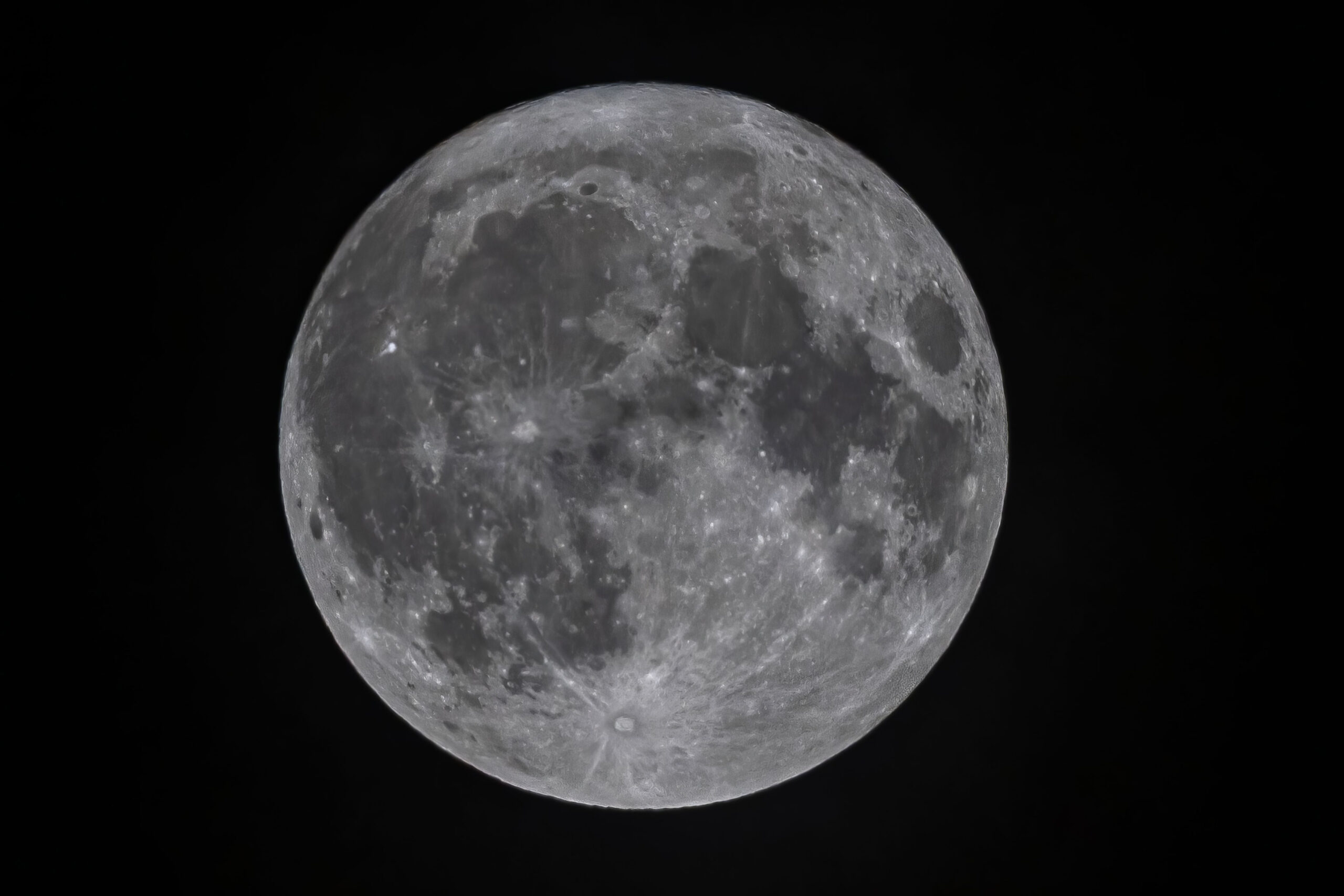
The Moon is one of the stars most studied by scientists and astronomers around the world. In the midst of the missions to return to its surface and the investigations into the phenomena that surround it, a new fact keeps the international scientific community attentive: the possible impact of a fragment of the SpaceX Falcon 9 rocket.
The analyzes published by international media and portals indicate that the impact could occur near the Einstein crater, located at the western end of the visible side of the natural satellite.
The Falcon 9 rocket fragment is also considered space debris. According to Infobae, this upper stage of the rocket would impact the lunar surface at a speed of 2.43 kilometers per second.
This event arouses curiosity among the scientific community because it would allow the impact against the natural satellite to be analyzed in real time. In addition, it would offer the opportunity to collect unpublished data on this type of collision.
USA Today highlights that this fragment of SpaceX will reach the Moon before another of Elon Musk’s company’s projects, although in very different circumstances than planned.
The SpaceX company, founded by billionaire Elon Musk, will see one of its vehicles reach the Moon much sooner than expected, although not as part of a mission, but as a consequence of the displacement of this fragment of the Falcon 9.
This fragment has remained in orbit for more than a year and is expected to impact the visible side of the Moon on August 5.
Independent astronomers, such as Bill Gray, developer of Project Pluto software, have tracked the fragment using orbital tracking programs. Based on these analyses, they established the expected date of the impact and the area where it could occur.
According to USA Today, the impact will occur because the Moon lacks an atmosphere, so the fragment will not disintegrate before reaching the surface.
According to international media, the impact would occur at 2:44 a.m. Infobae points out that astronomers hope to study three main aspects:
- An impact flash lasting less than a second.
- An ejecta plume of dust and lunar material that will rise several kilometers above the surface.
- A new crater with an estimated diameter of between 20 and 30 meters.