
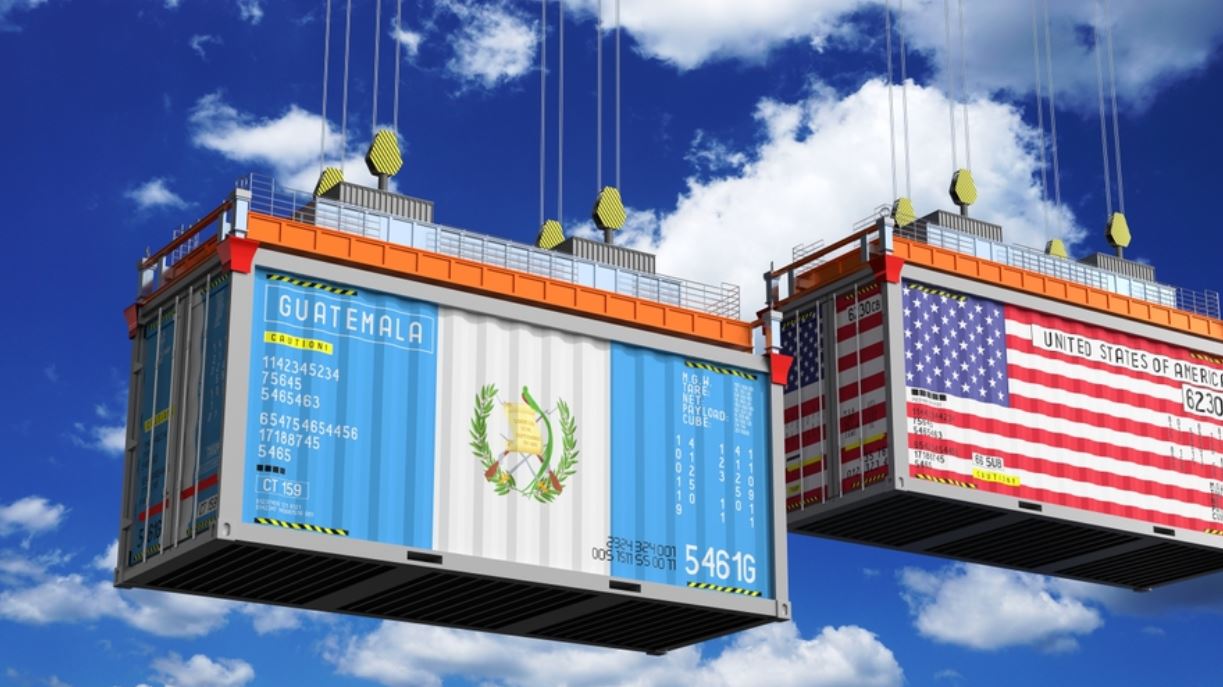
The decision on the new tariffs includes the 60 economies that were investigated by the US decision in relation to the ban on importing products from other countries made with forced labor.
This tariff would be replacing the temporary 10% tariff established in February for a period of 150 days and which expires on July 24, based on section 122 of the Trade Law of 1974.
As reported by the USTR, the head of said office, Jamieson Greer, “following instructions from President Trump, takes definitive action under Section 301 of the Trade Act of 1974, imposing tariffs on 60 economies for failing to impose and effectively enforce the ban on imports of products made with forced labor”.
The percentages and where Guatemala is
The measure decided by the United States Government recognizes progress made by Guatemala and other countries, as well as the Reciprocal Trade Agreement signed bilaterally, as detailed in the report when explaining the percentages of tariffs imposed.
The report adds that, in accordance with the specific instructions of President Donald Trump, the United States Trade Representative has made the following determinations:
They are established 10% tariffs of Section 301 for investigated economies that have committed to adopting and effectively enforcing forced labor import prohibitions and that have taken the following actions:
- They established a ban on the importation of forced labor
- They committed to imposing and enforcing this ban through an Agreement on Reciprocal Trade
- They imposed a partial regime with the effect of preventing the importation of certain goods made with forced labor
These countries and economies include Guatemala and other Central Americans. such as El Salvador and Honduras. In addition to Argentina, Bangladesh, Cambodia, Canada, Ecuador, India, Indonesia, Jordan, Malaysia, Mexico, Pakistan, Sri Lanka, Trinidad and Tobago and the United Kingdom.
CONTENT FOR SUBSCRIBERS
Meanwhile, it is added that 10% or 12.5%, net of the Most Favored Nation (MFN) rate, is the rate decided based on Section 301 duties for certain products from the European Union, Taiwan, Japan, Korea and Switzerland that are not otherwise exempt, according to notice from the Federal Register.
The scope of the measure and what specific products the Office of the US Trade Representative is referring to are not yet known.
Likewise, it is established that 12.5% for all other economies investigated.
The United States Trade Representative has also determined, pursuant to the President’s specific direction, that product exemptions are appropriate for the following:
- Raw materials that, if subject to these tariffs, could cause a lack of domestic supply
- Products that could cause disruption throughout the economy if subject to these tariffs
- Products that cannot be grown or produced in sufficient quantities or at reasonable prices in the United States or obtained from other sources
- Certain products from Argentina, Bangladesh, Cambodia, Ecuador, El Salvador, the European Union, Guatemala, Indonesia, Jordan, Malaysia, Switzerland, Taiwan or the United Kingdom that would encourage these economies to comply with commitments relating to import prohibitions on forced labor or to enact and effectively enforce such prohibitions
- Items for which these tariffs may not contribute substantially to the elimination of acts, policies and practices that are considered actionable in investigations
It added that this action follows USTR investigations, which included two rounds of public hearings, more than 2,100 public comments and dialogue with commercial partners to address these long-standing concerns.
Guatemala participated in the public comment phase as well as hearings during July, It also approved through ministerial agreement 377-2026 the prohibitions on imports of goods produced through forced and compulsory labor.