
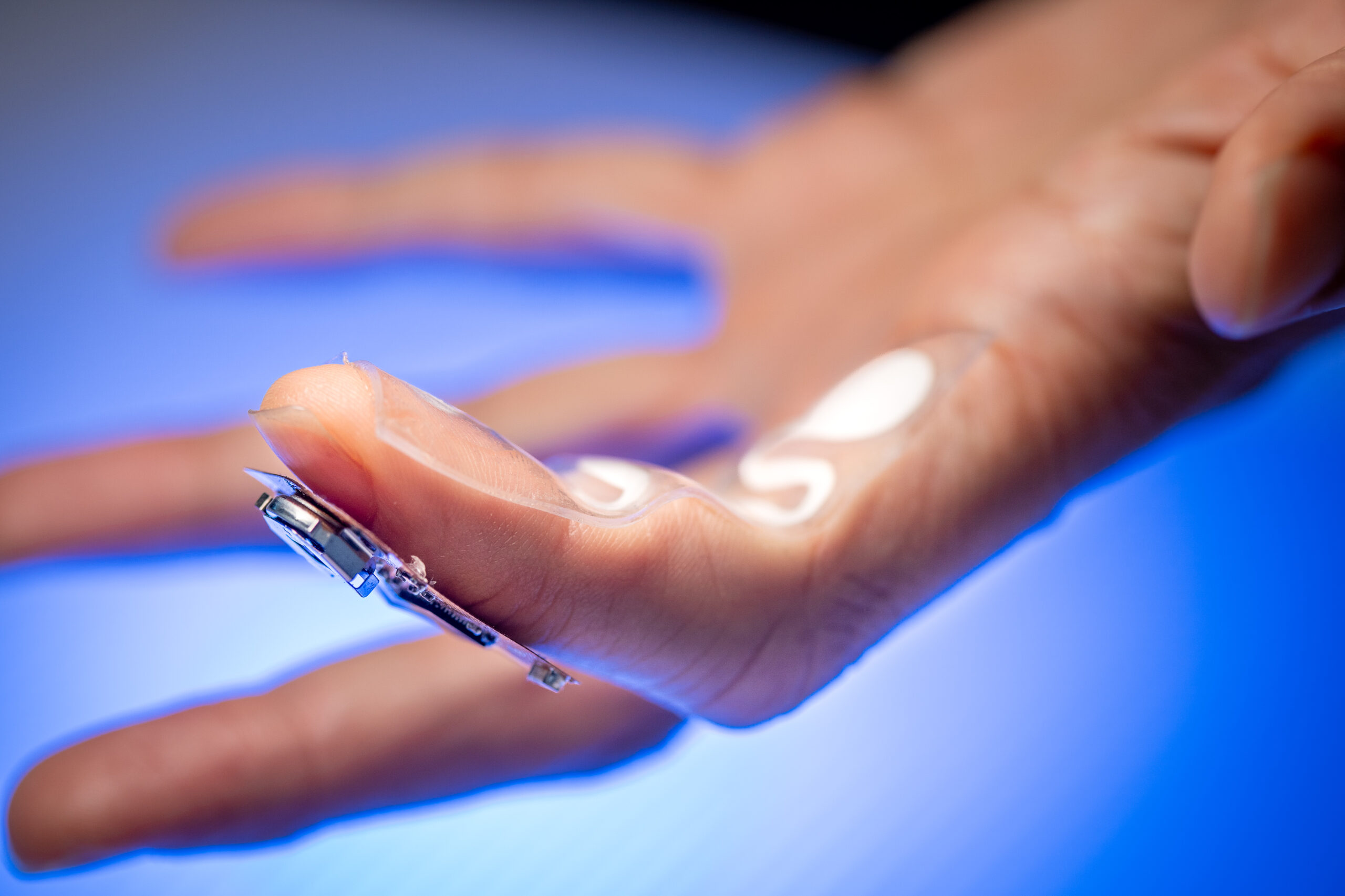
A new technological invention could contribute to the treatment of Parkinson’s through a flexible and portable patch that is placed on the fingertip and is capable of continuously monitoring levodopa levels in patients with this disease.
This new technology was developed by engineers and neuroscientists at the University of California, San Diego (UC San Diego). The device allows the measurement of chemical substances present in sweat and could help to more precisely personalize medication schedules.
Portals like Genetic Engineering & Biotechnology News They highlight that this experimental technology could offer a way to constantly monitor levodopa concentrations in the body in real time.
The research, led by Tamoghna Saha and published in the scientific journal PNAShighlights: “Our portable, easy-to-use, low-power device allows for real-time, stimulation-free monitoring.”
Furthermore, the technology offers the possibility of adjusting doses at home and, according to the researchers, “paves the way for the future development of a closed-loop autonomous therapeutic system with L-dopa.”
This invention could represent an advance in the fight against Parkinson’s, since the portal Genetic Engineering & Biotechnology News points out that this disease is the second most common neurodegenerative disorder and the fastest growing in the world.
The analysis highlights that tests carried out on Parkinson’s patients and healthy people showed that the measurements obtained through the patch are comparable to conventional laboratory blood tests.
For researchers, this technology could offer a new alternative to control the loss of motor control that people with Parkinson’s develop.
Likewise, the device could improve medication management and reduce adverse effects, since an insufficient dose can limit the patient’s mobility, while an excess can trigger jerky movements.