
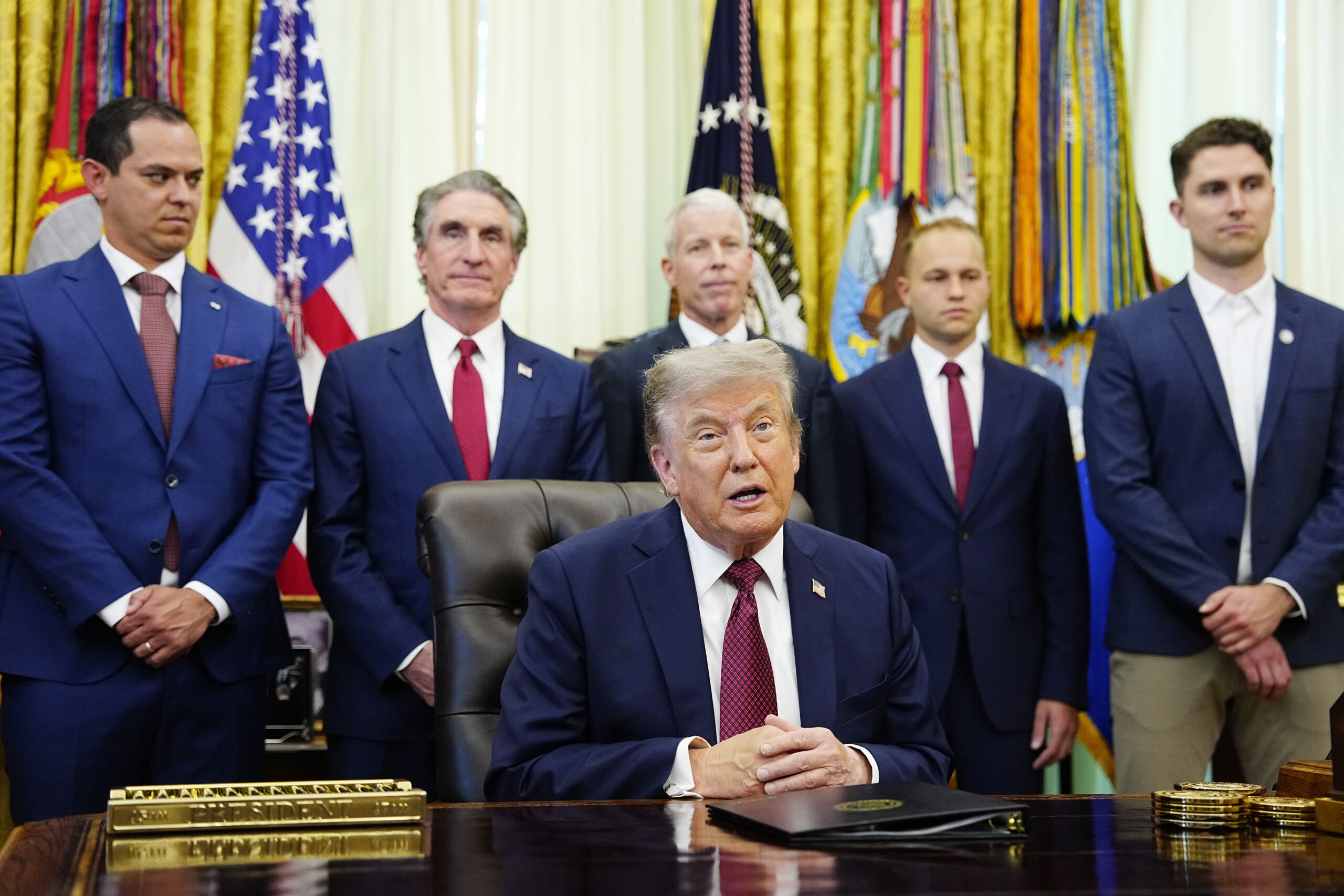
US President Donald Trumpis deeply unpopular, as are some of its major policies. A sizable portion of voters who support him are not very enthusiastic about voting in the midterm elections, while Democrats seem very motivated to change the balance of power in Congress and at the state level.
What is going wrong for Republicans?
According to a survey conducted earlier this month by Washington Post-Ipsos, the three main issues for voters are the economy, the war with Iran and migration. Voters disapprove of Trump’s management on all of these issues. Affordability and cost of living are of particular concern to voters right now, according to Republican strategists. And while the economic data is mixed, voters have little to say in favor of the economy. “The economy? I would describe it in two words: It’s a disaster,” Armetris Hare, a Michigan businessman, told my colleagues at ThePost.
“We voted for Trump,” Lance Sulentic of Iowa, who voted for him three times, told my colleagues at The Post, “and he did the opposite of what he said he was going to do.” Voters also don’t fully understand Trump’s signature legislative achievement: the tax and spending bill, known as the Big Bill. A new Politico poll finds that nearly half of Americans say they can’t explain it, and those who can tend to say the beneficiaries are the rich, not them. Many of the provisions benefit corporations and the wealthy. And if the stated objective of the measures was job creation, this may take time to materialise.
Meanwhile, hiring has slowed. To help fund the extension of Trump’s 2017 tax cuts, The bill made significant cuts to social services —including food stamps and Medicaid—that are only now beginning to affect Americans. Millions of Americans have lost food assistance, including children.
The possible good news for Republicans
The image of the Republican Party is not as damaged as Trump’s popularity seems to be. For decades, Republicans have enjoyed some trust among voters, as the party they trust most to manage the economy. According to the survey of ThePost-Ipsos, andThe Republican Party still maintains a slight advantage in that sense. On policy, Republicans say they can base their campaign on tax cuts, new tax breaks for tips and overtime and “Trump accounts,” a program that offers a one-time deposit of $1,000 into new investment accounts for children.
On average, tax refunds were higher this year because of Republican tax cuts. However, according to economists, this effect could be diminishing, as Americans used the extra money to maintain their level of spending in the face of rising costs from the war against Iran. Republican voters who could be persuaded to vote in November are more motivated by immigration, taxes and crime than other issues, polls show. This could explain Trump’s emphasis on the Save America Act, which imposes strict voting restrictions to prevent undocumented migrants from voting—a statistically rare occurrence that recently occurred in New Jersey.
Trump’s efforts to get Republicans to redraw congressional districts could also help his party counter Democrats’ enthusiasm. It will take significantly higher voter turnout from Democrats than Republicans to win some of these swing districts.
“Although House Republicans “They have a three-seat majority on paper,” writes Erin Covey, an analyst for Cook Political Report, a nonpartisan publication, “in practice they have created an eight- or nine-seat margin for November thanks to states they gerrymandered to their advantage.” And finally, Democrats have their own problems. Centrist Democrats are concerned about nominating far-left Democratic socialists in key states like Michigan. “This reinforces the stereotype that the radical left controls the party,” said Arizona Republican strategist Stan Barnes. whose state has several close races for the House of Representatives.
Additionally, the Democratic Party structure is having difficulty raising funds, as donors are still smarting from the party’s loss in the 2024 presidential election. But the deciding factor, strategists say, is simply who votes in November. The survey of ThePost-Ipsos shows that among voters who say they are absolutely certain to vote in November, Democrats have a 10 percentage point lead over Republicans, which would go a long way toward helping them overcome gerrymandering and take back the House, and even give them a chance to take back the Senate.