

Read more:
Subscribers
Subscribers

Turbulent beginnings
In 2001, the decline or crisis of the international liberal system that was built since World War II was marked, and the September 11 attacks to the Twin Towers, which are the reminder that the world still has real and new threats and danger, explains analyst Roberto Wagner.
In the case of Latin America, it comes from the 1990s, with approaches such as the Free Trade Agreement of the Americas (Alca), the economic crisis in Argentina and the socialism of the 21st century initiated by Hugo Chávez in Venezuela, says Wagner, indicating that it was the emergence of authoritarian politicians of different ideologies.
Another strong blow to the International Liberal System was the Mortgage Bubble of 2008-2009, and, more recently, the pandemic crises —cierres, supply problems and
Containers – and of the war in Ukraine, which show schisms in democracies, says the expert.
The first 25 years of the 21st century have been turbulent, marked by the crisis of the liberal system and the return of authoritarian policy. In Guatemala and the rest of Latin America “the usual problems are together with the new ones,” adds Wagner, commenting that the region faces great challenges with the emergence of new technologies, while dragging the social and political problems of the previous century.
The independent sociologist and consultant Luis Raúl Salvadó points out that one of the lessons of this period is “that the awareness of the series of interconnected challenges begins to make way, which include from the global warming, already irreversible, to the slow geopolitical readjustment that just begins.”
The global interconnection presents brutal challenges, adds Salvadó, and mentions that one of the characteristics of the moment is the “dilution of truth”, one of the repercussions of hyperinformation that overwhelms us and the overload of false news that damages the possibilities of life in democracy.

The attacks on the twin towers in New York ended a mode of traveling by plane and gave way to new safety standards in the world.
Free Press Photo: EFE
Virtuality and beyond
The last stage of the twentieth century was marked by the uncertainty about the implications that technology and the imaginary created around the 21st century would have from the ideas that were forged, marked by the media, mainly of television and radio, says Virgilio Álvarez, researcher at the Faculty of History of the University of San Carlos de Guatemala (USAC).
In the transition of these two centuries, a strong cut is given, due to the progress and greater access to technology, since, in addition to the generation of knowledge, the information is made instantly, explains Álvarez, since the advances transformed the communication systems to the point that social networks are had as a source of information, for better or for evil, because there is also misinformation or hate messages.
According to Wagner, the gap between generation X – nailed between 1965 and 1980 – and the millennial —1981 and 1996 – is wide. The youngest are more demanding in political matters, consumption and use of social networks, although it warns that technological changes have caused polarization in opinions and difficulties in corroborating the veracity of the cluster of information received.
According to the World Economic Forum (WEF, in English), the millennials are followed by the Z or Centenial Generation – born between 1996 and 2010 – which is the first digital native generational cohort. Those born from this year are called Beta Generation, which will happen to those who were born from 2010 to 2024, the Alpha generation.
In 2020, the Covid-19 Pandemia forced the world to use the Internet to work, study, buy and entertain, to meet the “stay at home” measures and thus stop the infections.
This situation, according to studies by the KPMG consultant, increased the need for more solid communication networks and accelerated investments in 5G technologies, artificial intelligence (AI), robotics and the internet of things (IoT, in English). To reach 5G and other technologies, a long journey has been made until it reaches virtuality and have in the prelude the augmented reality, which will come with the 6G generation, which is announced for the next decade.
The presence of analog mobile phones comes from the beginning of the 1980s, but takes off in the next decade, with the use of digital systems that allowed to send SMS or text messages, and Blackberry arises. Then, the 3G offered more stable connections and higher speed for data transmission, advances that evolve more accelerated with the use of optical fiber and broadband.
During these technological changes, users left cell phones with small screens and keys to mark or write texts, passing to the smartphone and their virtual keyboards. In addition, storage space was gained, which guarantees the download of multiple applications (app) with various functions.
The emergence of app has facilitated personal, commercial and work communications. Their adoption has been made by omnipresent today, and they have not left out the financial field, which is present in this new virtual reality with cryptocurrencies, champion of the bitcóin, created in 2009 and followed by others as Ether.
Big Tech and Ia.
Social networks such as Facebook, WhatsApp, Tik Tok or YouTube, as well as streaming and email services are among the most used globally among millions of applications with which, from any device, the user can access in real time the content of their interest.
Among the main Big Tech – technological major – Alphabet – proprietary of Google companies -, Amazon, Meta, Apple, Microsoft and Chinese companies Alibaba and Tencent are mentioned. They are added startups – emerging business – focused on specific services, using artificial technology and intelligence tools (AI).
The Wef ensures that the use of AI still faces trust problems, due to concerns such as privacy and job security, so it is appropriate for companies to adequately inform the benefits for society.
Charles HESS, executive director of Cabi Data Analytics, says that with AI can be done with machines everything a human performs, but more quickly and more efficiently. That is, AI can make a film with the tastes and preferences that one has thought at a certain moment, he said.
Read more:
Subscribers
Subscribers
The evolution of technology is getting more and more accelerated, adds HESS. If we go back to 1990, we were with a cell phone, a computer with the Internet connected to the phone – Modem – and the speeds were measured in few kilobits (Kbps).
Currently, the imagination marks what we want and we can do, explains the CEO of Cabi Data Analytics by mentioning as an example that AI and technology allow to process algorithms and large databases with which a cure for cancer can be achieved.
According to publications of the Massachussetts Institute (MIT, in English), in an era in which there is artificial intelligence for everything, there will always be the potential of collaborations between humans and AI. Proof of this is from a chatbot to the treatment for a type of anemia presented in 2023 VERTEX Pharmaceuticals, created from CRISPR research, genetic editing technology, but still has cost barriers and complexity to apply it.
But there are other AI applications in medicine, for the analysis of diagnostic images, information -based treatments decisions from data, vaccine development, improve compatibility in organ transplants and human resource management services in hospitals.
Wagner shares that the positive of these advances is that it will lead to a personalized medicine from knowing the DNA, in addition to finding cure for diseases that we catalog incurable so far.
The amplitude of fields for AI tools attracts the investments of the Big Tech and others such as the AI chips manufacturer, Nvidia, IBM, Openia and Tesla, one of the companies of Elon Musk, the richest man on the planet and official just appointed by US President Donald Trump.
Musk is also the owner of X (Twitter), Neuralink, Starlink and Spacex, one of the private companies involved in the new space race.
For Álvarez, spatial development in this century and the previous one is a dispute for the control of resources, information and technological hegemony. The space race between the US and the Soviets now includes other actors such as China, which has become a power, based on their “new era” approach, which includes as priority spatial development. India and Japan are other powers that are interested in participating in this battle.
For their part, private companies arrive at this race for space, understanding that not everything can be planned from the states, especially for the development of telecommunications, for their profitability, and as a business opportunity for those who have the financing required by these operations, he adds.
In this ambitious achievement of conquering space, Musk is not alone. Jeff Bezos, from Amazon; Richard Branson, by Virgin Group; and Jared Isaacman are the millionaires who got on this battle for the moon and the red planet, Mars.
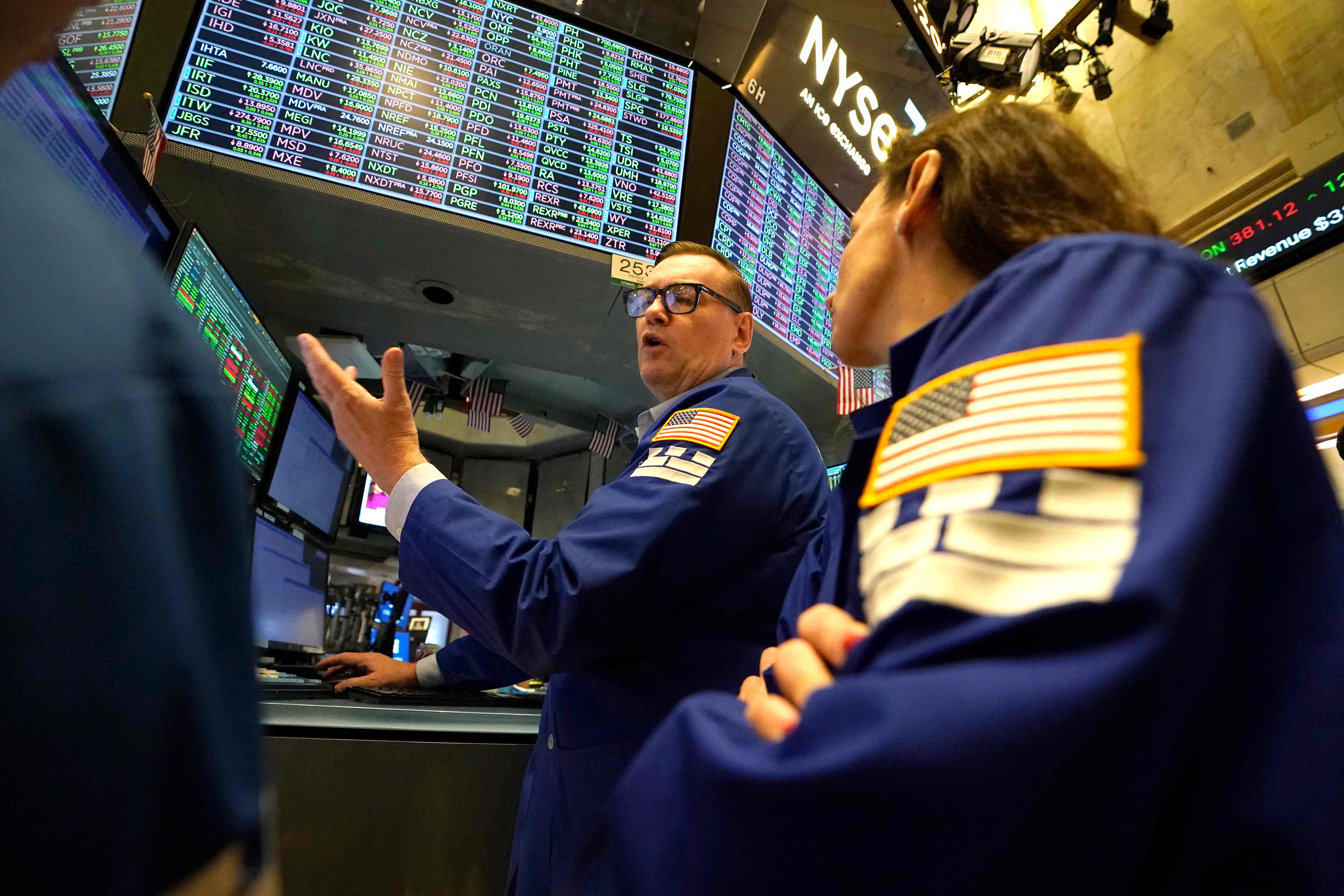
In these 25 years, world finances have also been affected as in 2008 when the first major financial crisis occurred in the United States.
Free Press Photo: AFP
Guatemala, an obstacle race
Luis Salvadó frames these 25 years for the country in a crisis characterized by the weakness of democracy, the decline in human rights and the persistence of impunity and corruption. In relation to digital transformation, for the Guatemala academic, the lack of telecommunications infrastructure must resolve, which causes huge difficulties, and the lag that has us in a kind of digital illiteism.
In the countries of Latin America, a part of our underdevelopment is to always have the situation. We live the present and it becomes difficult to make plans or a road map for the short, medium and long deadlines, Wagner adds. “Technological changes complicate the situation and need a time to analyze the situation and prepare,” he says, by criticizing the concentration in the country of services and digitalization in urban centers.
Guatemala, although it has capabilities to use technological tools, is at a disadvantage, by access gapsuse and payment, says Álvarez. In the 21st century we have the use of cell phone as an access model, but using a phone does not mean a significant change in social gaps, it emphasizes.
Against all the barriers, in 2020 the first satellite created in the country by a group led by the University of the Valley of Guatemala (UVG), the Quetzal-1, was put into orbit from the International Space Station. Last year the beginning of the new Cubesat Quetzal-2 project was announced, which highlights the innovation of Guatemalan creators to contribute in aerospace science.
The science and technology sector needs stronger support in the country. Universities must bet on the avant -garde and government, advance in aggressive policies and aligned with technological development and digitalization of processes, recommends Álvarez.
Salvadó is positioned in the so -called “hopeful pessimism” coined by the theorist Franz Hinkelammert, who refers to the impact of the current economic model, while forces to use hope as a heuristic tool to find new forms of collective action that lead to democratic and inclusive responses.
Almost a century ago, Tanguero Carlos Gardel sang “that twenty years is nothing.” Looking for in memories, what are your reflections for this tour of the quarter of the 21st century?