

Foreign trade
In the midst of the commercial war, Guatemalan exports and imports would have a new position to add, in this case costs for the use of Chinese ships in the transport of products or raw materials since the United States imposed fees on the ships of that Asian country, Camagro warned.
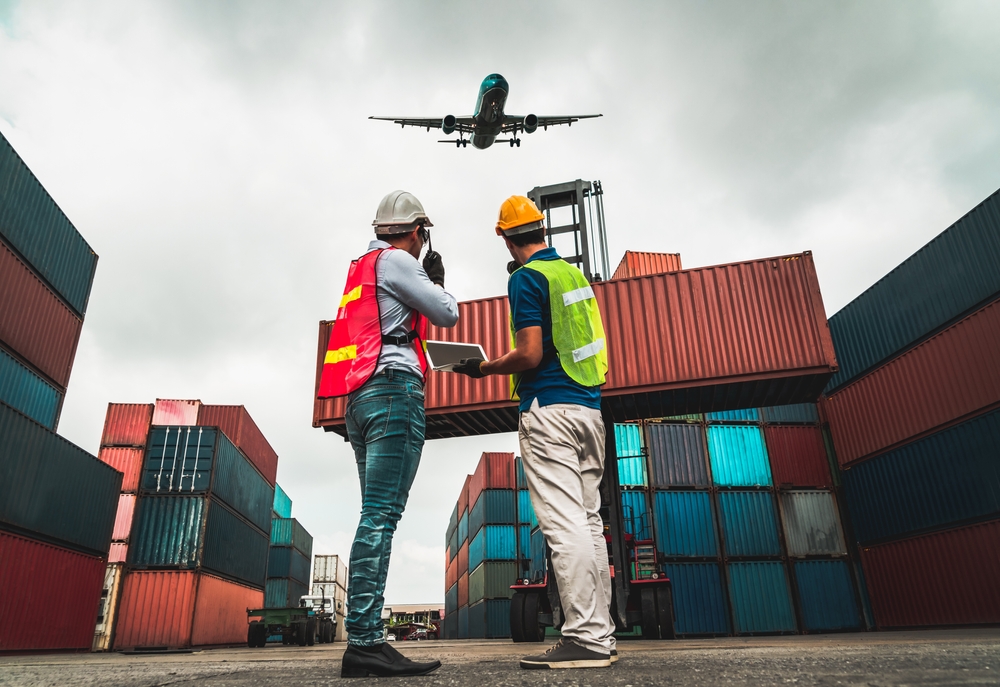
With the new decision, released on April 17, 2025 and that enters into force in October, the United States imposes tariffs on vessels built or operated by Chinese entities. (Photo, free press: Shuttersock).
The Office of the United States Commercial Representative (USTR) officialized on April 17, 2025 a new measure under section 301 and which will enter into force October 14, 2025, the Agro Chamber of Guatemala (Camagro) reported to its associates.
The Business Chamber warned that this measure will impact maritime logistics and can affect exports from Guatemala and Central America.
With the new decision, the United States imposes tariffs on boats built or operated by Chinese entities.
This action is part of the Executive Order 14269 (Restoring America’s Maritime Dominance/ Restoring the Maritime Domain of the United States), was signed on April 9, 2025 and released on 17, it was reported.
The objective is to reduce China dependence in strategic sectors such as logistics, maritime transport and port manufacturing, adds.
The announced rates
The rates that would charge validity in October are:
- Chinese ships (either Yu Naves Construction), US $ 50 per net ton in 2025, and increase to US $ 140 in 2028
- Boats built in China, but operated by third parties, US $ 18 per net ton in 2025, but rises to US $ 33 in 2028, or US $ 120 per discharged container and rises to US $ 250, respectively.
- As indicated, the incentive is an exemption for three years if ships built in the United States are used.
Impact
For the exporting companies of Guatemala and the region the impact is derived in several edges, according to Camagro.
- The increase in logistics costs since shipping companies could transfer these rates to customers.
- Less availability of routes, because they would give rhinestones of fleets and could limit space from Central America.
- The impact on ports in the United States, since rates are evaluated to port cranes and teams of Chinese origin.
- Greater pressure on supply chains.
- The entity recommends several actions to mitigate possible impacts:
- Check logistics contracts and fleet origin. Evaluate logistics suppliers and possible cost overruns.
- Monitor operational conditions in ports of the United States.
- And, continue coordinating actions with guilds and government of both countries to reduce impacts.
Subscriber content
Carla Caballeros, executive director of Camagro, indicated that the rates were imposed based on a investigation process for complaints against China that began for a year and within which there was a investigation process by USTR, a period of consultations, and the measure was disclosed on April 17.
“Boats and maritime transport are vital for the economic security of the United States and the free flow of trade,” said US authorities and it was added that with these actions the Chinese domain begin to be reversed, to mitigate risks to the supply chain and send a clear signal to promote the construction of ships in the United States.
Section 301 of the 1974 Trade Act authorizes USTT to investigate and act against foreign commercial practices considered unfair or discriminatory. In March 2024, five American unions formally requested to investigate China’s actions in the mentioned sectors. The USTR concluded that Chinese practices are “unreasonable”, restrict the US