

Travel to the Vatican City From the Roma-Fiumicino International Airport (FCO) It is simple thanks to the variety of public and private transport options available.
The city of Vatican is a small territory that exclusively houses the Holy See. For this reason, visitors usually make a previous stop in the city of Rome to leave their luggage before moving there.
This guide detailed the most practical ways to move from the airport, as well as to mobilize between Rome and the Vatican, including updated costs and useful recommendations for the visitor.
What is the airport closest to the Vatican?
He Roma-Fiumicino Airportalso known as Leonardo Da Vinci Airportis the closest to the Vatican.
It is located at some 30 kilometers from the center of Romeand the journey can be done in less than an hour using public or private transport.
Airport transport options to the center of Rome
Direct buses
Several companies offer direct buses From the airport to the Termini stationthe main transport center in Rome:
- Terravision: direct service with an approximate duration of 45 minutes. The ticket costs around 14 euros.
- Flibco: direct bus with a duration of 45 minuteswith prices from 6 euros.
Train
With a price between 9 and 12 euros You can travel by train through the company Treitalia. The trip lasts between 32 and 48 minutes.
Public transport
You can also use the Roman public transportspecifically those Bus 40 and 64 lines.
These options are cheaper, although travel time can be greater depending on traffic and stops.
- Frequency: Buses usually come out 30 minutes.
- Schedules: The first services begin early and the last morning, at night.
- Prices: They range between 6 and 14 euros depending on the company and the type of ticket.
Taxi
It is possible to use the traditional taxi service or mobile applications such as Uber. The cost per path varies according to traffic, time and other factors, but usually ranges between 66 and 84 euros approximately.
Transport in Rome: types of tickets, prices and how to use them
Moving in Rome can be simple if the right ticket is chosen according to the time of stay in the city.
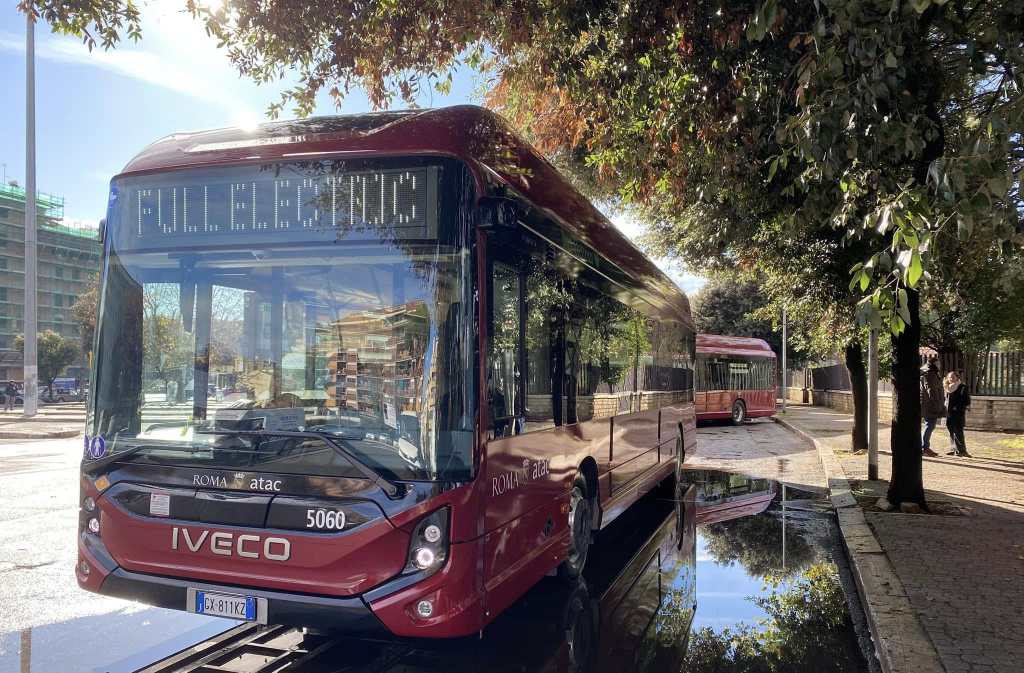
Next, the different types of available passes, their prices and the points where they can be acquired, through the ATAC company are presented.
- Simple ticket: Bit – Biglietto Integrated to Tempo. Has a cost of 1.50 euros and a validity of 100 minutes From the moment it is validated. During that period, it allows multiple trips to buses and municipal trams, but only a journey in the subway. If the person leaves the subway and wishes to enter again, you must use a new ticket.
- Rome 24h. Costs 7 euros and is valid for 24 hours since its validation. It allows unlimited use of municipal public transport, although its cost is hardly amortized.
- Rome 48h: Costs 12.50 euros and is valid for 48 hours from its validation. It can be used in all municipal means of transport, although its profitability depends on the frequency of use.
- Rome 72h: Costs 18 euros and allows you to travel for 72 consecutive hours. Like the previous ones, its value is rarely amortized.
- CIS – Settimanale integrata letter: Costs 24 euros and is valid for seven full calendar days, including the day it is validated. He is the only one that is counted for days and not for hours.
Atac offers detailed maps of its lines, stops and schedules, available in the following link: https://www.atac.roma.it/en/utility/maps
Where the tickets are bought
Tickets must be purchased Before addressing Any means of transport. There are multiple points of sale distributed throughout the city:
- Automatic machines in metro stations.
- ATAC windows and train stations.
- Tobackets, easily identifiable by a large letter T.
- Newspaper kiosks.
Types of transport in which they can be used
All tickets and fertilizers are valid in the following services:
- Rome subway: lines A, B and C, managed by Atac.
- Municipal Buses and Tram Operated by Atac.
- Regional Cotral Buses in its urban section.
- Regional trains: Roma-Lido, Roma-Viterbo (Municipal Section), Roma-Giardinetti (Atac).
- Train from Trenitaliaonly in its urban tour.
How to get to Vatican from the center of Rome
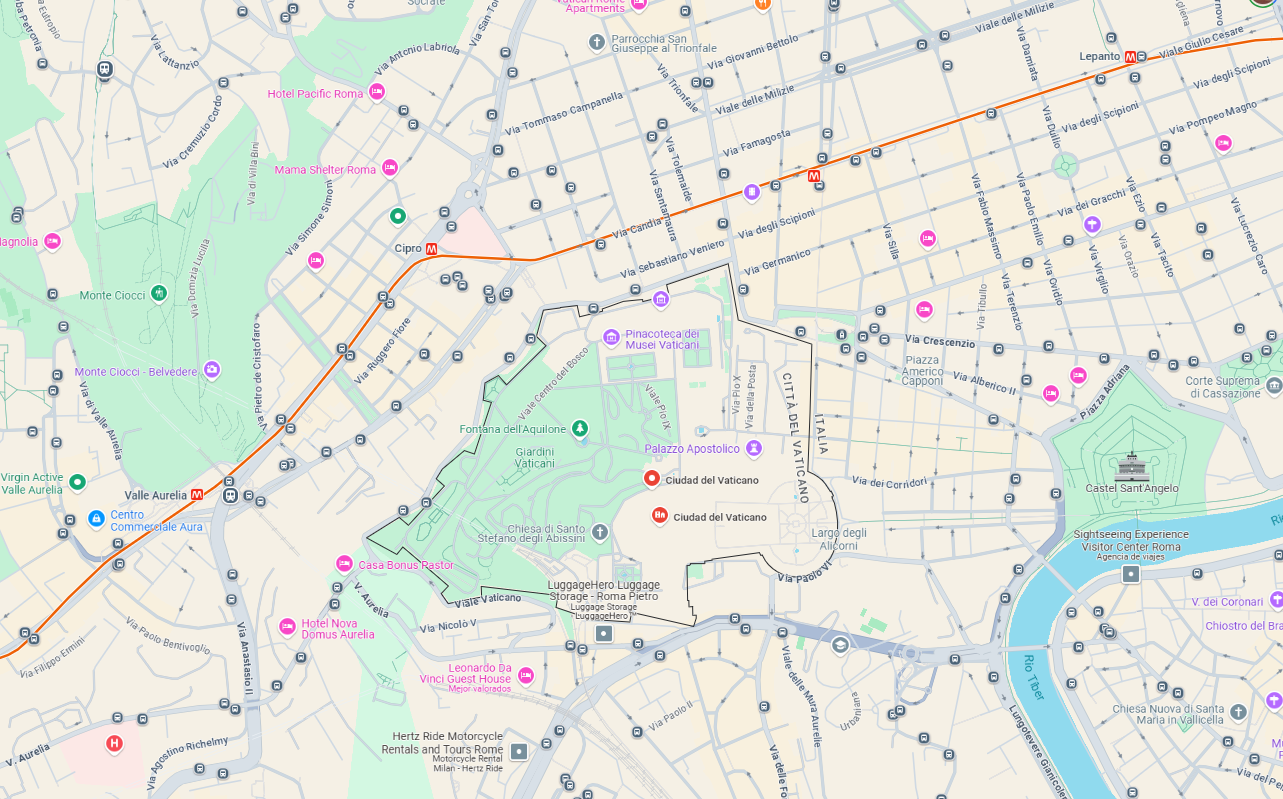
He Vaticanlocated on the shores of the Tiber River, it is a Independent city Nestled in Rome.
Since 1929, with the Lateran Treatyit was established as the headquarters of the Roman Catholic Churchand receives millions of visitors a year.
One of the fastest and most comfortable ways to reach Vatican from Rome is using the metro.
Metro Line A.
The Line a of the Roman subway easily connects with the Vatican:
- Ottavian station: It is the closer stop to the Vatican museums and San Pedro Basilicajust 5 minutes on foot.
- Cipro Station: It is also close, although Ottaviano is the most direct for tourists.
Entrance price to the Vatican
The Vatican Cityeither Holy See As it is also known, it occupies an area of just 0.49 square kilometersand only the general entrance to the city costs:
General entrance: 20 eurosjust to enter the city.
Purchase online: Available in the Official page of the Vatican Museumswith a cost of 25 euros (It allows you to queue).
Reduced entrance (7 euros): Applies to children between 7 and 18 years, as well as for priests, seminarians and religious with a card.
Bloggers and travel guides recommend booking in advance, since the ranks can take up to three hours if the ticket is bought at the scene.
It is important to take into account that, in the Interior of the Vaticanthere are spaces that do require additional payment, with prices ranging from 18 euros to combos of 119 eurosdepending on the route.
Within the Vatican there are more than One thousand 400 spaces (Chapels, galleries, rooms) that can be visited, including:
- Vatican Apostolic Library
- Art collections
Is the Basilica of San Pedro free?
Yes. The entrance to the San Pedro Basilicaconsidered the world’s largest Catholic Church, is gratuitous. However, waiting times can be an hour or moreespecially in high season.

Clothing requirements to enter the Vatican
The entrance to the sacred enclosures of the Vatican demands adequate clothing. Admission is prohibited with:
- Sleeveless clothes or miniskirts.
- Shorts above the knee.
- Hats inside religious enclosures.
- Visible objects or symbols that can offend the Moral and Catholic religion.
Personal luggage and objects
Visitors must leave in the Free wardrobe Large objects:
- Bags and suitcases of more than 40 x 35 x 15 cm.
- Large umbrellas, banners, video cameras, knives, scissors or metal tools.
Admission is not allowed with:
- Firearmslaser pointers or amplified microphones.
- Garbage or waste inside museums (designated containers should be used).