

Especially because it was he who approved the new rules on how the suffering pontiffs of Catholicism should be buried.
Francisco, whose secular name was Jorge Mario Bergoglio, was the first American Pope and the first Jesuit, singularities that he wanted to reflect in his papacy.
Since his appointment in March 2013, Francisco wanted to establish the idea of a “poor and for the poor” church, with gestures of simplicity such as not living in the private apartment of the potatoes in the Vatican but in a room in the residence of Santa Marta.
And that is also reflected in the way its burial is now organized.
In April 2024, Francisco approved the new edition of the liturgical book for the Pope’s funeral, the Ordo Exsequiarum Romani Pontificis (“Rite of the funeral of the Roman Pontiff”), in which he gave new indications about how the funerals of the chiefs of the Catholic Church should be.
The main idea, according to the document published in November 2024, is to simplify and adapt some rites to “show that the funeral of the Roman Pontiff is that of a pastor and disciple of Christ, and not that of a powerful man of this world.”
In fact, for many experts that is the main objective of the changes that Francisco approved.
“Now it is more about the funeral of a diocesan bishop than that of a Roman emperor and that was the message that Francisco wanted to leave,” Massimo Faggioli, an expert in theology of the University of Villanova, in the US, told BBC.
Three coffins to one
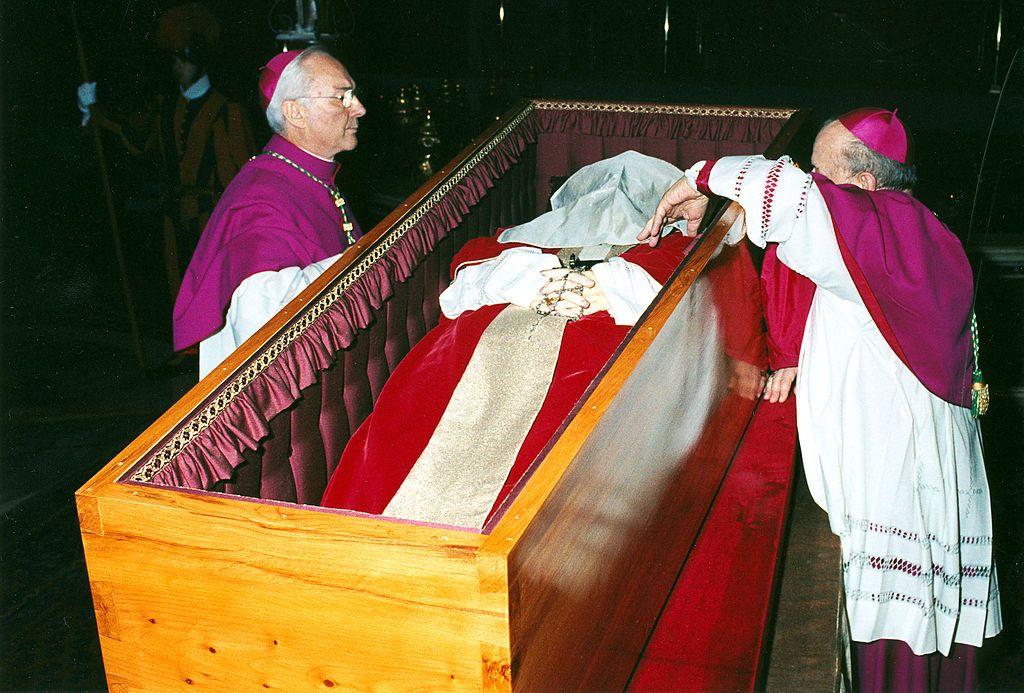
Of all the changes that Francisco promoted, perhaps the most notable is the elimination of the use of three coffins, to pass one.
Traditionally, the pontiffs were buried in three coffins: one of cypress, one of lead and one of oak, which fit each other.
The foundation to use three coffins was to create a hermetic cover around the body of the Pontiff, in addition to the symbolism of each material.
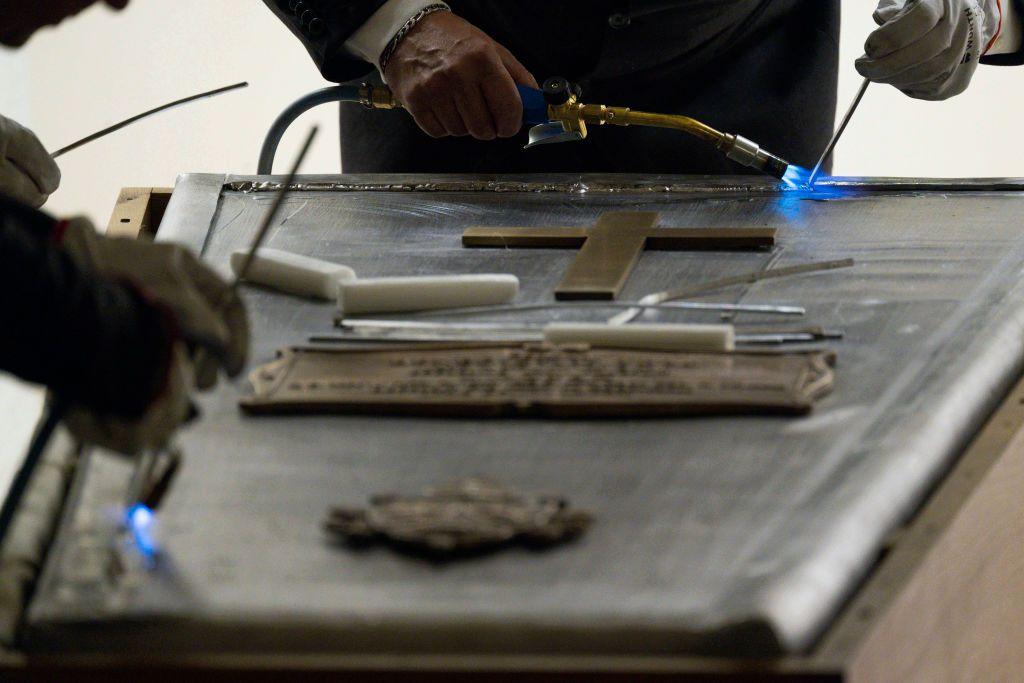
Francisco, on the other hand, will be buried in a single coffin. In your case it will be a simple wooden that will be covered with zinc.
The three stations
In addition to the coffin, other changes have to do with the process that begins immediately after papal death, which is known as the three stations.
In the first station, with the changes ordered by Francisco himself, the finding of the death of the Pope is made in a private chapel and not in his residence, as happened before.
This is because the Pope, unlike his predecessors, did not live in the private apartment of the Vatican, but in the residence of Saint Marta guests.
The finding of Francisco’s death included the rite of the three blows with a small hammer on the head of the deceased, which Cardinal Kevin Joseph Farrell, who officiates Camarlengo, the highest authority of the Vatican when the Pope dies.
Farrell had to call Francis for three times by his first name. Not answering this, said the official words: Vere Pope Mortuus est (“Truly, the Pope has died”) and the papal ring was destroyed.
In addition, the body had to be introduced immediately into the coffin.
The second station contemplates the transfer of the body to the Basilica of San Pedro, chaired by Camarlengo.
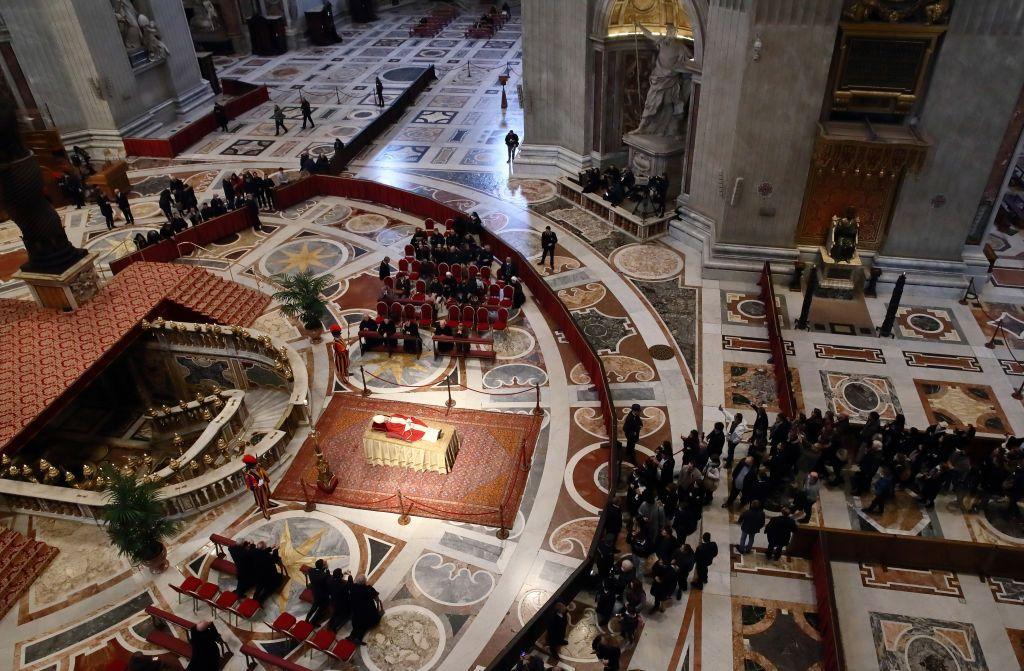
In this station the catafalco was eliminated, a high platform cover with velvet in which the body of the deceased Pope was located during exposure to the faithful in San Pedro del Vaticano.
Pope Francis’s body has been in the coffin, without his staff -this is another change -, with the naked eye of the faithful who came to give him a last goodbye. This process usually lasts three days.
Before the exequial mass, the night before, the Vatican authorities closed the coffin.
The exequial mass is the first day of the ‘novelty’, which are the masses that are held for nine consecutive days for the eternal rest of the Roman Pontiff.
Place of burial of choice
In the third station, the deceased Pope is buried.
The new edition of Ordo Exsequiarum Romani Pontificis It contemplates, in addition to the use of a single coffin, “the introduction of the necessary indications for a possible inhumation in a place other than the Vatican Basilica.”
Since the early twentieth century, all popes have been buried in the Grutas under the Basilica of San Pedro.
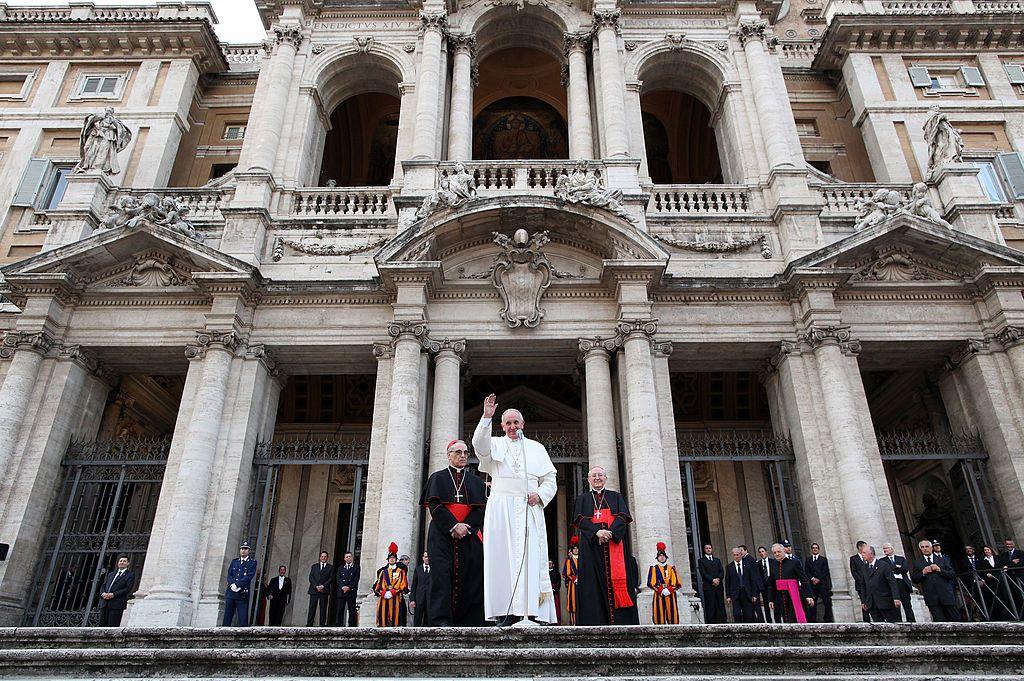
Francisco, however, decided that his place of rest is the basilica of Santa María la Mayor, located in Rome, outside the limits of the Vatican.
This place had a special meaning for the late Pontiff: before and after many of its 47 apostolic trips, Francisco prayed to the image of the Virgin known as Salus Populi Romani (“Protector of the Roman people”).
In an interview he made clear his desire: “As I always promised the Virgin, and the place is already prepared, I want to be buried in Santa María la Mayor, because it is my great devotion. Before, when I came to Rome, I always went there on Sundays in the morning.”
In his will, written in 2022 and released on April 21 by the Vatican, Francisco left some concrete instructions referring to his burial in this basilica.
“My life and my priestly and episcopal ministry have always entrusted them to the mother of our Lord, Mary Most Holy. Therefore, I ask that my mortal remains rest waiting on the day of the resurrection in the papal basilica of Santa María la Mayor,” he wrote.
“I ask that my sepulcher be prepared in the niche of the side nave between the Paulina chapel (Chapel of the Salus Populi Romani) and the sforza chapel of the aforementioned papal basilica.
“The grave must be on earth; simple, without particular decoration and with the only inscription: Franciscus,” he added.
The nine days of mourning after the Pope’s burial are maintained. After this, preparations for the conclave begin, which usually starts 15 days after the death of the pontiff.

Click here To read more BBC News World Stories.
Subscribe here To our new newsletter to receive every Friday a selection of our best content of the week.
You can also follow us in YouTube, Instagram, Tiktok, X, Facebook And in our new WhatsApp channel.
And remember that you can receive notifications in our app. Download the latest version and act.