

agricultural production
The agroclimatic March analysis warns about possible effects in seven crops due to high temperatures in 17 municipalities of the South Coast, as well as a reduction in fodder for cattle and dairy cattle.
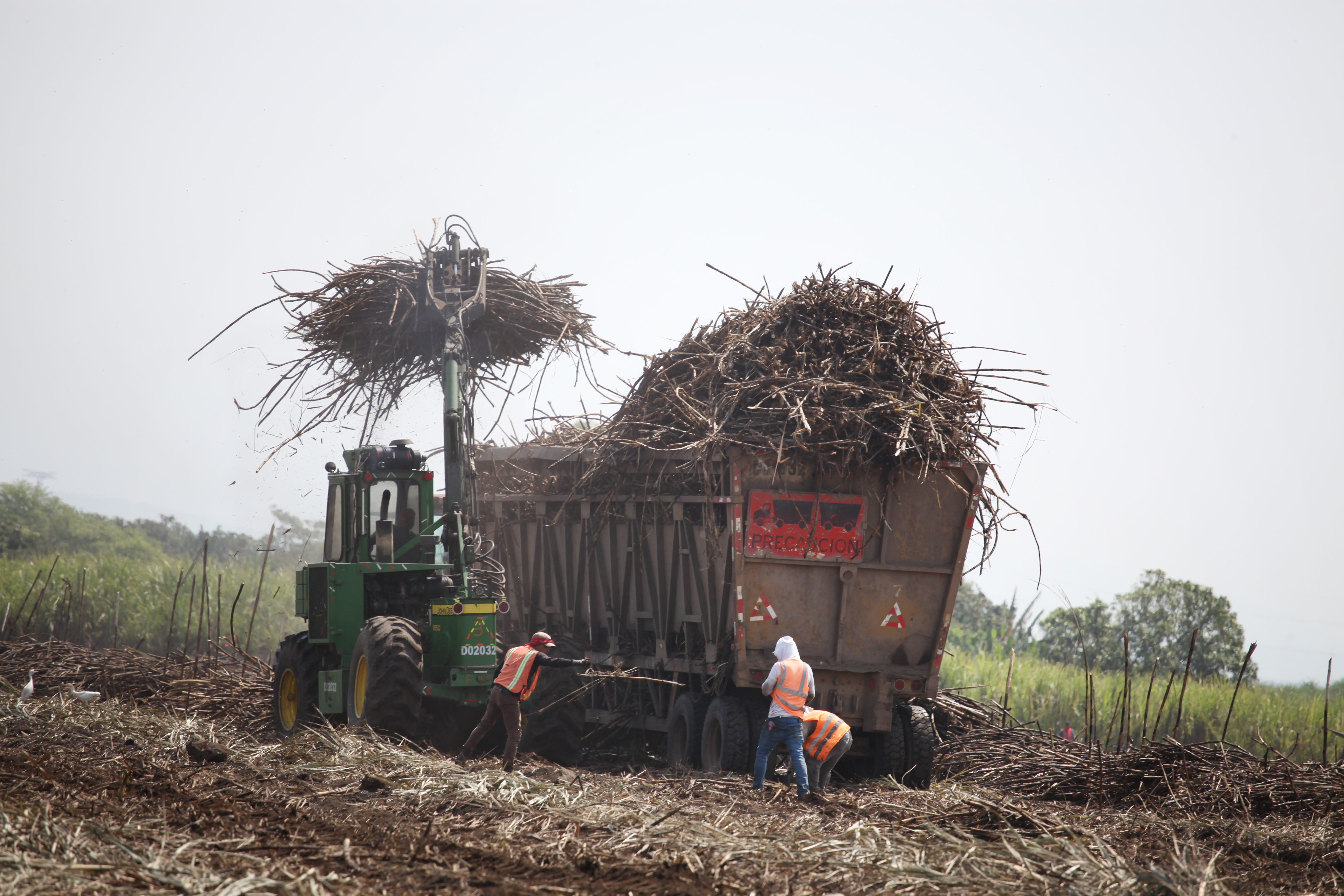
Sugarcane is one of the agricultural products with risks due to high temperatures, warns Maga’s technical report. (PHOTO FREE PRESS: PL hemeroteca)
Risks in at least seven agricultural crops and a reduction in fodder for cattle and dairy, These are some of the warnings carried out by the agroclimatic analysis for producers by high temperatures and heat spotlights especially on the southern coast.
The crop monitoring system report indicates that susceptible crop areas can change according to the variation of weather conditions. On the map, identifies the Pacific regions as San Marcos, Quetzaltenango, Retalhuleu, Suchitepéquez and Escuintla, in which the crops susceptible to damage for possible occurrence at high temperatures are shown.
The document elaborated by the Planning Department (Diplán) of the Ministry of Agriculture, Livestock and Food (MAGA) emphasizes that the possible risks are for Banano, banana, pineapple, mango, rubber, pastures and sugar cane in a coverage of 17 municipalities on the southern coast.
For example, for Escuintla the municipalities of Nueva Concepción, Masagua, Santa Lucia Cotzumalguapa, La Gomera, Democracia, Sipacate, Tiquisate and Guanagazapa are identified.
Nevertheless, Last weekend rainfall was reported on the southern coast.
The report remarks that, since risk areas may vary over time due to climatic variations, it is essential to implement adaptation and intervention measures.
Among them, they include as the use of heat -resistant varieties, crop diversification and the adaptation of agricultural practices that mitigate the effects of high temperatures, as well as the use of shade crops, efficient irrigation systems and soil conservation techniques to retain moisture.
Heat points
The report shows the recurrence of heat points in March and is based on the years 2001, 2005 and 2013, which has allowed to identify various areas in agricultural territory, with different risk scales. On this occasion The presence of heat points with low, medium, high and very high recurrence is evident, especially in the southern coast region.
Although the rainy season still does not begin, agricultural producers are recommended to plan design and structures for the collection of rainwater with easily accessible materials and supplies.
The objective is that it will be possible to support the families of farmers who have orchards or small areas of cultivation of their homes.
Main recommendations
The document lists some recommendations to agricultural producers:
- Implement drip irrigation or night irrigation systems to reduce evaporation.
- Ensure adequate rotation of crops and conservation practices to maintain fertility and water retention.
- Application of biofertilizers or growth regulators to strengthen the resistance of plants to thermal stress
- Organic fertilizer production.
- Preparation of ditch on slopes.
- Rainwater collection systems.
- Basic grain storage.