

When UNESCO enrolled the Takalik Abaj archaeological park as a world heritage, in 2023, there was an increase in visits, according to the Archéolgo of the Maycol Flores Park. However, the archaeologist himself recognizes that “what this site needs is promotion to attract tourists.” One of the opportunities to increase the influx is astronomical tourism.
According to the European Postgraduate Center, Astronomco Tourism is a segment within sustainable tourism that points to the observation of “The natural resources of space, such as stars, planets, comets, asteroids and galaxies; to promote the visit and enjoyment of astronomy fond of people. ” He adds that it can be practiced from places like Astronomy Observatories and Museums, Even in the contemplation of night sky through stellar tours and astronomical hiking. It is perceived as an opportunity for rural areas, for having a clearer sky and low population density.
In the case of Takalik Abaj, one of the monuments found in the Astronomical Observatory, the altar 46 -known as “Piecitos” -, were discovered that the footprints are oriented at the exit of the sun in the winter solstice -December 21-, which could be used for astronomical tourism.
Flores explains that a pilot plan was carried out in 2017 to be executed in the park, called “Luciérnaga Operation”, but it was not completed. The Tour proposed to begin on terrace 3 known as “Astronomical Observatory”, visit the altar 12 (structure 3) and 13 (structure 4), continue on the terrace 2 “Plaza Tukur Balam”, with structure 11 and 12.
To execute the plan that allows to offer astronomical tourism in the park, Flores indicates that they require rates approval and strengthen staff training. “The last proposal was presented to the Technical Table of the General Directorate of the Cultural Heritage of the Ministry of Culture and Sports on April 10, 2024,” says the archaeologist.
Essays were carried out to launch the plan, where they determined that for this type of tourism the groups must be small, due to the attention that is required by the guides. Flores indicates that he sought to “strengthen the training of the guides and make the Inguat known the opening of the Luciérnaga Plan for its dissemination to the tour operators and implement it.”
Kimberly de León, subregional delegate in Retalhuleu, emphasizes that “there are many things that can be done within a national park, Takalik Abaj is an important place for astronomical heritage.”
Natural and spiritual sanctuary
At present, several indigenous groups consider Takalik Abaj a sacred place and visit it to celebrate rituals. Every year around 200 ceremonies are held. Another aspect of this place is the landscape, which has tried Recreate and conserve with the aim of providing ancient ruins with their original environment.
In addition, the warm subtropical wet forest and animals have tried to rescue. “We have a shelter where we can find crocodiles, turtles, mountain cars, monkeys, we have a macaw, a royote and loose deer,” Lista Maycol Flores, archaeologist of the park.
From 2023, “we are driving to visit the park through the monuments. Then, the range is the one that is being promoted so that they come to know what is around the park and what we have protected,” says the archaeologist.
Currently, Salvadorans and Costa Ricans are the tourists who visit Takalik Abaj most, according to Rolando Schweikert, president of the Guatemalan Chamber of Tourism, who attributes that this site “is sold very well due to the relevance it has as it is heritage.”
Museum’s renovation
Rafael Martínez, president of Guatemagic, identifies that in the archaeological park one must work to recover the “El Caracol del Tiempo” museum, since it presents “problem with filtration issues at the structural level”.
De León agrees with Martínez, he considers that it is important to activate it and that the Ministry of Culture and Sports is involved in improving the museum’s infrastructure, since it is they who manage the park. “It is of interest to the tourism sector of Retalhuleu that this museum again enters into functions, because during the time it was open it was a magnet of tourists,” says León.
On April 25, 2024, the Ministry of Culture and Sports, through a statement, announced that the museum would be closed by “a fissure that causes water leaks in the slab”, a damage they indicate was not originated during the current management.
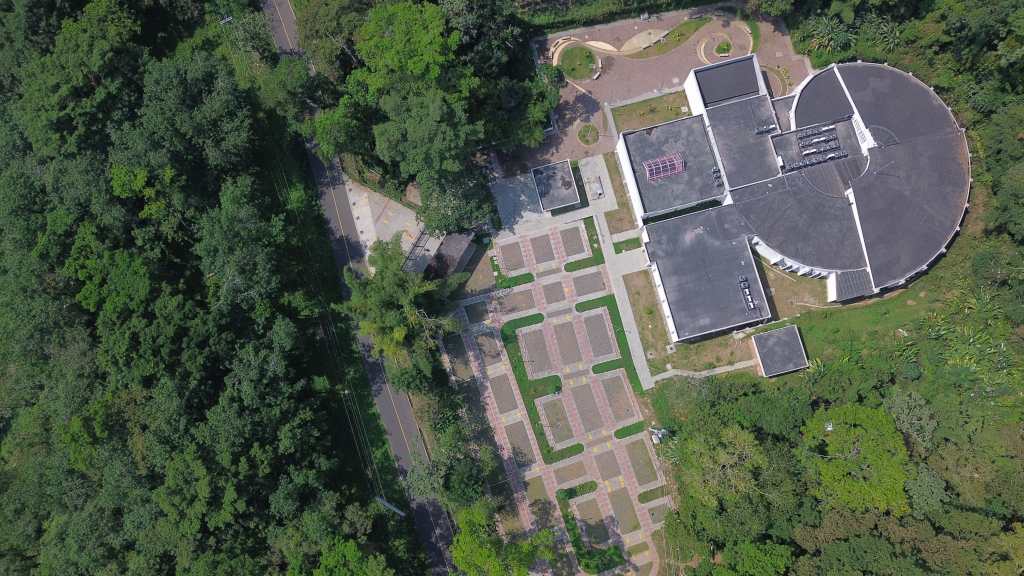
This museum has the shape of a spiral, inspired by the snail to reflect the story, unique in the pre -Hispanic cultural world, of one of the longest cities of Mesoamerica that started around 800 AC up to 900 AD
According to information from the Guatemalan Tourism Institute (Inguat), it is a complement to the archaeological park, it has eight rooms where post -classic, classic and preclassic periods are exhibited, with archaeological pieces of 2,500 years.