

Many aspects related to the twelve apostles and the circumstances that surrounded them, before, during and after their encounter with Jesus Christ, are still very unknown.
Simón Pedro; Andrés, Pedro’s brother; Santiago, son of Zebedeo; Juan, Santiago’s brother; Felipe; Bartolomé (also known as Natanael); Matthew (also known as Levi); Tomás (also known as Dídimo); Santiago, son of Alfeo; Tadeo (also known as Lebeo or Judas, son of Santiago); Simon, the Cananita (also known as Simon the Zelote); and Judas Iscariot, who later betrayed Jesus.
They are the twelve men who accompanied Jesus and who chose as his main disciples, ‘The twelve’, who are more simplified are known as: Pedro; Andrew; Santiago el Mayor; Juan; Felipe; Bartholomew; Matthew; Thomas; Santiago the youngest; Judas Tadeo; Simon and Judas Iscariot.
“Many of the facts and circumstances surrounding the twelve apostles and their lives, remain very unknown; they remain wrapped in the mystery; they have not yet been told or told badly,” says José María Zavala, journalist, historian, filmmaker and reference author of the historical dissemination in Spanish.
Member of the Royal Academy of Arts and Film Sciences of Spain, with more than 30 years of experience, Zavala, He is a specialist in the history of Christianity, and has published numerous books and directed seven films based on his own historical research, which have become reference works.
In his last book, ‘The twelve’, Zavala addresses the legends, enigmas, curiosities and life of the apostles, both before, during and after his encounter with Jesus, and reveals surprising aspects about these disciples that “beyond their roles as pillars of Christianity, they were men with human and complex stories,” as he describes them.
Zavala points out that many of the archaeological discoveries that have marked the history of Christianity are related to ‘the twelve chosen’, as also calls the apostles, highlighting that “Places such as Pedro’s tomb under the basilica of San Pedro in Rome or Pedro’s house in Capernaum, which are not only historical milestones, but also key points in the connection between faith and tangible evidence.”
There are also facets of the apostles, who have fascinated believers, historians and archaeologists for centuries, such as The Falange of Tomás preserved in Italy, the arm of Judas Tadeo venerated in Rome and the remains attributed to Santiago in the Cathedral of Compostela, All of them reflected in stories and wrapped in the mysteries, which Zavala explores in ‘The twelve’
This author dedicates in his book a chapter to each of Jesus’ chosen, and analyzes some historical enigmas about ‘The twelve’ in the light of what he has discovered in his investigations, such as those that moves Efe below.
The remains of Santiago in Compostela
Are the venerated remains in the Cathedral of Santiago (Galicia, Spain) truly those of the apostle Santiago? Zavala describes some reliable evidence of the authenticity of the compostel burial of the apostle.
“The letter of Alfonso III El Magno, King of Asturias (852-910), is a palpable evidence and a focus of light at the same time in the midst of the historical controversy that has even questioned that the tomb of the apostle Santiago is today in the compostela Cathedral,” according to Zavala.
Addressed to the clergy and the people of the former galorromano settlement of Tours, a French town located between the Cher and Loira rivers, the letter of this monarch offers key information based on “Oral testimonies and writings of great value, which help dissipate any questions about it”, assures.
“As for what you ask me,” writes the sovereign, in his epistle – what apostle is the grave that we possess, Know how it is from the apostle Santiago, Boanerges [que significa «Hijo del Trueno», como le moteja Jesús, igual que a su hermano Juan]Son of Zebedee, who was slaughtered by Herod, and that this grave is in the marmonic ark, province of Galicia. ”
“By divine disposition, as many true stories refer, his body was driven by sea in a ship here and buried. How was slaughtered in Jerusalem by Herod, transported here and buried and other circumstances, it is manifest to all and consists of letters and authentic relations of our prelates and many other testimonies,” says Alfonso III the Great in other paragraphs.
Other tests of the genuinity of the sepulcher are found in the extraordinary privileges granted by the Pontiff Romans to the Cathedral of Santiagoas well as in the donations with which the kings of Spain enrich it, from Alfonso II, III and IV, which are its true founders, to Felipe IV, who decrees the national offering to the apostle, according to Zavala.
“Similarly, the celebration of national councils and assemblies, together with the coronation of monarchs and other acts of great historical relevance registered around the venerated tomb also contribute to its undeniable authenticity,” he says.
The discovery of the tomb of San Pedro
“Pedro, the prince of the Apostles, is the best known and cited character in the Neotamentary writings after Jesus,” according to Zavala.
“It is mentioned in one hundred fifty -four occasions, with the nickname of Pétros, which means ‘stone’, ‘rock’, according to the Greek translation of the Aramaic name assigned by the Nazarene directly: Kefa. Also known for Simon in the New Testament, Pedro is cited in this way seventy -five times ”points out.
Zavala recounts how the tomb of San Pedro in the bowels of the Vatican was discovered in 1939, which included the long previous research papers and concluded with the examination of the abroad of the grave that confirmed who was buried in it.
He explains that Pope Pius XII proclaimed roughly, in a radiated Christmas message, that he had found an open Christian tomb … and empty!: The tomb of St. Peter! However, the investigation was closed, with a certain disappointment as remains have not been found. ”
This changed when Dr. Margherita Guarducci, an authority in Greek and Paleocristian epigraphy, after dedicating six years of her life to examining the graphites discovered in the adjacent walls of the tomb, managing to decipher the different inscriptions made with punch on the walls of the mausoleum.
The messages that gradually come to light were as revealing as enigmatic: “Pedro, pray for the Christians that we are buried with your body” or the resounding “Pedro is here”, According to Zavala.
Dr. Guarducci also distinguished, in inscriptions, a letter ‘P’ with several horizontal lines that symbolize the key to the kingdom of heaven, he adds.
“Together with those graphites, some mortal remains appeared that Venerate Correnti, a professor of anthropology from the University of Palermo, studied with meticulousness until concluding that some bones were human, and others corresponded to a rodent trapped in that remote place,” explains the author.
“Correnti concluded that the remains belonged to a seventy robust complexion, who had lived in the first century, and also located some remains of gold thread and a certain red Tizne that makes him think that the deceased Pedro was wrapped in a gold and purple mantle to better protect his body,” Zavala emphasizes.
The great mystery of Judas Iscariot
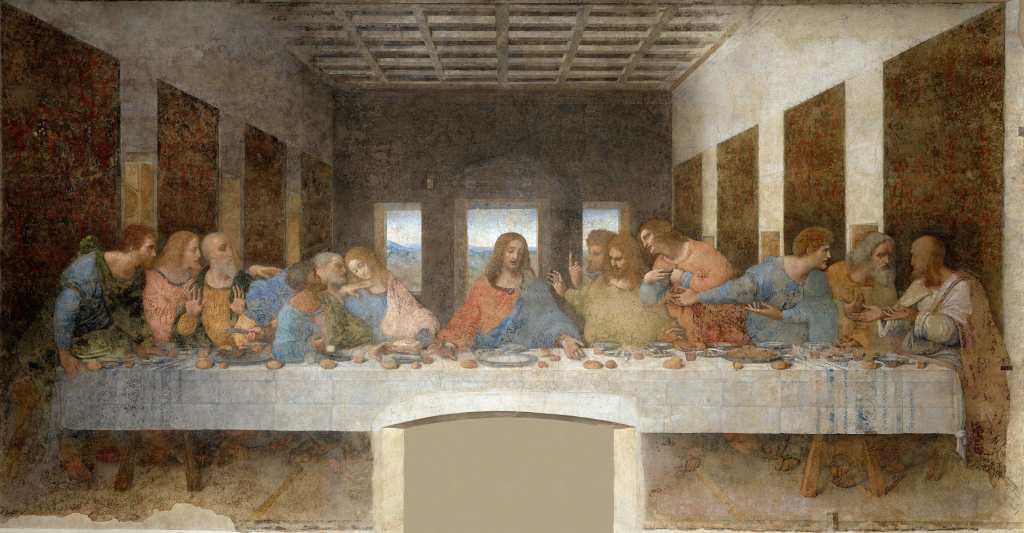
“Did Judas already bad intentions when Jesus called him? Was he depravated over time? What were the real reasons for his betrayal?” Zavala asks.
For this author, “no one equanimously and honest with the evangelical truth is in a position to ensure that Judas is already a depraved being when Jesus calls him to be part of his apostolic school.”
Zavala also argues that “the Gospel does not offer any argument to doubt that the faith and affection of Judas for Christ were at the beginning noble and worthy” and that “Jesus himself was very clear about it, by ensuring` you have not chosen me to me, but that I chose you. “
Points out that Judas did good works at the beginning. He toured the paths of the Lord along with the other eleven apostles preaching the gospel and even healing some patients and expelling demons in the name of Christ ”and that “Jesus even came to consider him at first above some of his disciples and to entrust his steward.”
Then, according to Zavala, the big question arises: how is it possible for Jesus to choose this man and confuse him from the beginning, taking into account that Jesus himself virtued a very severe judgment on him: “Oh of man for whom the Son of man will be delivered!; Better he went to that he was not born”
“In truth, his choice is an unfathomable mystery,” he concludes.