

While “Esperanza. Autobiography” was conceived to be published after his death, Francisco decided to launch it in January.
A few weeks later, he was admitted to the Gemelli Hospital in Rome by a respiratory infection that resulted in other health complications.
And this Monday, April 21, the death of the 88 -year -old pontiff was announced, after 12 years leading the Vatican.
“Esperanza” is based on more than six years of Pope Francis’s conversations with Italian journalist Carlo Musso.
There he travels the memories of his youth in Buenos Aires, he shares his reflections on issues such as migration, and gives details of his life as a potato.
“A autobiography is not our private literature, but rather our travel bag. And memory is not only what we remember, but also what surrounds us,” says Francisco in his book.
“On each page, in each step, also the book of who has walked with me, who has preceded me, who will follow us,” he adds.
These are some of the most outstanding anecdotes and reflections of “hope.”
1. The sinking of the ship
Francisco’s story begins with a wreck.
Nine years before his birth, on October 11, 1927, his father Mario José Bergoglio had bought tickets to travel by boat from Genoa to Buenos Aires with his parents.
But that day neither Mario nor his family got on the boat.
They had not managed to sell the furniture of the house they would leave to live in another country. Therefore, the Bergoglio family chose to return the tickets and delay their departure to Argentina.
A few days later, while the Bergoglio family still remained in Italy, the huge Mafalda Principessa ship was hit by a ray while crossing the Atlantic and the accident ended in the sinking of the boat.
The tragedy left at least 300 dead people, according to the Pope’s autobiography.
“That’s why I’m here now,” Francisco reflects.
Two years later, his father arrived in Buenos Aires, where he was registered as “overseas immigrant.”
“It is not a new story, it is yesterday as much as today,” says Francisco in his book about the reasons that, both in early 1900 and now, lead thousands of people to abandon their countries in search of better living conditions.
Therefore, after many years, on his first trip as a pontiff out of the Vatican, Francisco traveled to Lampedusa, the Mediterranean island converted into a symbol of migrations.
In his opinion, “it is urgent to adopt measures to guarantee the right to emigration.”
2. The extra ballot
Francisco did not expect in 2013 to be chosen the maximum spiritual leader of the Catholic Church.
At most, I believed that as a Latin American cardinal could guide some of the votes among the names of the possible successors that circulated in those days.
“To say that I was not waiting for anything similar, never in life, much less at the beginning of that conclave, it is certainly little to say,” he says.
Anyway, seen in retrospect, the previous movements within the Vatican could suggest what would finally happen.
At the previous meeting, the Argentine was caught the applause he had received after pronouncing a brief improvised speech.
“Well, you need a person who does those things,” one of the cardinals told him when he finished hearing it.
–Yes, but where do you find it? – Bergoglio replied.
–In you.
-Ha ha ha! Already, of course, very well, give it, see you later.
The future Pope took that comment like a joke.
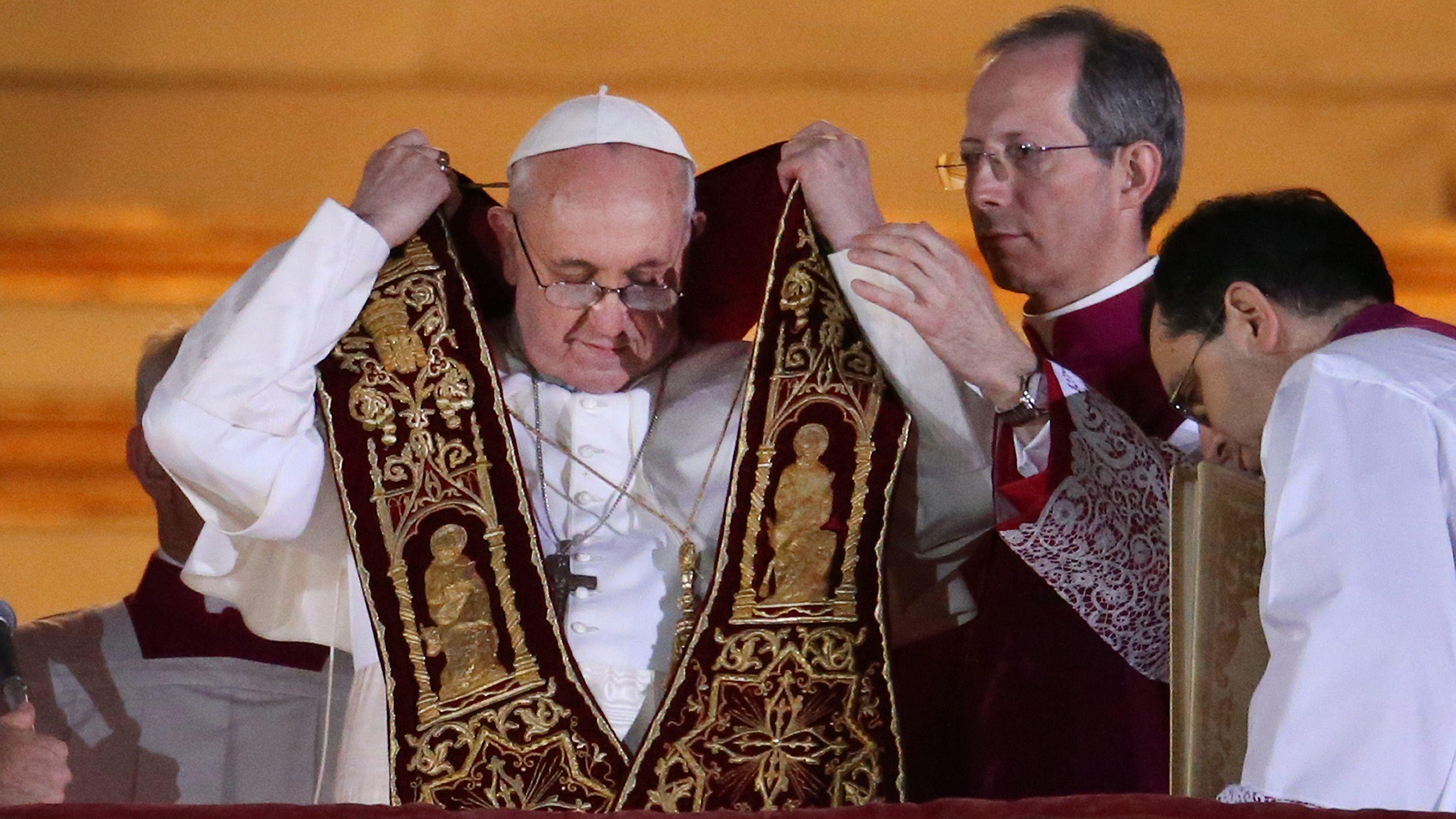
On March 12, 2013, the conclave began.
Bergoglio arrived in Santa Marta with a suitcase in which he wore two robes and little else. The rest of his things left them in Buenos Aires, which he did not return after being elected Pope.
The first night of the conclave ended without consensus.
The next morning, on March 13, a second and third vote took place with little success, where none of the candidates got the majority of 77 on 115 votes that was needed.
In the middle of the break towards a fifth vote, a Latin American cardinal told Bergoglio:
– Have you prepared the speech? Prepare it well.
– What speech are you talking to me? Asked Bergoglio.
– The one you have to pronounce from the balcony! – The Cardinal replied in reference to the first speech of the new Pope.
“Is it another joke?” Bergoglio asked himself, who didn’t understand what was happening.
In the fourth vote, the Argentine won 69 votes. But he did not reach.
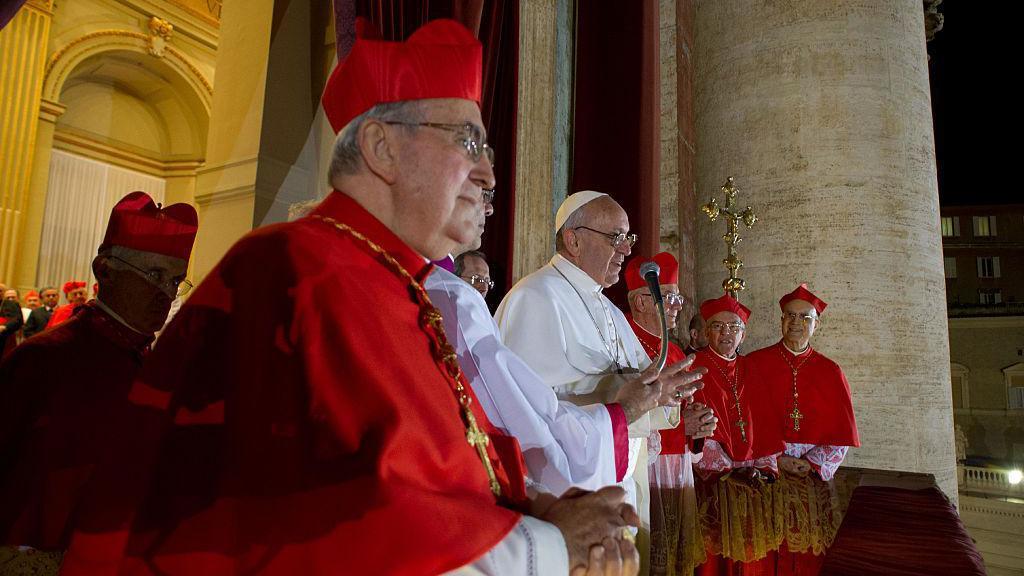
The fifth vote unleashed an unexpected problem: there was an more ballot. Someone had glued two cartons, so they had to burn them all and repeat the process.
It was in that second round of the fifth vote that the last name Bergoglio was heard more than 77 times.
“I ignore how many votes were exactly at the end, I no longer listened, the noise overlaps the voice of the scrutador,” says Francisco.
– Does the canonical choice of the Supreme Pontiff accept? – Cardinal Re.
“Act,” Bergoglio replied.
Twelve years later he acknowledges: “I felt alone, calm.”
Then, the white smoke cartridges loaded, which rose through the chimney of the Sistine Chapel when it began to dusk.
3. The white box
Bergoglio’s choice came after the resignation of Pope Benedict XVI, the first Pontiff in almost 600 years to retire from office due to his health problems.
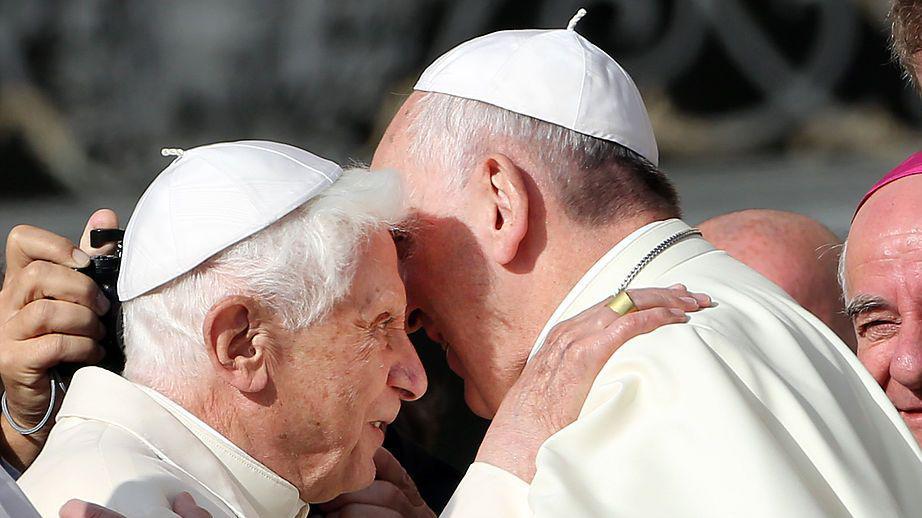
Wrapped in that almost unprecedented situation, Francisco was able to talk with his predecessor who, at the beginning of his pontificate, gave him a “great white box.”
“Here is everything. The acts with the most difficult and painful situations, the abuses, the cases of corruption, the dark passages, the misdeeds,” says Francisco that Benedict told him, who died in December 2022.
“I have arrived here, I have taken these measures, I have separated these people. Now it’s your turn,” Benedict added, according to Francisco.
In the book, the Pope defines his predecessor as “a father and a brother” with whom he always had an “authentic and deep relationship, beyond all legend built by whom he has determined to tell the opposite.”
Beyond these and other general comments, nowhere in the book Francisco specifies the content of the box or talks about a particular case.
For example, he says that the reform of the Roman curia and its discussions with the most traditionalist wing of the Catholic Church was “the most arduous and the one that for longer had more resistance to change.”
Or explain about the economic administration of the Vatican that “to leave the curse of the It has always done like this It was not easy, but now it is finally on the right track. ”
The mention was relevant because, although in 2013 reports had been published on the existence of these documents, this was the first time that Francisco referred to the issue.
4. The double attack
The world had not left the pandemic when Francisco traveled to Iraq.
In a historic visit, the Pope went to the city of Nayaf, considered the historic and spiritual center of Chií Islam, to meet the Ayatolá Ali al Sistani.
The Holy See had been preparing the meeting for years, considered a milestone on the path of interreligious dialogue.
But the risks linked to the security of the Pope, amid the violence unleashed between Shiite and Sunni Muslims, were according to the Vatican very high.
“Almost everyone advised me that trip, which was going to be the first of a Pope to that country in the Middle East region devastated by extremist violence and jihadist desecrations,” says Francisco in his autobiography.
“But I wanted to get to the end. I felt I should do it,” he adds.
The Christian population in Iraq is calculated less than 250,000, a loud fall from the 1.4 million prior to the invasion of the United States in 2003, according to a 2019 report of the State Department.
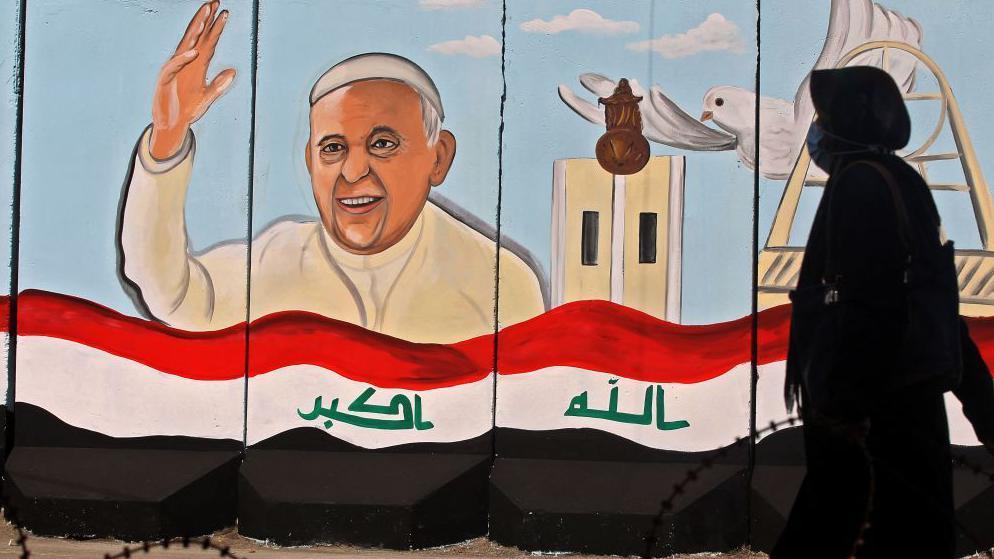
When landing in Baghdad, the Vatican Gendarmerie informed Francisco that the United Kingdom’s secret services had deactivated two attempts of suicidal attack against his person.
One was from a woman with explosives who headed to Mosul to immolate during the papal visit. The other was a truck that had come out at full speed with the intention of exploiting along the way.
Francisco then asked how they had dismantled both threats.
“The commander replied laconically: ‘They no longer exist,” Francisco says. “The Iraqi police had intercepted and exploded.”
“That also shocked me. It was another poisoned fruit of war,” he says.
5. The relationship with Borges
Francisco recalls in his autobiography the time he met the Argentine writer Jorge Luis Borges.
At that time, Bergoglio was 27 years old and was a professor of literature and psychology at the College of the Immaculate Conception of the province of Santa Fe, in center of Argentina, where he issued a creative writing course.
Borges’ secretary had been a piano teacher from Bergoglio, so the latter decided to send her two stories written by her students.
At that time Bergoglio was nothing more than a religious and Borges was already among the most recognized Latin American writers of the twentieth century.
Borges not only liked, but suggested that they publish them in the form of a book and offered to write the prologue: “This prologue is not only of this book, but of each of the still indefinite possible series of works that the young people congregated here can, in the future, write,” according to Bergoglio.
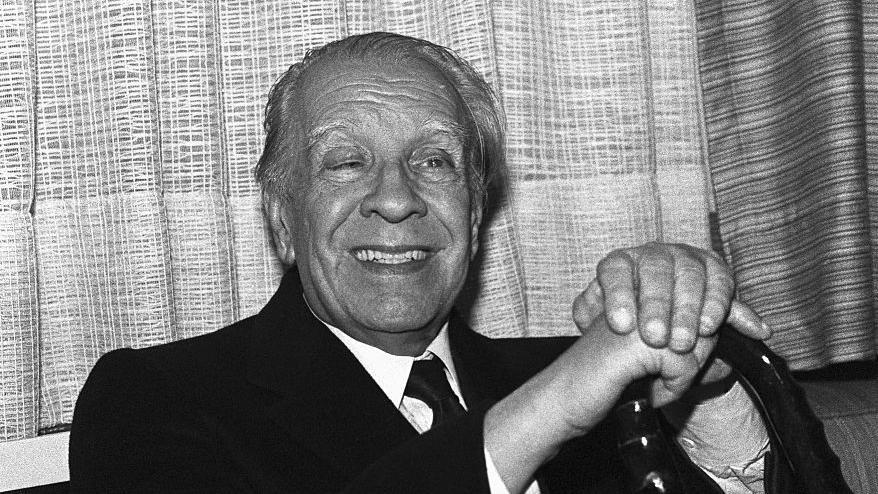
Then he invited him to give classes about what in Argentina is known as “gaucho literature.”
“And he accepted; he could talk about anything, and he never gave air. With 66 he got on a bus and made an eight -hour trip, from Buenos Aires to Santa Fe,” says the Pope, who identifies himself as a lover of reading and a passionate about teaching.
“On one of those occasions we arrived late because, when I went to look for him to the hotel, he asked me to help him shave,” he says.
“[Borges] It was an agnostic that a Our Father prayed every night because he had promised his mother, and before he died he received the sacraments, ”says Francisco from the writer who died in 1986.
And he adds: “I admired and estimated Borges a lot, I was impressed by the seriousness and dignity with which existence lived. He was a very wise and very deep man.”

Click here To read more BBC News World Stories.
Subscribe here To our new newsletter to receive every Friday a selection of our best content of the week.
You can also follow us in YouTube, Instagram, Tiktok, X, Facebook and in our WhatsApp channel.
And remember that you can receive notifications in our app. Download the latest version and act.