

Health and family
Little is all that we can give mom in her day, that she approaches, but what better than entertaining her with an exquisite dessert prepared at home with much love.
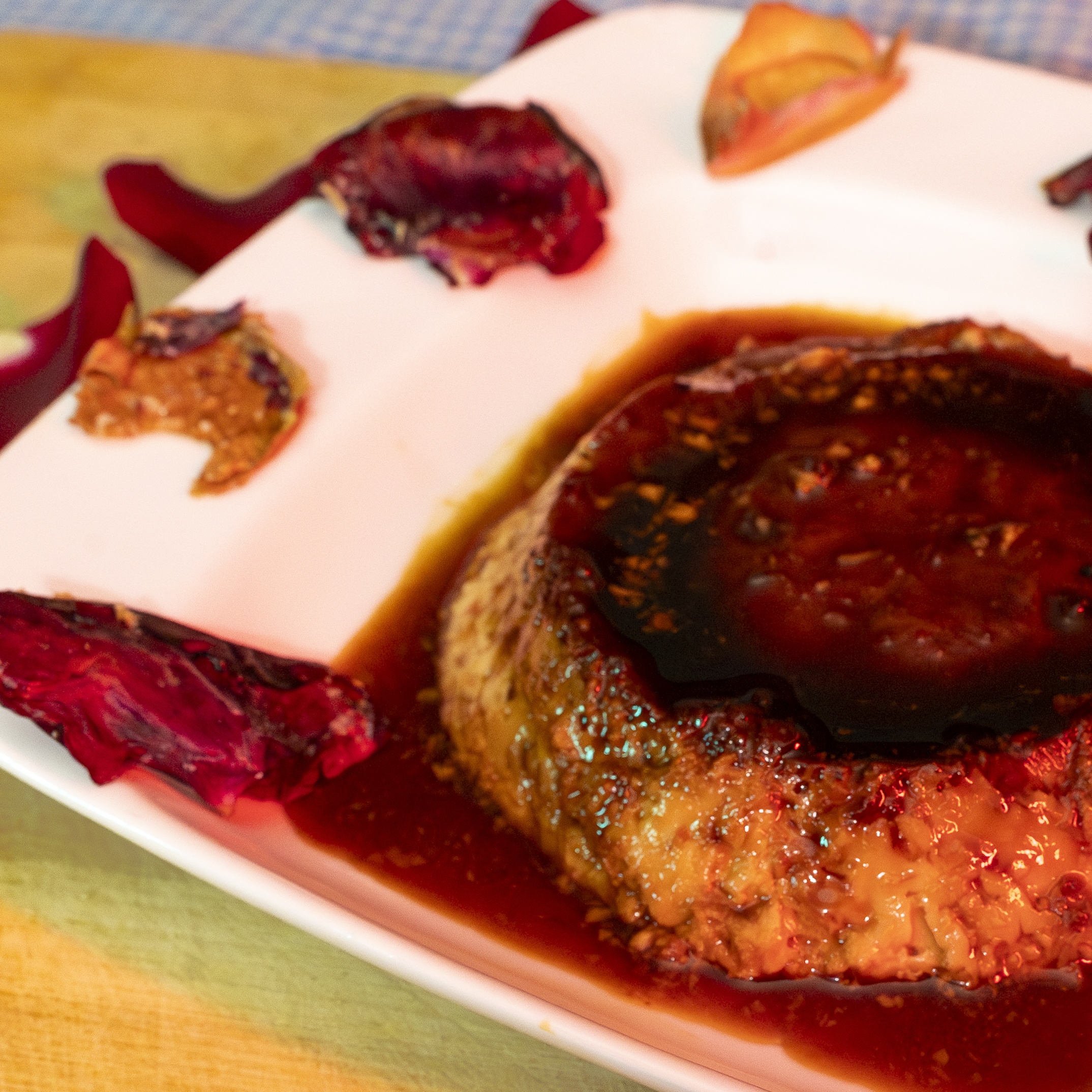
Flan with infusion of Coffee from Atitlán, with rose petal crockers, a recipe prepared by chef Pablo Pacheco. (Free press photo, courtesy of Gerson Sosof)
Chef Pablo Pacheco Soto proposes the fine Delite Flan with infusion of Coffee from Atitlán with crochers from Petalos de Rosas, a unique flavors bouquet.
Ingredients
3 eggs
80 grams of cream cheese
80 grams of condensed milk
80 grams of evaporated milk
4 ounces of whipping cream
100 grams of sugar
60 grams of coffee from Atitlán
3 tablespoons of vanilla essence
For crisks
10 edible rose petals
1 egg white
Sugar, necessary quantity
Preparation
- Correctly weigh the flan ingredients and liquefy them for about four minutes.
- Prepare a coffee essence, with the help of French or coffee press. Atitlán Café is recommended (Bourbon), of medium and ground tags.
- Add the essence of coffee to the flan mixture, little by little.
- In a pan cook the sugar over medium heat, until it begins to melt. Add this candy to flan molds and, on this, the flan mixture.
- Place the molds on a maria bath tray and cover them with aluminum foil. Bake at 200 degrees Celsius for an hour. Introducing a stick into the center of the flan and if it comes out dry, it means that it is at its point. When they are cold, refrigerate, at least, for eight hours.
- For the rose petal crockery, defoliate this flower and apply the clear with a brush. Then, sprinkle half a tablespoon of sugar. Bake them for 12 minutes to 50 degrees Celsius. Reserve.
- For assembly, gently cut the edges of the flan to be able to get it. Place it on a deep dish so that the essence of coffee essence stands out. Decorate with rose petals. Master it with a good coffee or sparkling wine.
Related readings


Related readings

Star ingredient
Arabic coffee (Coffea Arabica) It is a native and millenary bush of Ethiopia, possibly, which originated in the province of Kaffa. It is documented that in Yemén there were coffee plantations in the fifteenth century and great trade of the grain. Its cultivation has great economic importance for Colombia, Mexico, Costa Rica, Guatemala and Brazil, countries that are the main world producers of this grain.
It is commonly used in the kitchen to prepare drinks and desserts, but is also used to make natural exfoliants and aromatic candles.
To the coffee You are attributed diuretic and stimulating properties of the central nervous system, increases gastric activity and intestinal movements. Is rich in antioxidant polyphenols Like coffee or kahweol. Increase sports performance and improve cognitive capacity. Excessive doses can cause palpitations, anxiety, migraine, irregular sleep and cardiac imbalances.
Subscriber content
Chef profile
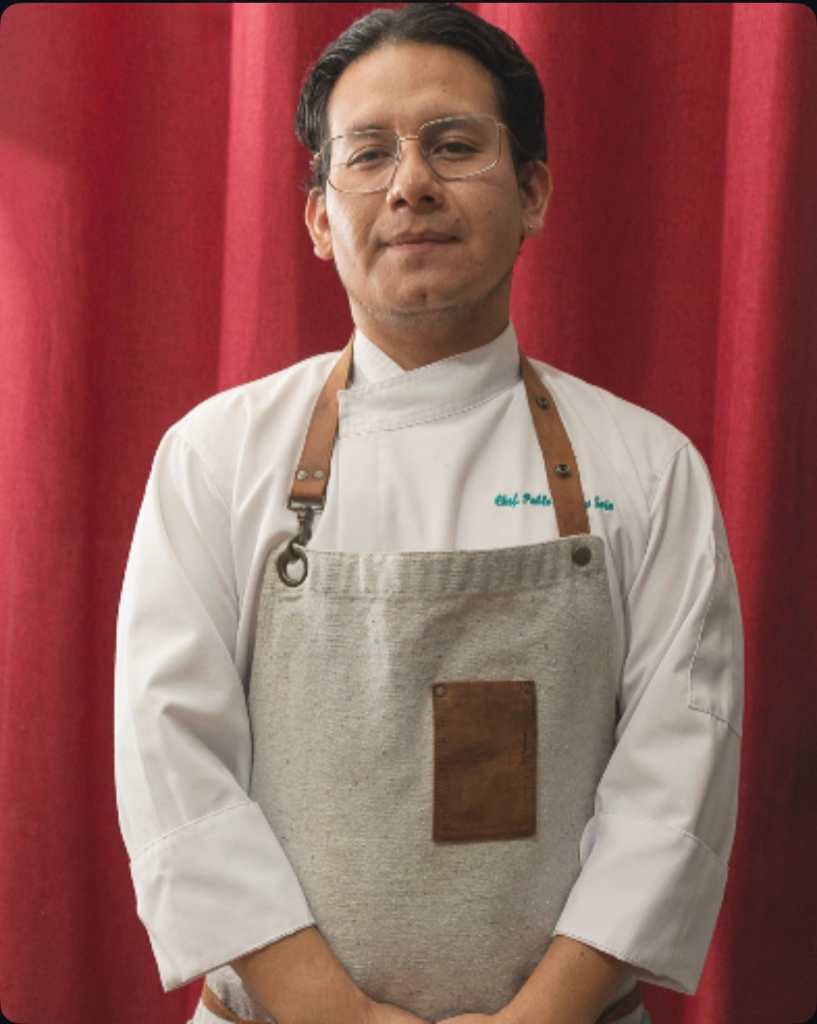
- Pablo Pacheco Soto is originally from Santiago Atitlán, Sololá.
- He studied Gastronomy in Intecap de Sololá, and two more years, at the Private Technological Institute of the West, in Quetzaltenango.
- It specializes in Mexican, Guatemalan and American gastronomy, as well as bakery and pastry.
- He passed the IRTRA hostel Mexico Guide.
- He studied pastry in the Kitchen Study Deseret SA, in Quetzaltenango, to perfect and innovate his knowledge.
- He founded his pastry and bakery Los Olivos, in Santiago Atitlán, Sololá.
- He returned to the country recently, after a work stay in Mexico, for 10 months, and in El Salvador, for four months.
- Soon will open its restaurant and coffee called Prague, in Santiago Atitlán, Sololá.