

Health and family
Chaya is a millenary superfood that grows in Petén and is recognized for being low cost and maintenance, and easy access, in addition to providing many health benefits.
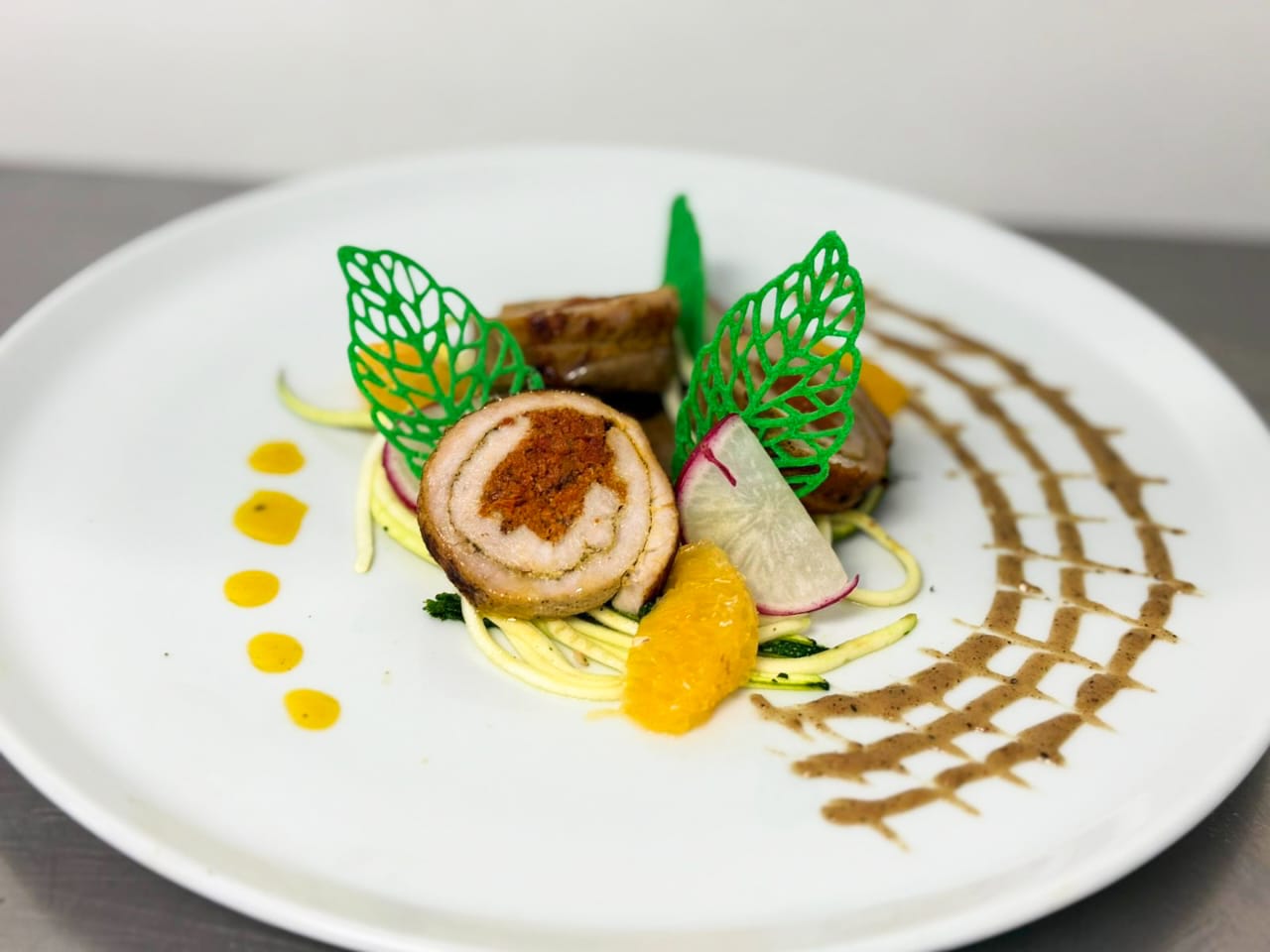
Chicken breast in chaya sauce, recipe prepared by chef Vivian Pérez. (Free press photo, courtesy of Vivian Pérez).
This ingredient is the one that stands out on the breast dish in chaya sauce, stuffed with Tziquinché fungus, also a petenero product, prepared by chef Vivian Pérez.
Ingredients
180 grams of chicken breast
For filling:
50 grams of tziquinché fungus
15 grams of petenero chives
15 grams of habanero chili
15 grams of canola oil
For the marination:
5 grams of mustard
5 ml of soy sauce
Salt and pepper to taste
For sauce:
10 grams of chaya
250 ml of milk
3 grams of nutmeg
10 grams of flour
10 grams of butter
Preparation
| 1. Cut the breast and marinate with soy sauce, mustard, salt and pepper. |
| 2. Open a hole in the thickest part, to introduce the filling. Reserve. |
| 3. Save in a pan, with oil, chives, tziquinché fungus and habanero Chile. |
| 4. Fill the chicken with the sauteed, and seal in the pan. |
| 5. Cook it covered until it is completely cooked. Reserve. |
| 6. For the sauce, place in a butter pan, then, flour and mix well. Add the milk in the form of a thread. |
| 7. Beat with a fuel until thickens. Liquefy the chaya, already cooked, and add it to the sauce. Season with salt, pepper and nutmeg. |
| 7. Pour a little sauce on the plate. Place on this, sliced breast and decorate with more sauce. Accompany with favorite vegetables.
Also read: To the rescue of native herbs |
Star ingredient
| The Chaya (Cnidoscolus aconitifolius), also known as “Mayan spinach”, is a native tree of Mesoamerica, and constituted an important element in the diet of the ancient Maya. This species is greener and wilder and itchs a bit, while the chayamansa cnidoscolus, is not spicy and is more common. Produces leaves all year. It has high content of protein, potassium, calcium, iron, vitamin A and C. A portion of chaya can contain the same amount of protein as an egg and more calcium than other vegetables. The recommended amount is two to six leaves per day, liquefied in soups or salads, after being cooked.
Medicinal properties are also attributed in cases of diabetes, obesity, renal calculations, eye problems, arthritis, back pain and high levels of bad cholesterol. It should be avoided consuming raw leaves, since it contains a toxic substance similar to cyanide (cyanhydric acid) that can be dangerous to health. It is necessary to cook it 5 to 15 minutes, since the inactive cooking said toxic substance. Also read: Slow food is a good, fair and clean kitchen |
Chef profile

- Vivian Pérez is an instructor of Intecap. He graduated from the headquarters in Petén as a professional cook and has an international chef certification.
- He has studies in Tourism and Hospitality Business Administration, by the Galileo University, and in hospitality companies, for the IFES.
- He was awarded a study scholarship for a diploma in hotel, gastronomy and catering, in Taiwan, in 2019.
- He obtained a diploma in food and food technology, in Mexico, and attended a avant -garde gastronomy course, in Barcelona, Spain.
- He has won prizes as a silver medal in National Word Skills and bronze medal in Junior Chef Guatemala, and acknowledgments at the Gastronomic Festival.
- He obtained gold medal in international Olympics, in Chile, in 2024.