
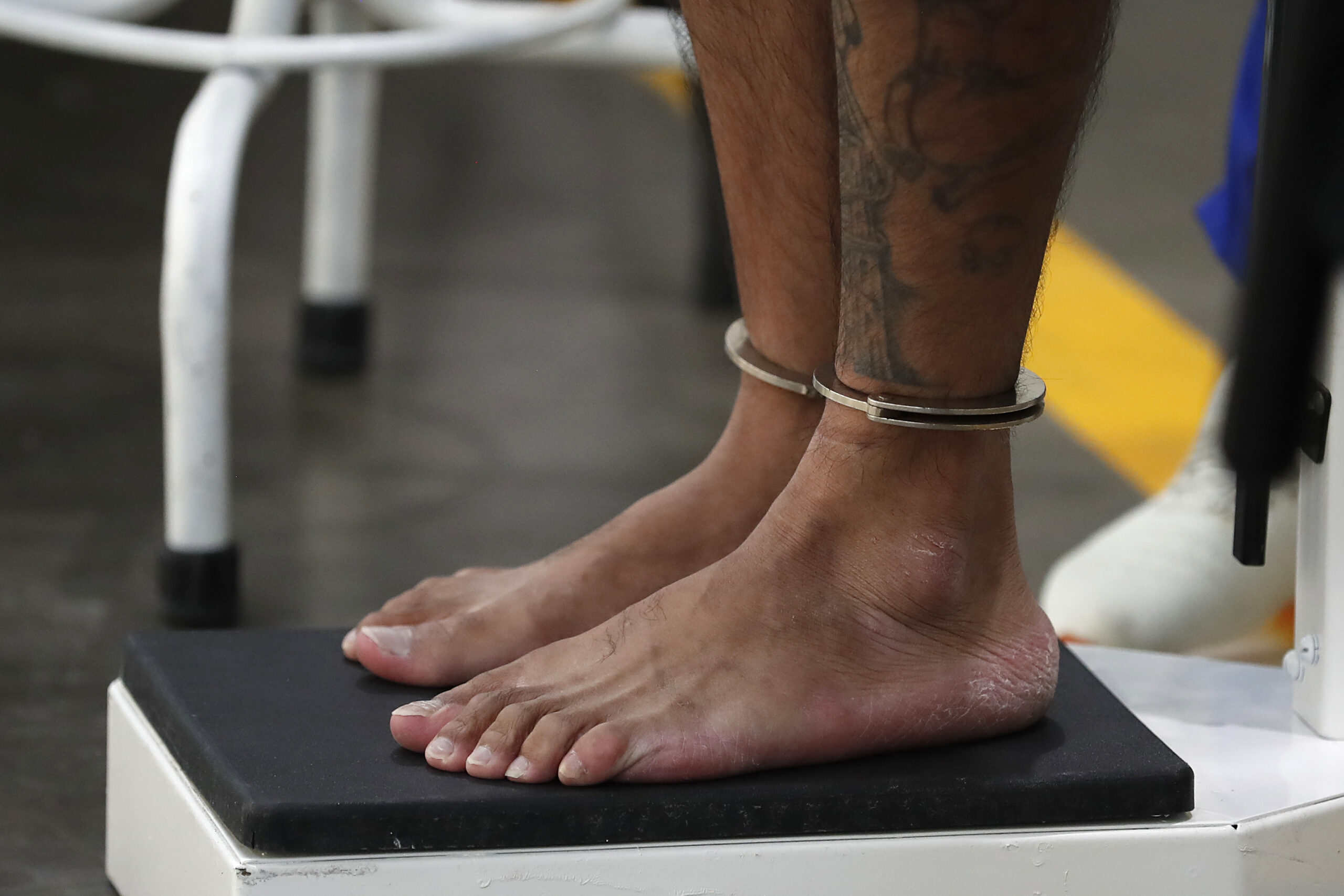
The number of people who died in prisons El Salvador after being detained under the exception regime amounted to at least 512as reported this Friday by the non-governmental organization Humanitarian Legal Relief (SJH).
The entity indicated, through social network X, that the two most recent cases correspond to inmates from the Izalco and Mariona prisons. The SJH, created in the context of this measure, provides free legal advice to relatives of detained people.
#URGENT
The total number of confirmed fatalities during the measure rises to 512 #RegimeOfException. The last two deaths come from the IZALCO AND MARIONA penal centers.
It is still the defendants in those places who place the dead, at least the visible ones,… pic.twitter.com/Auij8qrRoK— Humanitarian Legal Aid (@SJHumanitario) April 3, 2026
According to the organization, the deaths are mainly concentrated in prisons that house the majority of more than 90,000 detained under this regime, many of whom do not have a judicial conviction. Furthermore, he pointed out that there is little official information about what is happening in the Confinement Center against Terrorism (Cecot), one of the emblematic prisons of the Salvadoran Government.

The SJH stated that the 94% of the deceased did not have a gang profile and warned that the real number of deaths in state custody could exceed estimates 2,000 peoplealthough these data have not been confirmed by official sources.
A report released by the organization at the end of January indicates that the physical violence leads the causes of death in prisons, representing nearly 32% of cases. Likewise, a 31.6% of the deaths would be related to the lack of medical careaccording to versions collected from relatives, due to the reservation of official information.
He exception regime It was implemented in March 2022 after an escalation of violence attributed to gangs, which left more than 80 people murdered in one weekend. Since then, it has been continuously extended with the support of the Legislative Assembly, dominated by the ruling New Ideas party.
The president Nayib Bukele has defended the measure as a key tool to reduce crime in the country. However, humanitarian organizations have pointed out possible abuses.
Until March of this year, different entities register at least 6,889 complaints of human rights violationsof which the 98% correspond to arbitrary arrests and the 75% point to the responsibility of police officers.
For Guatemala, a country that also faces challenges in terms of security and the penitentiary system, the Salvadoran case remains a regional reference in the debate on tough policies and respect for human rights.