
At least three relevant events mark the week that has just ended and will define the one that has just begun. Relevant fact 1: the notorious and relevant attitude of the judges of the Supreme Electoral Tribunal (TSE) who – a few days after inaugurating their term – have put limits on the arrogance of the prosecutors who are still trying to annul the result of the presidential and legislative elections, only in the case of Semilla.
The exchange of notes is important, because the magistrates have made it clear that their positions entail dignity that should not be undermined by blunt requests without judicial support.
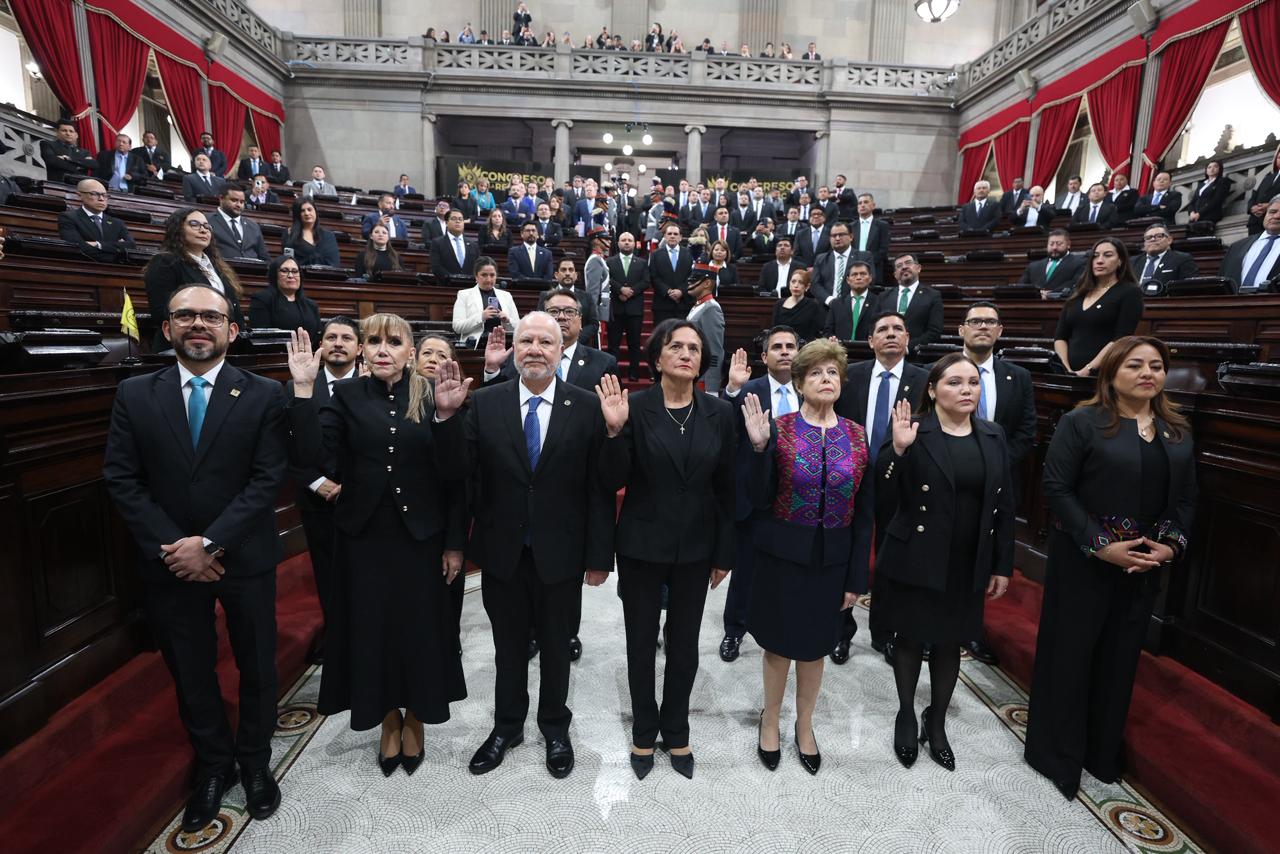
Relevant fact 2: the TSE occurs when, in addition, we are one day away from the start of a new period in the Constitutional Court (CC); which will be a milestone if the regular and alternate judges manage to take office without last-minute actions preventing the change.
Let us not forget that there are still intentions in the Public Ministry (MP) to annul the designation of magistrates by the Bar Association and affect its president, Patricia Gámez, also with the intention of hitting the nomination process of candidates for attorney general of the Republic. Furthermore, some actions against the illegitimate integration of the Higher University Council and the appointment of magistrates still revolve around the CC.
Therefore, the change in the CC will be a key event because it is expected that, in this new period, the magistrates will recover the lost democratic spaces and that constitutional control will return to the central route that marks the Constitution: not being a weapon that represses and nullifies rights and freedoms, instead of guaranteeing them.
This April 14, then, entails numerous expectations, with a first section that will be guided by the jurist Gladys Annabella Morfín Mancilla. The CC, the TSE and the MP with different management will be able to stop the excesses, injustices and lack of honesty that have reigned for years, largely at the will of deputies, judges, magistrates, prosecutors, traditional business groups, powerful State contractors, financiers and political and union operators with the darkest and spurious intentions.
Relevant fact 3: the nomination process for candidates for attorney general 2026-2030 is coming to an end. The interview phase has already been exhausted, which is usually very revealing regarding the tastes of those who make up the commission. There are commissioners and candidates who have spoken and this is evident when they ask complacent questions. There are also some who look for controversial sides or create them, to throw questions to make the interviewee look bad.
The fact is that, unlike other occasions, in this process the interviews allowed us to see more clearly, for example, a complacent attitude towards candidates like Julio Rivera Clavería, even with poorly articulated questions (there were commissioners who got tangled with simple things); There was a certain disdain for some candidates and there was no shortage of questions with which they cast doubt on the independence that candidates linked to the government (Marco Villeda and Julio Saavedra) will have.
Both candidates still do not have enough votes to be on the payroll, there is not even certainty if they will have the required qualification to be eligible. But both were forceful in putting on the table their track record in matters of ethics, objectivity, independence and loyalty to the rule of law.
So, for the MP this week is the final and it is key. By Thursday, April 16, the 48 applicants who are still in the process will have to be evaluated; there will be a list with the grades obtained, from the highest to the lowest.
On Friday the 17th, the vote will take place to integrate the list of six candidates and, before the vote, the commissioners must remember the issue of blemishes to refer to the honorability of those who manage to appear in the final vote. After that, if there are no setbacks, the final decision will be in the hands of President Bernardo Arévalo.