
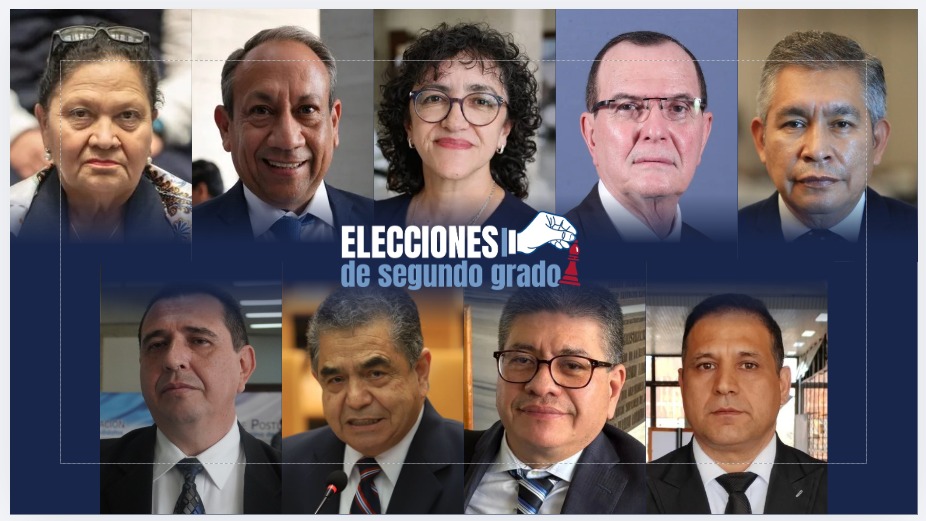
The Nomination Commission concluded the qualification phase for candidates for attorney general of the Public Ministry after a day that extended until dawn this Saturday, leaving defined the nine candidates who managed to move forward in the process. The integration of the final payroll was rescheduled for Monday April 20.
Although the evaluation phase has already closed, the process continues, since only nine candidates exceeded 75 points established as a minimum grade, when at least 12 profiles were required to make up the list of six candidates. Given this scenario, the commission is forced to rethink the criteria and adjust the cut-off line to complete the payroll.
The candidate had planned to conclude the selection of the payroll this Friday, April 17, however, the setbacks registered during the evaluations caused changes in the schedule, now setting the final integration for Monday, April 20
The final list will be sent to President Bernardo Arévalo, who will have the final decision on the next head of the Public Ministry, who must take office on May 16, 2026.
To form the final list, each candidate must have at least 10 votes from the 15 members of the nomination committee.
long day
The evaluation process was marked by prolonged sessions, review of files and discussions between commissioners that even delayed the planned vote, while the evaluation criteria were refined to close the final list of candidates.
The vote scheduled for Friday was delayed due to the debate generated around the file of the Minister of the Interior, Marco Antonio Villedawho obtained a score of 41.86 points.
The discussion focused on inconsistencies in the accreditation of his professional practice, since initially he did not appear with a current registration as a lawyer before the Supreme Court of Justice, which led to the assignment of zero points in that area, a situation that was later subject to review when documentation was incorporated about his career as a judge, which opened the debate between the commissioners and kept the session open for several hours.
In the development of the process, the actions of a group considered “dominant” within the commission, whose recent decisions influenced the evaluation of Villeda, whose low rating left him out of the race.
This block is made up of the president of the Supreme Court of Justice (CSJ) and the commission, Claudia Paredes, and Alicia Franco, president of the Court of Honor of the College of Lawyers and Notaries of Guatemala (CANG), along with deans of several universities, including representatives of the USAC, UFM, Universidad San Pablo, Universidad Rural, Universidad Panamericana, Universidad DaVinci, among others.
The other block of the commission is made up of five members, including the president of the CANG Board of Directors, Patricia Gámez, along with representatives of universities such as Mesoamericana, del Istmo, Rafael Landívar and Mariano Gálvez, who have held different positions in the voting process.
With this scenario, the Applicant concluded the qualification phase and in total, nine candidates achieved the required score and advance to the next stage of the process. Read below the profiles of the candidates who continue in the race
Eligible applicants:
According to the registry of organizations Pro Justice Movement and Guatemala Visiblethis is the consolidated information of the candidates with the maximum scores:
1. Consuelo Porras (92.33)
Attorney General since 2018 and re-elected in 2022; seeks a third term. His management includes high-impact investigations and has been questioned by national and international actors, in addition to US sanctions and the European Union for accusations about their performance.
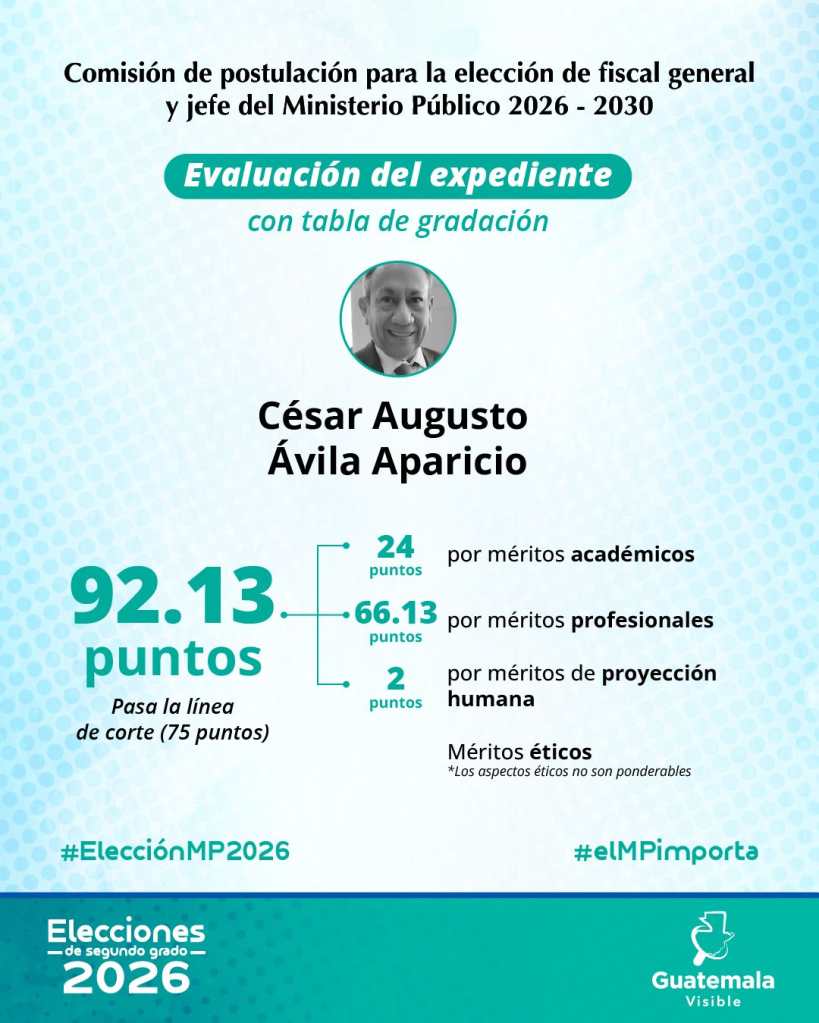
2. César Augusto Ávila Aparicio (92.13): former magistrate and litigator with a career since 1989. According to observers, he has been singled out for alleged family ties with political actors, allegations of nepotism during his time in the appeals chamber, and questions about decisions in sensitive cases.
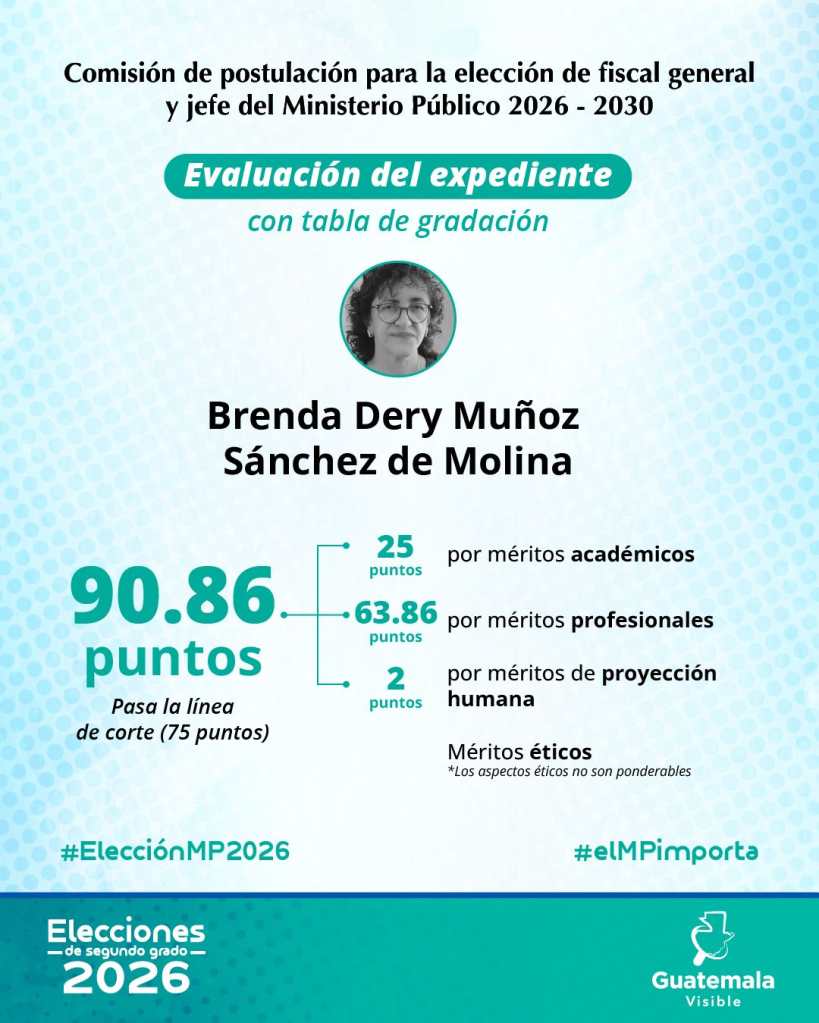
3. Brenda Dery Muñoz Sánchez (90.86): Former prosecutor with more than 16 years in the MP, in areas of organized crime and drug activity. He has held positions in various State entities; His profile focuses on technical career, rather than relevant public statements.
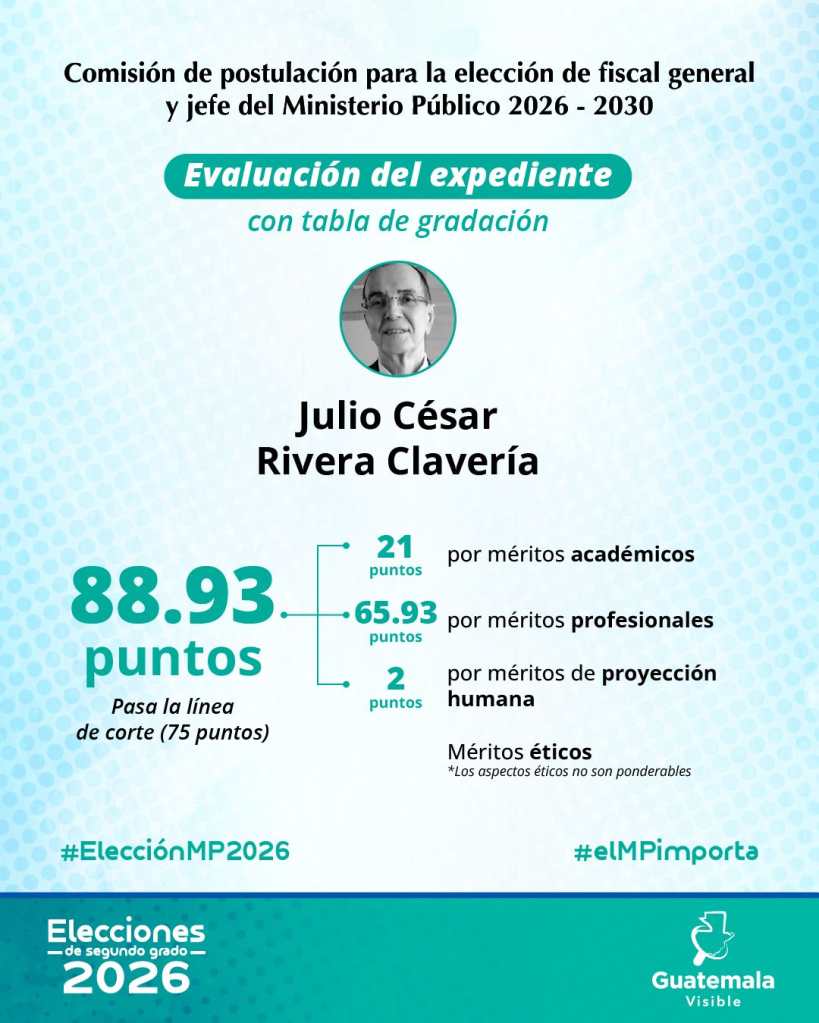
4. Julio César Rivera Clavería (88.93): recurring candidate and former security official. He was linked by the CICIG to the so-called “Moreno Network”, a smuggling structure, allegations that he has rejected; He has also had recent political participation as a presidential candidate.
5. Wálter Paulino Jiménez Texaj (86.73): substitute magistrate of the CC with more than three decades in the judicial system. He has been questioned by recent rulings, an attempt to withdraw a pretrial linked to a controversial protection and administrative accusations, in addition to the revocation of his visa by the US.
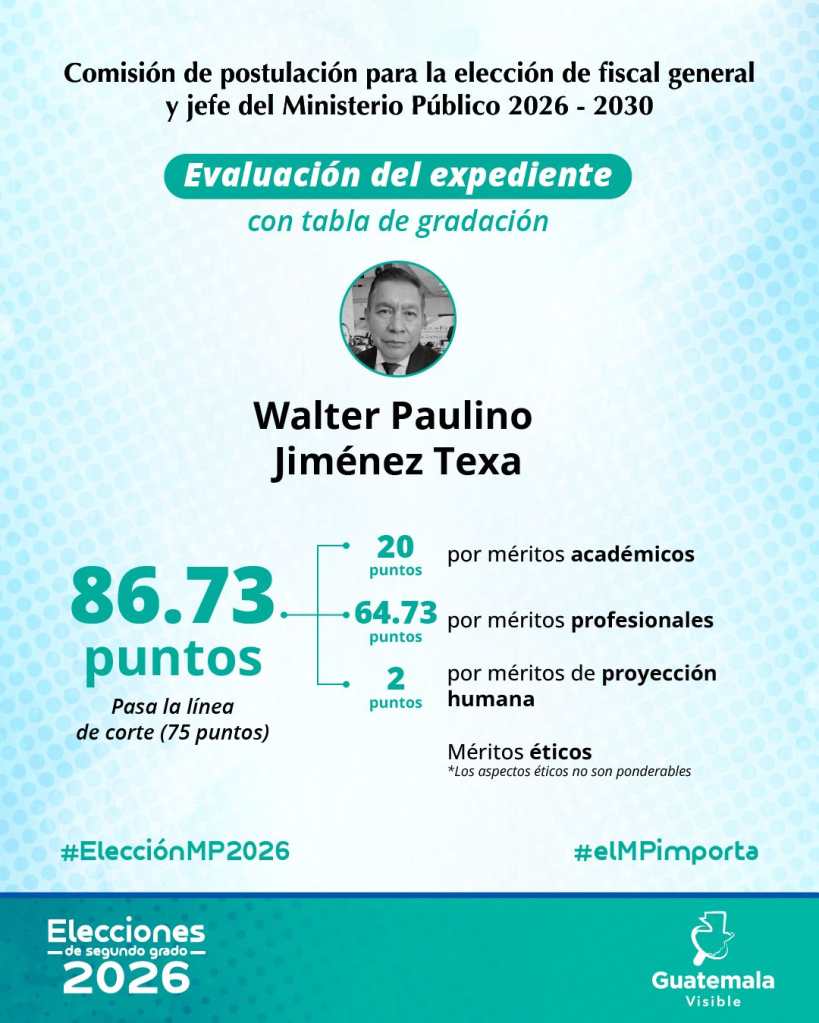
6. Gabriel Estuardo García Luna (86.21): judicial career since 1997, with roles as judge, magistrate and on the Judicial Disciplinary Board. His profile focuses on disciplinary and administrative functions, without outstanding public accusations compared to other candidates.
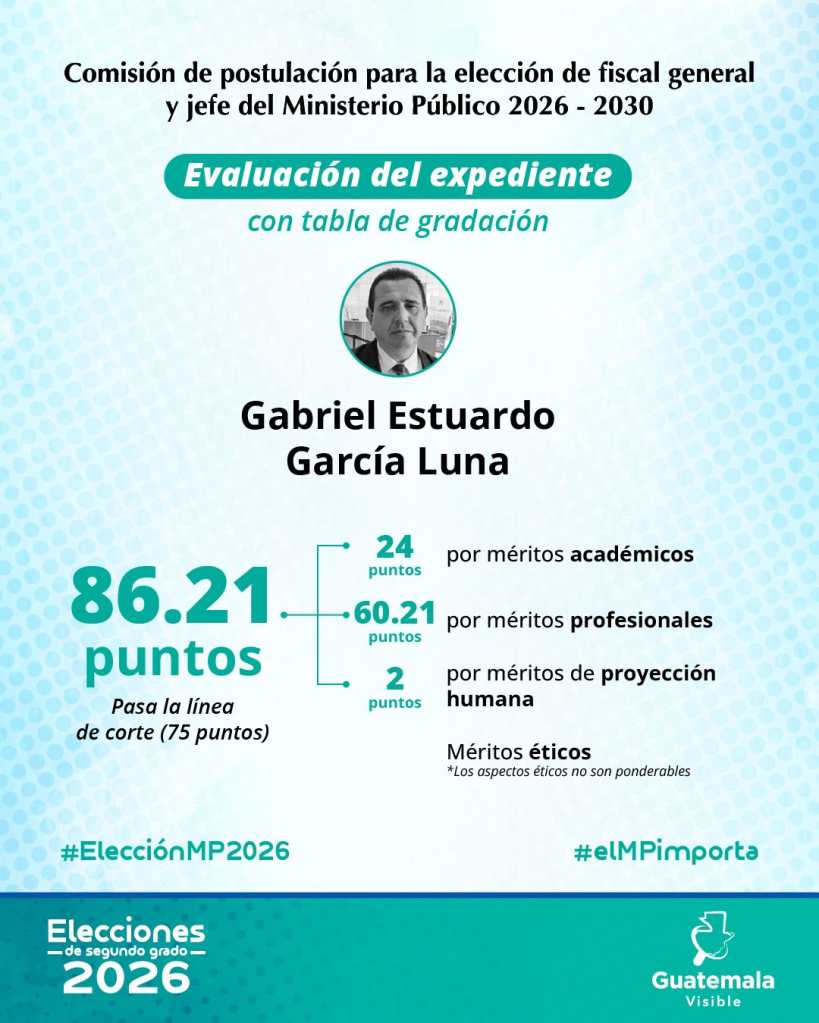
7. Néctor Guilebaldo de León Ramírez (79.69): former magistrate and acting attorney general. He has been questioned for decisions in high-impact cases, including the release of Judge Blanca Stalling and for a complaint of malfeasance that was unsuccessful.
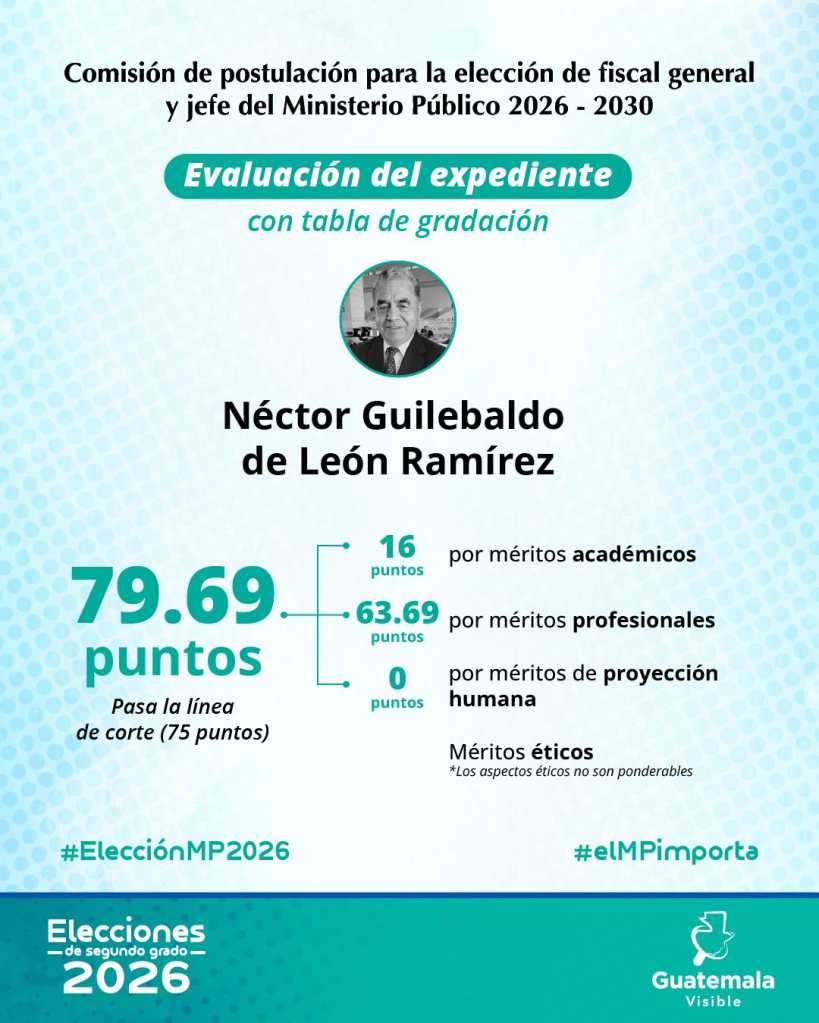
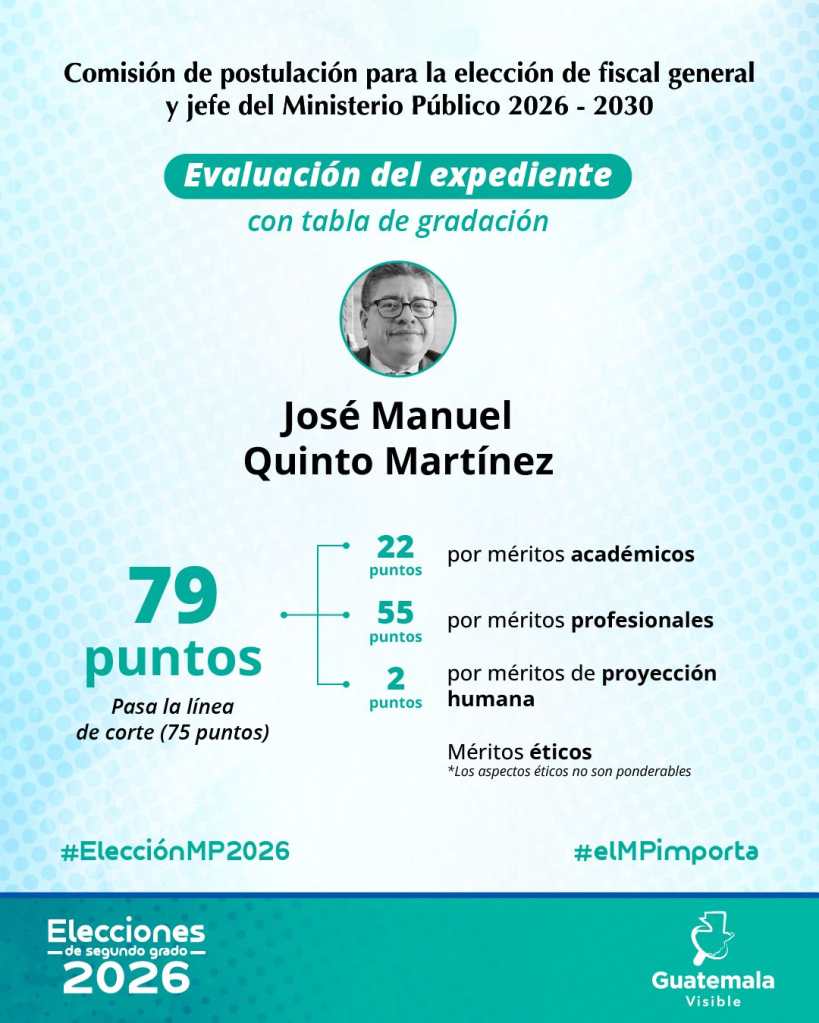
8. José Manuel Quinto Martínez (79.00): trial lawyer in relevant criminal cases, including the defense of those involved in disappearances and actions in proceedings linked to extradition processes, which places him in cases with high media exposure.
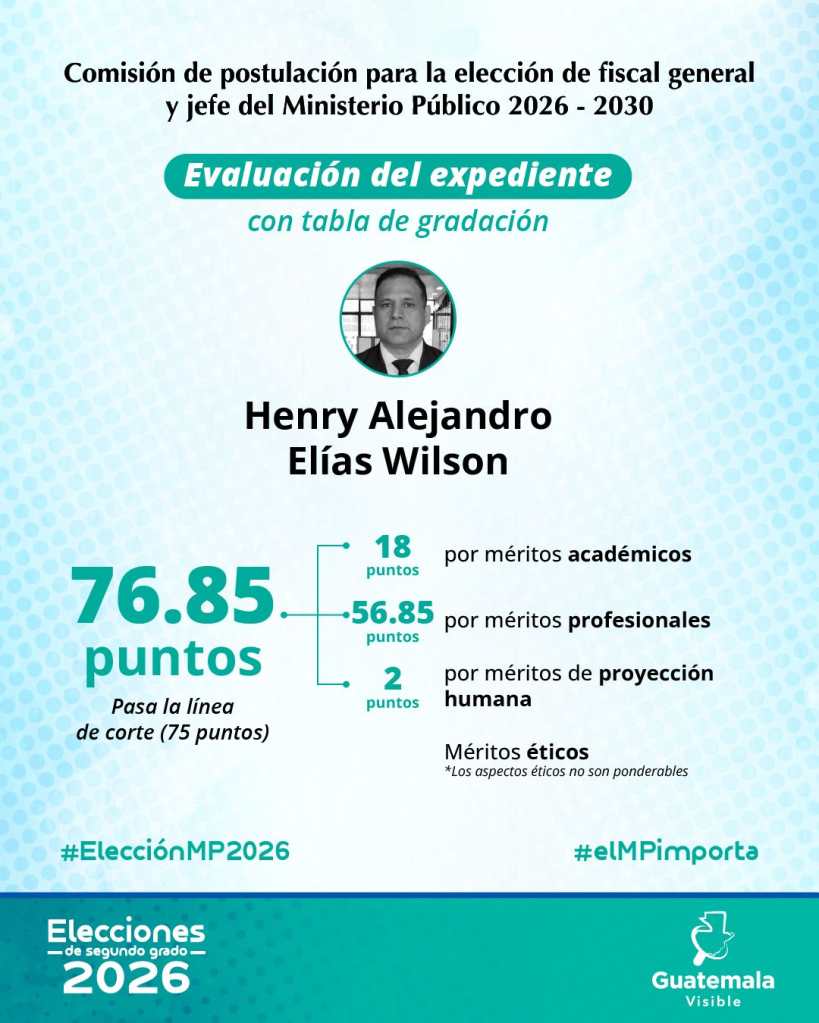
9. Henry Elías Wilson (76.85): magistrate with experience in the MP and courts. It has been pointed out in the Parallel Commissions 2020 case, in addition to questions about resolutions that benefited officials and alleged irregularities in judicial proceedings.
Applicants do not pass the cut-off line
With progress they add 35 applicants evaluated without 75 points required.
This is the order of those evaluated below the cut line:
- 73.73 – Beyla Xiomara Estrada Barrientos
- 70.28 – Zoila Tatiana Morales Validzón
- 74.26 – Raúl Estuardo López Rodríguez
- 69.21 – Carlos Alberto García Alvarado
- 67.71 – Gladys Veronica Ponce Mexicans
- 66.21 – Elíseo Rigoberto Francisco Quiñónez Villagrán
- 63.28 – Oscar Miguel Dávila Mexicans
- 62.35 – Mynor Hernandez
- 60.85 – Erick Osberto López Orozco
- 60.53 – Ricardo Aníbal Guzmán Loyo
- 60.06 – Julio Roberto Saavedra
- 59.92 – Ana Karina Méndez Vielman
- 54.40 – Tomás Ramírez López
- 54.07 – Brenner Israel López
- 53.53 – Walter Brenner Vásquez Gómez
- 53.50 – Shayne Ochaeta Argueta
- 51.66 – Nicolás Cuxil Guitz
- 51.21 – Esteban Emanuel Celada Flores
- 51.14 – Marco Antonio Cortés Sis
- 50.78 – Edgar Miguel Morales Santos
- 50.2 – Ronalth Iván Ochaeta Argueta
- 50 – Hugo Alfredo Bautista del Cid
- 45.6 – Walfred Orlando Rodríguez Tórtola
- 44.86 – Amílcar Enrique Colindres Hernández
- 43.6 – Juan Luis Polanco Santizo
- 41.86 – Marco Antonio Villeda
- 39.98 – Lisseth Gramajo Trampe
- 37.50 – Lissy Cristina Guerra Aguirre
- 34.80 – Miguel Estuardo Ávila Vásquez
- 33.64 – Sully Claudet Merlos Moya
- 32.80 – Sandra Elizabeth Acan
- 32.53 – César Isaac Payes Reyes
- 30.2 – Silvia Lucrecia Villalta Martínez
- 27.84 – Paolo Rubén Similox Valiente
- 27.83 – Wilber Gerardo Enriquez Jocol
- 26.46 – Carlos Humberto Rivera Carillo
- 25.92 – Maynor Eduardo González Méndez
- 19.2 – Mario René Espinoza Palacio
- 18.84 – Abdi Ariel Guerra Guzmán
Low grades
The commissioners maintain that the rating responded to the detailed review of each file and the lack of documentary support in several cases.
According to Carmen Aida Ibarraof Pro Justice Movementan organization that observes and analyzes this process, many applicants obtained low scores because They do not adequately accredit their academic, professional career or human projection.
“There are applicants who do not sufficiently document their academic or professional career, and that is reflected in the qualification,” he reflected.
He also stressed that without verifiable documentary evidence—such as proof of teaching or work experience—it is not possible to assign a score on the established criteria. “Many obtain zero in some areas because they do not present documentary support of their experience,” he stated.