
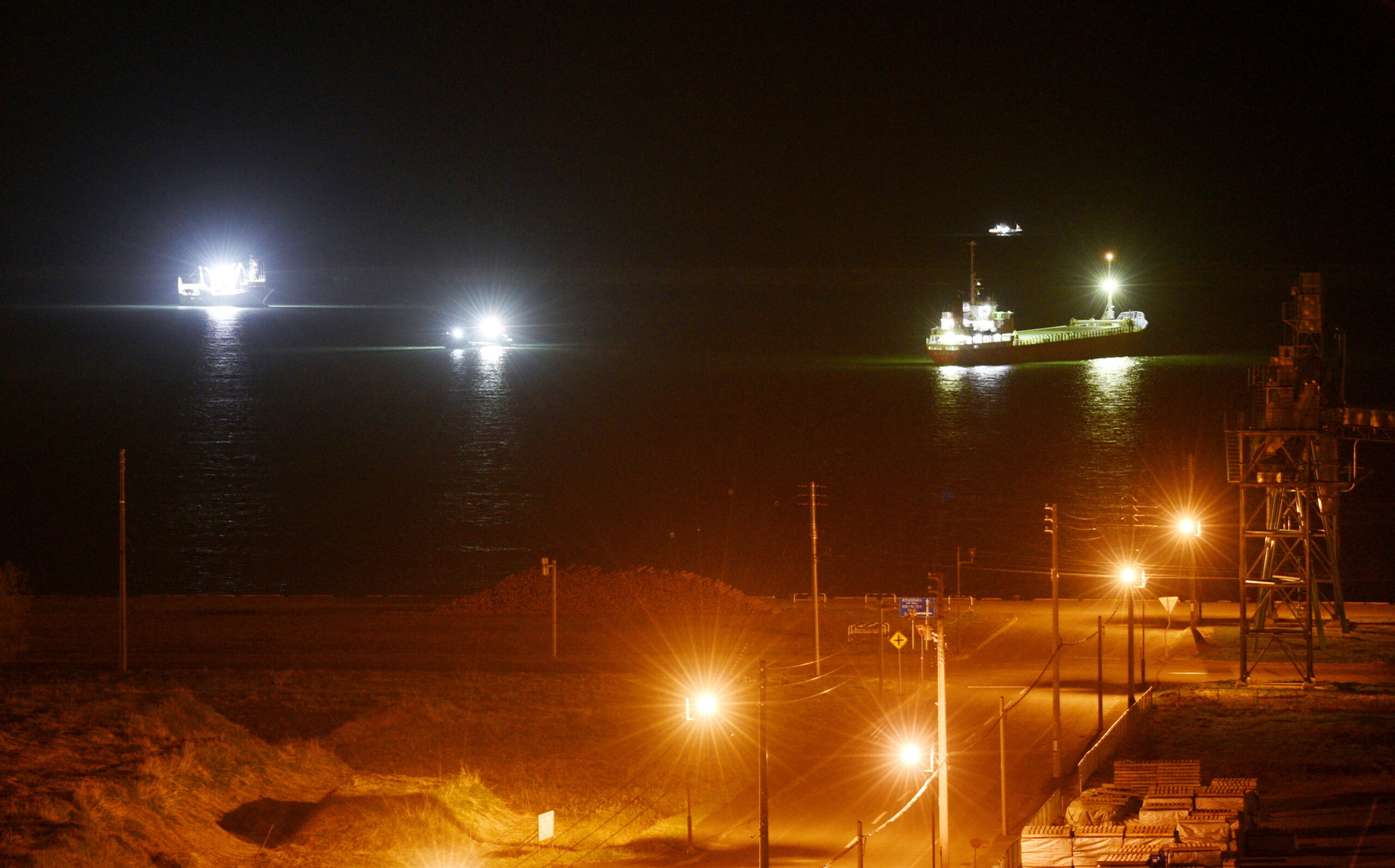
During the early hours of this Monday, April 20, around 3:55 a.m., an earthquake of magnitude 7.7 hit the eastern coast of central and northeastern Japanwith a depth of 10 kilometers, and led the Japanese authorities to activate a new alert for tsunamias stated by the Japan Meteorological Agency (JMA).
The earthquake was recorded more than 100 kilometers from the port of Kujion the coast of Sanrikuin northern Japan, so the Japanese Meteorological Agency made the decision to issue multiple tsunami warnings for coastal areas from Hokkaido to the prefecture of Fukushimawith waves that could reach more than three meters.
In a press conference, the prime minister, Sanae Takaichireported that the port of Kuji recorded the largest waves of the tsunami, with almost 80 centimeters talland for that reason his cabinet is “confirming the extent of the human and material damage”, because at the moment no damage has been recorded victims in that territory.
Meanwhile, the Japanese authorities asked the population in the most affected due to the tsunami warning, evacuate to more places insurancegiven that the forecast is that in the coming days there will be earthquakes on a similar scale in the same area, as has happened on previous occasions on Japanese soil.
The effects after the earthquake
According to the director of the Earthquake and Tsunami Observation Division, Shinji Kiyomotothe Japanese Government formed an emergency team to work together to provide all the necessary support, since the nuclear operators did not detect any anomalies or unusual levels of radioactivity around nuclear power plants.
In turn, the television network NHKJapan’s only public broadcaster, indicated that “no impact has been confirmed” in the facilities nor in the infrastructure of the nuclear plants, but confirmed that the evacuation of the workers at Fukushima Daiichi and Fukushima Daini to prevent any eventuality.
On the other hand, due to the cuts of electricity and the activation of the system preventionthe service trains HE suspended at various points, such as journey between Tokyo and Shizuoka, given that Japan sits on the so-called Ring of Fireone of the most active seismic zones in the world, and suffers earthquakes relatively frequently.
However, given that its infrastructure is especially designed to resist tremors, the effects of the earthquake were minima compared to the earthquake they suffered in December 2025 off the coast of Aomoriwhich left more than forty injured and caused waves of 710 centimeters, where major damage was reported.
Japan withdraws tsunami warning
Six hours After a 7.7 magnitude earthquake hit the eastern coast of northeastern Japan, authorities withdrew the tsunami warning issued after the quake that shook the country, although the Meteorological Agency left a warning from Hokkaido to Fukushima prefecture, where water can reach a height of up to metro.
The Japan Meteorological Agency had warned that waves of up to three meters high on the afternoon of this April 20 in the northern prefectures of Hokkaido, Iwate and Aomori, but so far only 80 centimeter waves have been recorded in the port of Kuji, so a tsunami is very unlikely.