
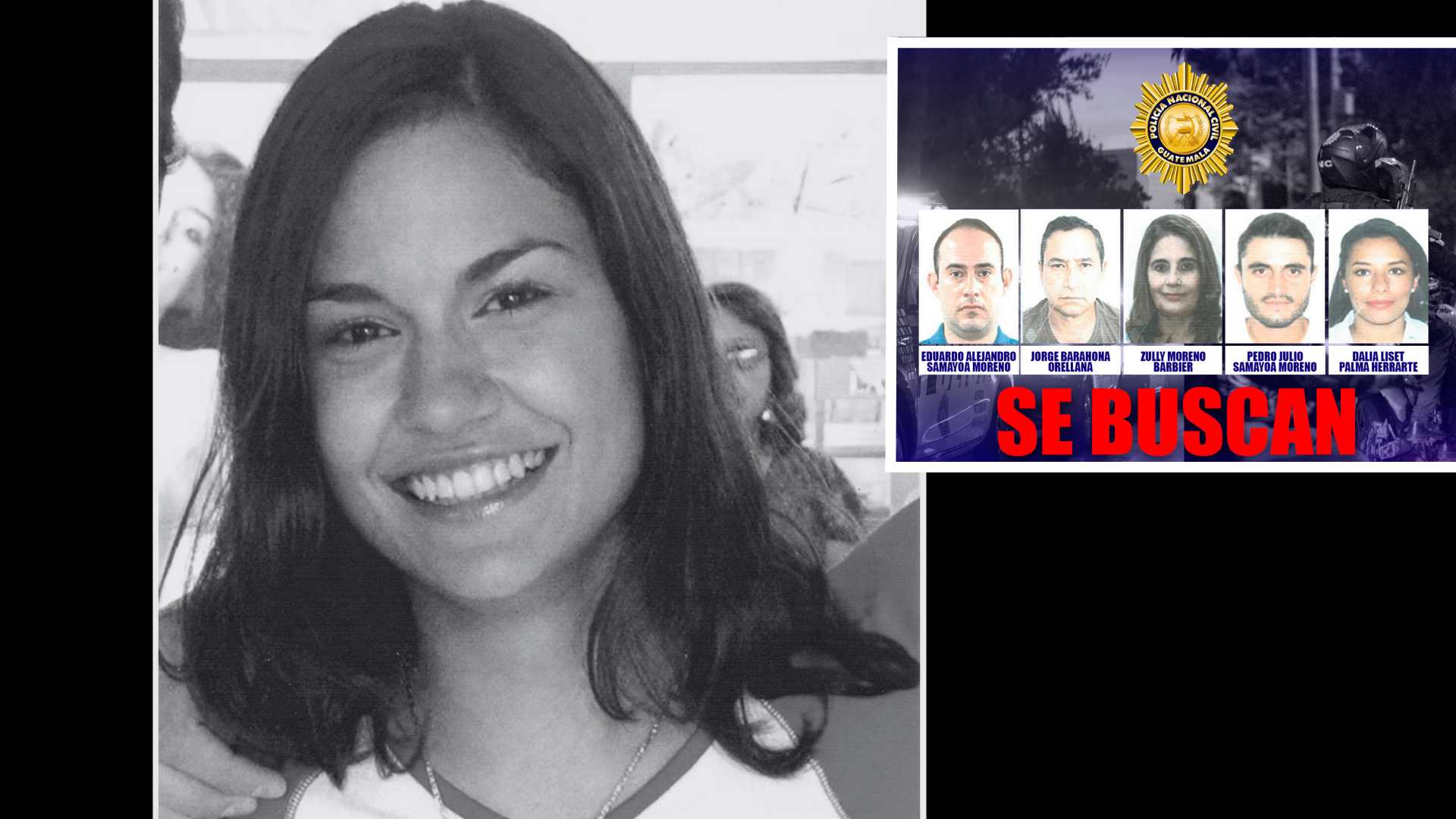
The arrest in the United States of the former Guatemalan soccer player Pedro Julio Samayoa Moreno, along with his mother and brother, marks a new update in the case for the death of Claudina Isabel Velásquez Paizoccurred in 2005.
The arrests were carried out by the Immigration and Customs Enforcement Service (ICE) in compliance with an international order requested by the Guatemalan Public Ministry.
The three men remain in custody at a detention center in Georgiaawaiting deportation. According to the authorities, had been declared in absentia within the criminal processwhich allowed the activation of international cooperation mechanisms.
The case returns to the public agenda after spending years under judicial reserve and with intermittent progress at different stages of the process.
Since this capture, the file is reactivated within an investigation that has had multiple phases since 2005, with recent judicial decisions that have allowed arrest warrants to be made public and new proceedings to move forward.
1. Disappearance and discovery in 2005
On August 12, 2005, Claudina Isabel, a 19-year-old law student, disappeared after leaving her home in Guatemala City after participating in a social activity. His family reported the incident to the authorities that same day.
The search was not activated immediately, an aspect that her family has pointed out as a determining factor in the loss of critical time to locate her alive in the first hours.
A day later, on August 13, 2005, his body was located in a vacant lot in zone 11 of the capital, confirming that he had been a victim of violence. The discovery formally began the investigation by the Public Ministry.
Since then, the case remained under a prolonged judicial investigation, with allegations regarding the initial handling of the crime scene and the collection of evidence.
Also read: Justice takes two decades for Claudina Velásquez and María Isabel Veliz
2. Investigation, impunity and international sanction
In the years since, the family reported flaws in the initial investigation, including delays, loss of evidence and a lack of diligence in the early hours of the case.
In a column published in 2025 by journalist Carolina Escobar Sarti in Free pressthe victim’s father, Jorge Velasquez, He reiterated his position that police action was decisive in the outcome of the case. “My daughter would be alive if the police had acted in time”he stated, pointing out the delay in the initial search.
In that same space, he also expressed the emotional impact of the judicial process and the revictimization suffered by the family, insisting that “the system benefits the person who commits the crime and does not dignify the victim.” In another of his statements, he reiterated: “I owe it to my daughter,” in reference to his fight for justice.
The case reached Inter-American Court of Human Rights (IAC Court)which determined the responsibility of the State of Guatemala for deficiencies in the investigation and ordered reparation measures.
The ruling consolidated the file as an emblematic case of structural failures in the investigation of violence against women.
Read also: Inter-American Court condemns Guatemala for the Claudina Velásquez case
3. Alert, reopening and current case
As a result of this case and that of other victims such as María Isabel Véliz, The Isabel-Claudina Alert was createda mechanism immediate search for missing women in Guatemala.
This system was designed to accelerate the institutional response in the first hours of a disappearance and improve coordination between authorities.
He Claudine’s case remained under judicial reserve for years, but in 2025 a High Risk Court authorized to partially lift itwhich allowed the publication of arrest warrants and the public reactivation of the file.
In that period, the Public Ministry advanced in new proceedings and achieved new links to the process, opening a recent phase of judicial reactivation.
Two decades without closure
The case of Claudina Isabel Velásquez Paiz remains as one of the most representative files of violence against women in Guatemalaboth for its duration and for the intervention of international bodies.
The family’s statements and public analysis of the case have maintained their relevance, especially after new judicial decisions and recent arrests.
The Guatemalan authorities continue with the efforts for the repatriation of the detainees, who will have to face the judicial process in the country as international coordination progresses.
Read also: 20 years without justice: the key points of the Claudina Isabel Velásquez Paiz case