
A tourist cable car, a linear park, a hotel zone and a mini hydroelectric plant are some of the projects that could be built in Sololá under the public-private alliance modality.through the National Infrastructure Agency (ANI). The municipality is located 137 kilometers from Guatemala City and approximately two and a half hours by car, and has one of the most emblematic destinations in the country: Lake Atitlán.
According to the mayor of Sololá, Andrés Iboy, In an interview with a Guatevisión team that visited the place, The proposal arises as an alternative to generate opportunities in the municipality. “They have to leave their family to look for an opportunity. The purpose of the project is to create opportunities for youth and give a tourist destination not only to national tourists, but also to foreigners,” he indicated.
The mayor added that the tourist complex would be developed on the El Jaibal farm, whose area is approximately 5.12 caballerías and was acquired by the commune for an amount of Q29.8 million. The land has at least one kilometer of public beach. “These conditions give us the possibility of creating a tourist complex. It is an opportunity for our young people and migrants who are looking for a better opportunity,” he said.
Iboy mentioned that the municipality does not have the necessary financial resources to develop large projects. “We are aware that, with municipal capital, it is not possible to work on these macro project proposals. They are extremely high investments and we will have to seek alliances to achieve these objectives,” he said.
An opportunity for tourist works
According to Mario Catalán, acting director of inspection of the ANI, the country has potential in areas such as cultural, archaeological, gastronomic and natural tourism, but lacks articulated infrastructure. “Public-private alliances allow these efforts to be articulated to be able to develop projects at the regional level,” he explained.
Catalán indicated that this model allows risks and responsibilities to be transferred to the private sector. “If the project is in the hands of a State entity and requires innovation, it must go through the State Contracting Law (LCE), which can imply deadlines of up to one year. In a PPP, the times are defined to meet service levels and improvements can be implemented more immediately,” he stated.
For his part, Sebastián Siero, president of the National Association of Municipalities (ANAM), pointed out that municipalities can participate through this model or through concessions. “PPPs are an advantage because you do not need to have the funds to make the investment. The municipality can receive royalties for authorizing and promoting the project,” he indicated. Siero added that the operation can be developed by the private sector to make it transparent. “If it is operated from the municipality, it has to be done through the Contracting Law, which is slow and cumbersome. Ultimately, that makes the processes more expensive than if it is done privately,” he explained.
Cecilia Pivaral, member of the infrastructure table of Guatemala No Se Detiene, pointed out that these types of alliances can facilitate the development of tourism infrastructure. “Public-private alliances attract private capital to projects that could originally be public, but for various reasons do not usually advance. In addition, they allow the development of infrastructure that attracts more tourism, which generates more foreign exchange and development in the area where the projects are executed,” he indicated.
He added that PPPs can be viable in works where there is good demand, that is, there is a market with which the projects can be repaid with a tariff or there is the State’s willingness to make a payment so that they are developed through a private company.
Where can tourism projects be developed?
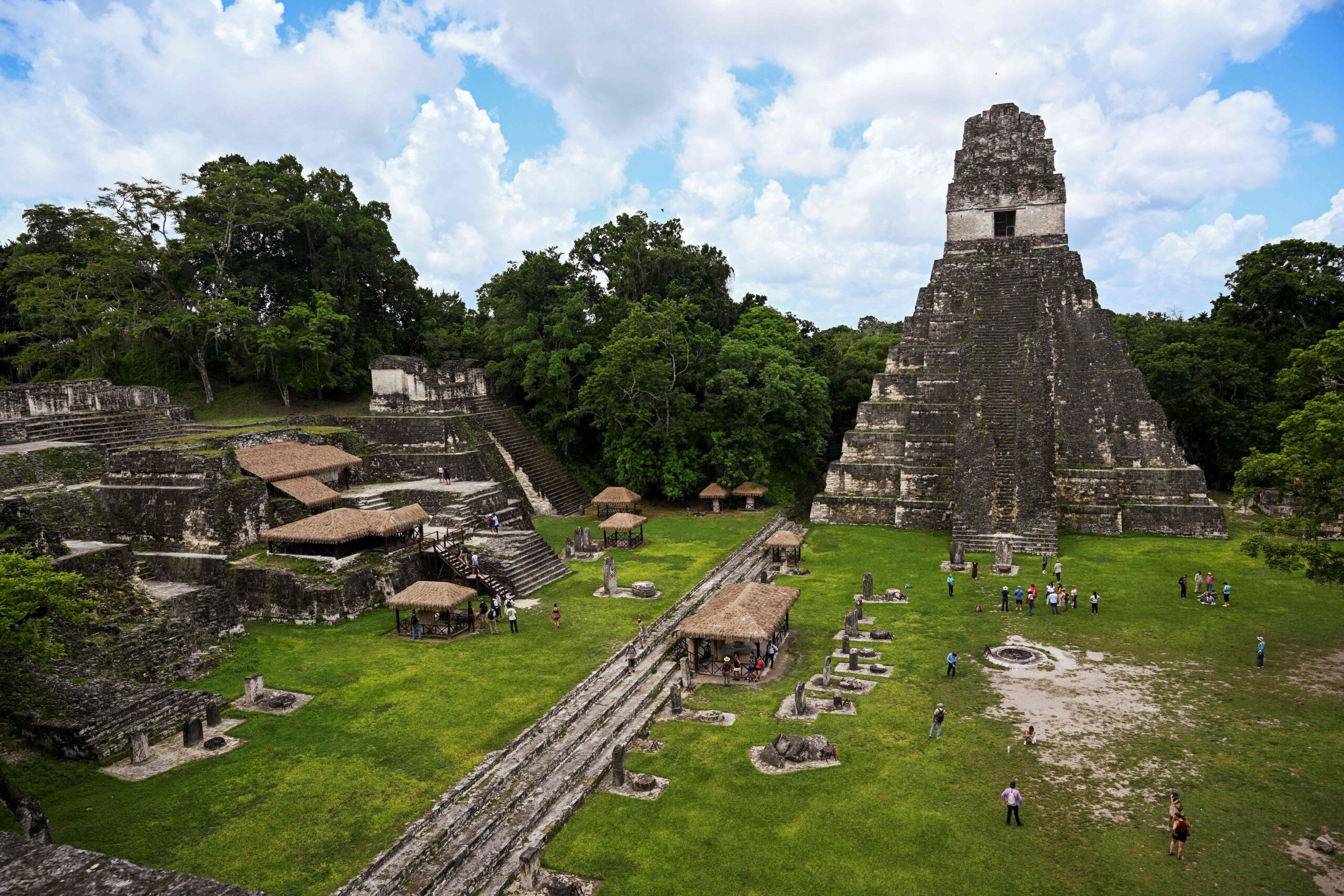
According to Catalán, the regions with the greatest potential to develop tourism projects under this model are found in the west and north of the country. “The greatest potential is in the western area. Also in the northern part, with Tikal, which due to its tourist nature is one of the main attractions of the country”he explained.
He added that there are also opportunities in areas such as Quetzaltenango, Sololá, Huehuetenango and Quichéalthough in some cases demand is still a factor to be developed. “Huehuetenango has natural potential, but it still does not have the necessary demand to promote a project under PPP,” he said.
Catalán indicated that these projects can include different components, such as mobility infrastructure, tourist and convention centers, viewpoints or trails. “Projects can be developed that integrate several elements and not only benefit a specific point, but the entire surrounding territory,” he explained.
He commented that Tikal is a destination where a comprehensive project could be developed that includes mobility, restaurants and a convention center within the park. “Today these services are dispersed, and that would allow the project to function better,” he said.
For his part, Pivaral pointed out that Guatemala has various tourist resources that require associated infrastructure. “We have natural, archaeological and colonial beauties, but we need access and use infrastructure so that they can be used and conserved,” he indicated.
He added that these projects can include spaces such as museums, theaters, routes, boardwalks, convention centers or access roads. “Projects can be developed that work through rates or mixed models, where the private sector is in charge of operation and maintenance,” he explained.
Procedure and duration
Catalán explained that the development of a project under a public-private alliance begins with the evaluation of the demand and potential of the area. “First we evaluate if the project is financially viable, if it has tourism potential and if there is the will of the parties, including the local government and the communities,” he indicated.
He added that these projects can be developed in the long term. “The reforms to the ANI law allow contracts of up to 50 years, although A local tourism project could be developed in terms of 15 to 20 years”he explained.
According to Pivaral, the development of projects under the public-private alliance model begins with the identification of viable initiatives. “First is to work on a portfolio of projects, that is, identify those that may be viable under this modality, where there is interest from both the public and private sectors,” he explained.
He added that, based on this identification, it must be coordinated with the State institutions in charge of the process. “We work with related authorities, which in the law are called State contracting institutions, to structure a profile of the project and define how the private participant would be invited to take part,” he indicated.
Regarding the time that a project of this nature could take, Catalán explained that, with the reforms to the ANI, this institution has a pre-investment fund to hire studies and consultancies, both locally and internationally.
“This facilitates and reduces time substantially. Then, there are also municipal projects where, if a project is self-sustainable, the municipality itself approves that project. It would no longer have to go through Congress, as was done with the previous version of the law,” he emphasized.
According to Catalán, the structuring and approval process can take around two years. “From the moment the project is requested until the feasibility studies are developed and the contract is approved, the process can last approximately two years,” he noted.
He indicated that the final time will depend on the complexity of the project and the studies required. “We could be talking about tenders in the next two years, depending on the conditions of the project,” he added.
They see benefits
According to Catalán, projects developed under public-private alliances can generate impacts at different levels. “There are two levels of benefits. First, the direct economic benefit from developing a territory at a tourist level with the infrastructure that a PPP can provide, and then there is an economic benefit in the nearby territories,” he explained.
He added that these effects can extend to different areas of local development. “This leads us to a comprehensive development of the population, not only in the financial aspect, but also in job opportunities and expansion in the urban territory,” he indicated.
For his part, Pivaral pointed out that this model also represents an opportunity to strengthen capacities at the local level. “It is an opportunity for municipalities and associations to strengthen their technical teams in projects that have the potential to be developed under this modality and that can attract long-term private investment,” he stated.
Pivaral added that the reforms to the law provide conditions for longer contracts. “The figure of public-private alliance provides legal certainty to work on long-term contracts, which allows investments to be repaid in periods of 10, 15, 20 or even 25 years,” he explained.
“These projects make it possible to develop competitiveness in these areas, promote employment and improve local capabilities, preventing development from concentrating only in the urban area of Guatemala City”
Cecilia Pivaral, Infrastructure expert
Private parties can present projects
Pivaral highlighted that the reforms to the law incorporated the figure of unsolicited initiatives. “They are projects that do not necessarily have to have been previously identified by a State institution. They can arise from a private participant interested in developing an initiative,” he noted.
He explained that, in these cases, the proposal can be presented to the corresponding institution or to the ANI. “The governing entity works together with the contracting institution to verify if there is interest in developing the project. With the authorization of both parties, the proponent can advance studies that determine its viability,” he stated.
He added that the private participant promoting the initiative may have conditions to participate in later stages. “Having previously invested in studies, you can count on certain conditions when the project goes out to tender,” he indicated.
For his part, Catalán pointed out that projects can also be promoted from the public sector. “Projects can be requested through municipalities or State entities,” he explained.
Likewise, he confirmed the incorporation of unsolicited initiatives within the model. “This figure establishes that a private person can propose a project through a governing entity so that it can present it to the agency,” he mentioned.
Find more Guatemala Doesn’t Stop on our video channels Free press and Guatevision, alliance content focused on solutions journalism.