
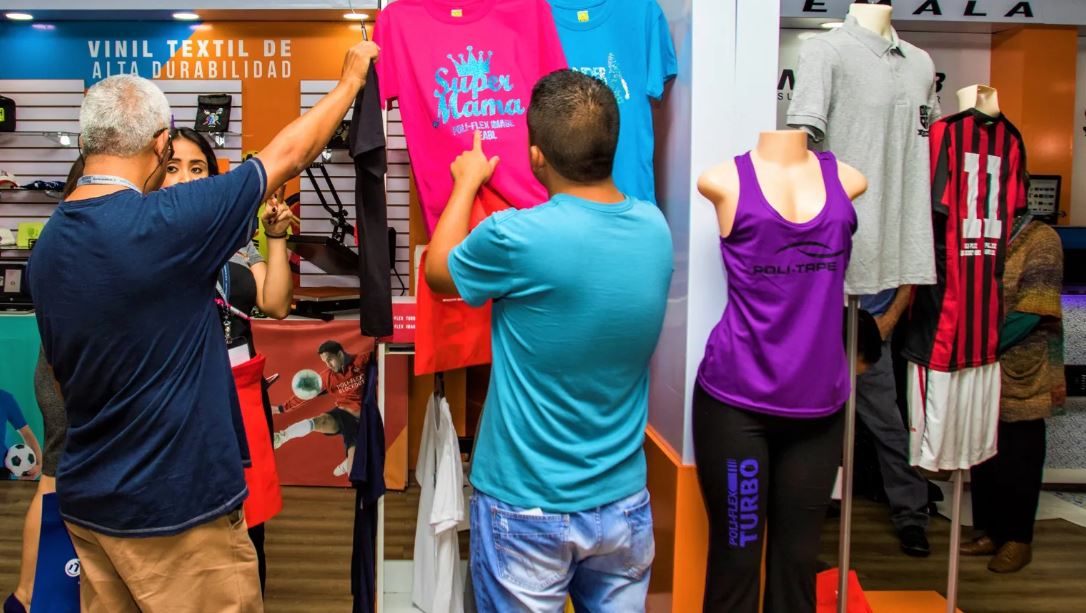
The term of the program is three years. It has technical cooperation from the European Union and Sweden amounting to US$4 million and is expected to benefit 70 companies from different segments of the sector.
It will include companies from clothing, textile companies, service providers and companies led by indigenous entrepreneursas well as the strengthening of institutions in the sector’s ecosystem, such as training centers, business associations and support organizations, the organizers reported.
These are two projects financed by the European Union and the Swedish Embassy within the framework of the Team Europe Initiative Alliance for sustainable growth and employment. It is aimed at strengthening the sector’s competitiveness, sustainability and access to international markets, and increasing the exports of Guatemalan companies.
For example, within the 70 companies it is expected to have 40 clothing manufacturers that would include complete package and maquila suppliers; five textile manufacturers and service providers, such as dry cleaners and laundries, and 25 companies led by indigenous entrepreneurs.
At the moment there are still 35 spaces to participate, so those interested can contact the program for more information and to know the requirements, it was added.
At the launch event it was announced that an alliance was made with the Global Network of Indigenous Entrepreneurs of Guatemala.
Ángel Pacheco, head of EU programs, said that the project seeks to support companies on issues of competitiveness and sustainability, with specialized training, technical advice and links with international markets.
The objectives of the initiative are:
- Increase productivity and reduce costs along all value chains
- Adopt sustainable and circular production practices in value chains, such as reducing energy, water and chemical consumption, as well as valuing waste
- Access new and traditional markets, through better marketing, brand strengthening and online sales, and comply with internationally recognized social and environmental certifications
In this case, the markets prioritized by the Swedish Embassy project are traditional ones, such as the United States, and emerging markets. While the EU project prioritizes the European market and the Central American regional market.
Meanwhile, Matthias Knappe, head of the Fibers, Textiles and Clothing Unit at ITC, in Geneva, said that the sector faces various global challenges for which you must prepare.
The project seeks an approach to implementing various factors in companies, as the executive explained:
- Identification of the main challenges at the business level and grouping of companies facing common challenges
- Establish a work plan that responds to the needs of the company
- Group training and training, followed by individual training of the advisors towards the company
- Companies that are trained and complete the different steps will be invited to join market activities and meet buyers; However, your participation in events or fairs must be financed by each company.
- Use of local and international experience
To do this, companies must sign a letter of commitment with the ITC. A plan will be worked on that must be approved by the company, among other requirements.
CONTENT FOR SUBSCRIBERS
Executives from REI and private companies that operate in the clothing and textile sector participated in the event.
Companies interested in participating must fill out the information in the survey available at the following link and comply with the conditions explained there: https://surveys.intracen.org/response/G2tIYnZfTwYAYFZ2X1FyS0d0cXk
For information, you can contact the national coordination of the project at hlinares@intracen.org.