
There is an international challenge created by Space for Teachers that invites Hail Mary Project, which places teachers at the center of the story. Educators guide students as they design a small rotating space station based on Project Hail Mary’s concept of artificial gravity.
The name of the project Hail Mary is based on the science fiction novel by Andy Weir, published in 2021, which recently had a film adaptation, in which Ryland Grace, played by Ryan Gosling, wakes up from a coma with no memory and without knowing why he is on a spaceship 11.9 light years from Earth.
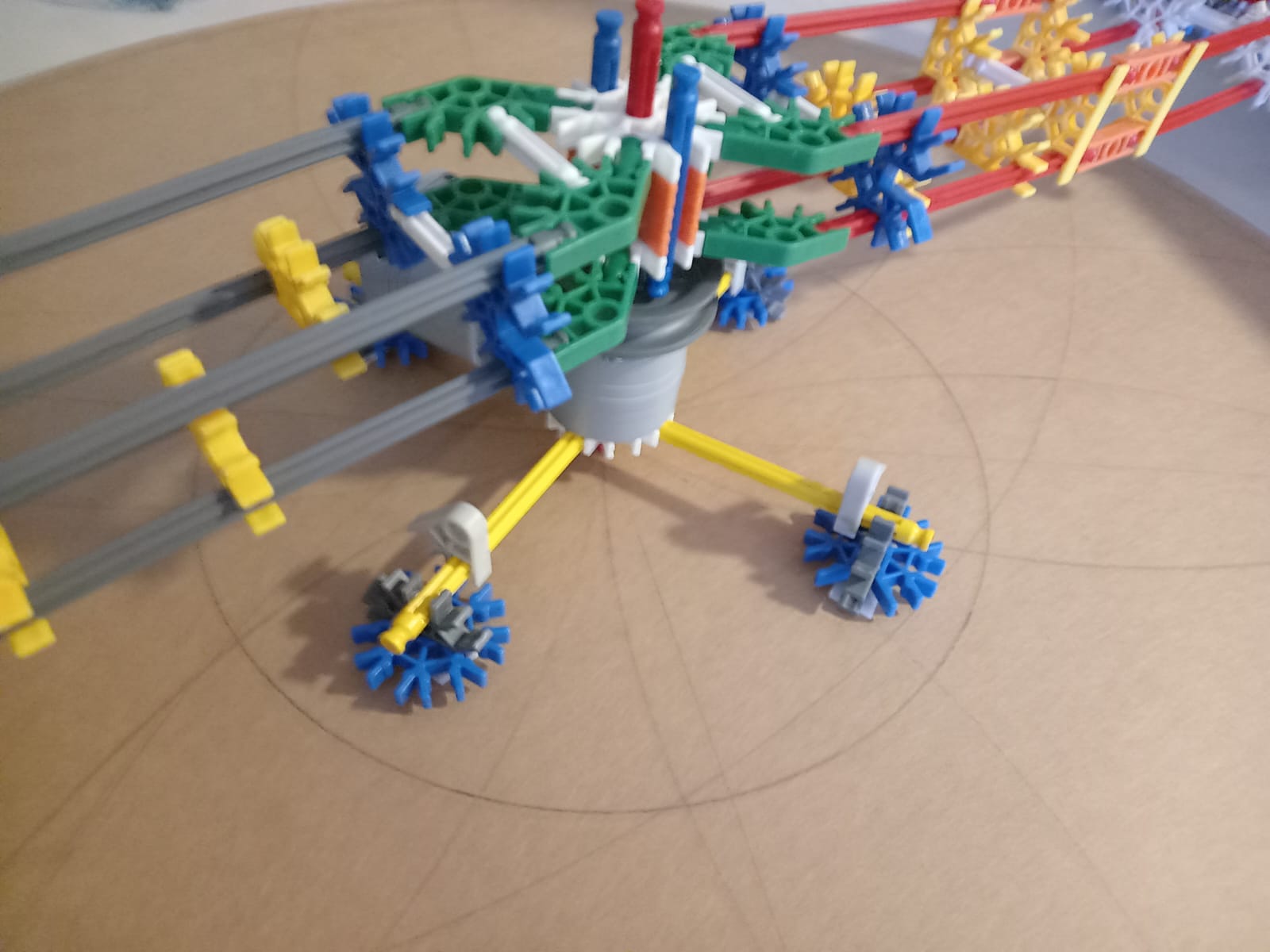
Mario Gálvez, president of the Guatemalan Association of Engineering and Space Sciences (AGICE), explains that in the story there is a specific part in which the ship generates artificial gravity through a centrifugal system (a mechanism that uses the force of rapid rotation). “That concept is precisely what inspires our project,” he says.
The initiative arises thanks to Space for Teachers, a group of teachers from different institutions – mainly in Europe – whose headquarters are in France. They organize a competition whose prize is a parabolic flight, in which you can experience microgravity, says Gálvez.
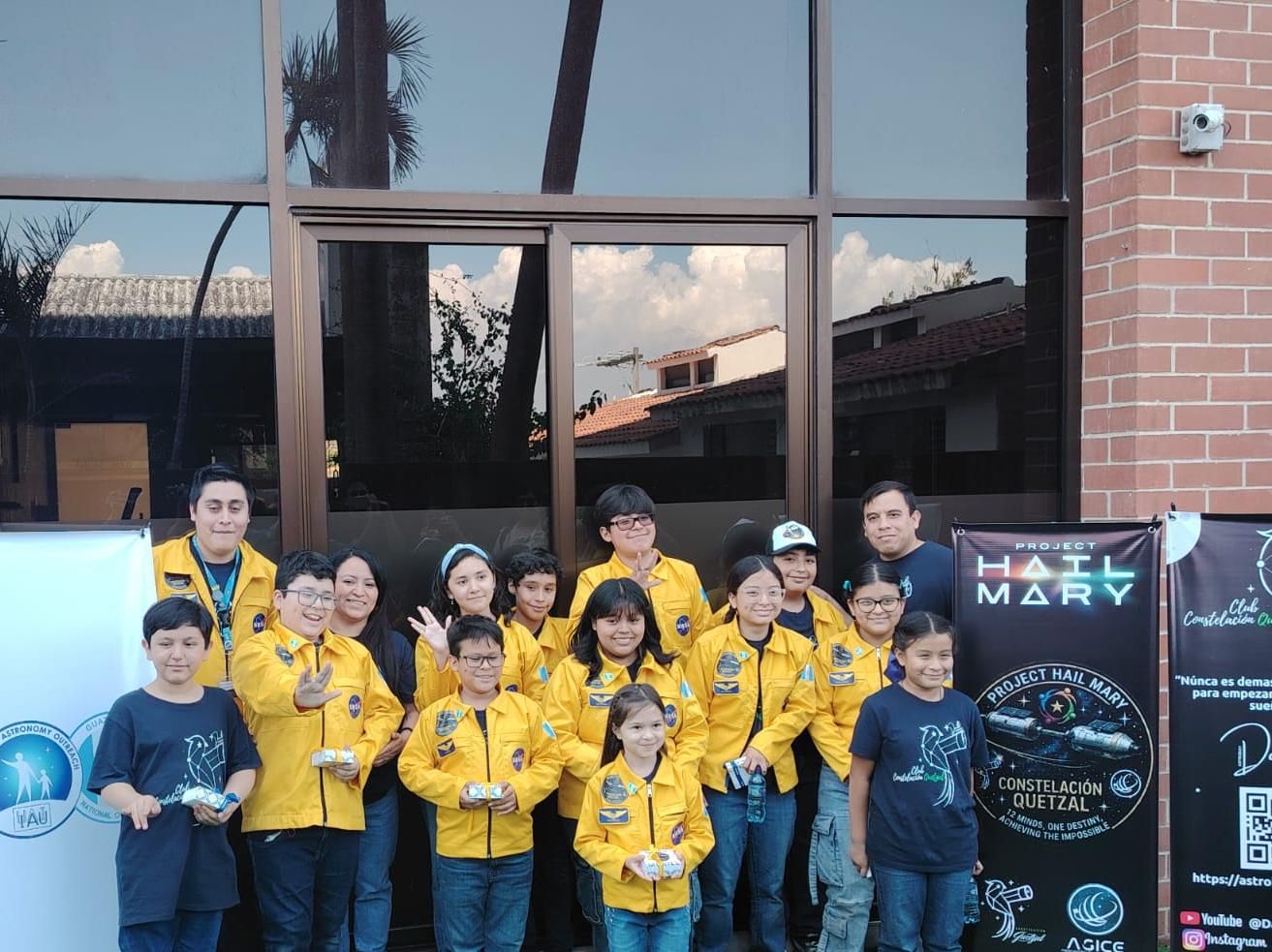
Guided by their teacher, student teams apply physics, mathematics, and engineering principles to design a two-module space station that generates artificial gravity through rotation. For now, the group of twelve Guatemalan members, part of the first generation of the Quetzal Constellation Club, meets every Saturday and other times to create their project.
The competition consists of developing a system with rotating movement that replicates the operation of the ship in the book or movie, explains Gálvez.
One of the great incentives is that, if the project is a winner, the prototype could be tested in parabolic flight. That is, if the work done by the children of the Quetzal Constellation Club wins, they would have the opportunity to fly. in France.
How was the invitation received?
Participation arose through communication with Geraldine Cortés, who is the first analog astronaut from Guatemala. “She attended a conference for educators where this challenge was launched. Then she contacted us to invite a group of children from the club to participate,” explains Pamela López, who is one of the founders of the club, which currently has 180 participants.
Among the teachers who prepare the children are Gálvez, López, Cortés and Professor Carlos Ramos. The project also has the support of AGICE, the NOC-IAU Guatemala and the Howard Gardner school, which has provided its facilities and support in 3D printing the prototype.
Currently, 12 children, between 8 and 12 years old, participate in the Hail Mary project, who are part of the first generation of the Quetzal Constellation Club. Since last year they have been in training, learning, for example, the use of telescopes, and they have maintained constant participation along with the support of their families, which has been fundamental, López adds.
Among the students is David López, also founder of the club that was born after it entered the list in 2025 of the 100 children recognized with the Global Child Prodigy Awards (GCP Awards).
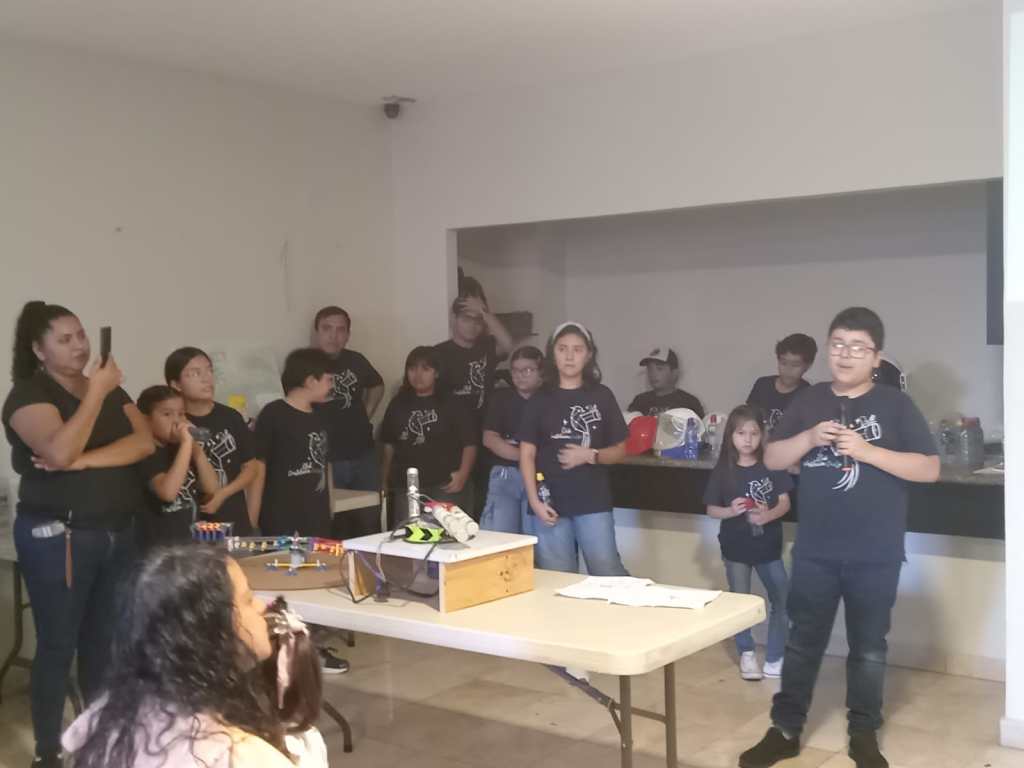
The delivery includes several components: the 3D model, a three-minute video in which the children explain the project, another video from the teachers, and a detailed report that documents the entire process, including activities like the one carried out today.
Daniela Ponce, for example, is one of the participating students and at eight years old explains how they are working on this challenge, “this project is about building a mini spacecraft that is going to go on a zero gravity flyby and has to generate artificial gravity using centrifugal force,” she explains.
A key aspect of the program is that children not only learn, but are also able to teach what they have developed.
One of the main challenges has been coordination. 12 families participate, in addition to the teachers, which involves organizing schedules and joint efforts. The children have worked with great discipline: they meet on Tuesdays and Thursdays in virtual sessions from 7 to 8 p.m., and on Saturdays from 8 a.m. to work on their prototypes.
“What I like most about the group is that I can make many friends and all of them are very good,” adds Renato García, one of the participating children, aged eight.
Who are the students in the Hail Mary project?
- Daniela Ponce
- Lincy Ramos
- Ana Garcia
- Daniel Garcia
- Natalia Garcia
- Sara Arango
- Renato Garcia
- Diego Gonzalez
- David Emilio
- Mateo Rodríguez
- Fernando Cos
- David Lopez