
The cumulative positive cases of measles in Guatemala total 5 thousand 297according to the latest update from the Ministry of Health as of April 24. The number of deaths remains at four, and they are children under one year old.
According to official data, an increase in infections began to be reported starting in February, and it was between March 15 and 21 when the biggest rebound, with 905 cases.
A decrease is observed in the week of April 12 to 18, when 51 infected people were reported, which represents a 94% drop in a period of four weeks.
One in every two cases has been identified in the department of Guatemala, where the contagion rate is 60.19 per 100 thousand inhabitants.
Sololá, which in January was the epicenter of the outbreak, currently occupies the second most affected place, with 345 cases; However, it has the highest rate in the country: 67.96 per 100 thousand inhabitants.
Increased vaccination
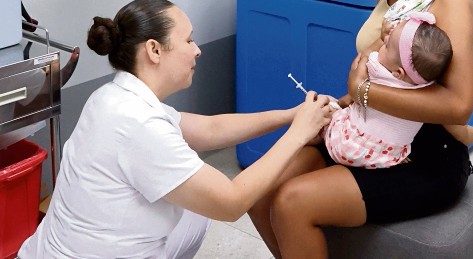
According to information from the ministry, the downward behavior is a reflection of the measles vaccination campaign that the ministry implemented since the outbreak was identified in the country, on January 9 in Santiago Atitlán, Sololá.
As of April 20, they have been administered 261 thousand 209 doses of MMR —against measles, mumps and rubella— and SR —against measles and rubella—, as part of the blocking vaccination and the protection of susceptible people.
The official report indicates that 11,577 correspond to the “zero dose”which is administered to children between 6 and 11 months. This vaccination was enabled in the context of the emergency, since this is a population at high risk of getting sick and dying. The fatalities Those who registered in the country had not received the biological one, because they were not old enough to receive it according to the regular scheme.
While 249,632 doses have been applied to the population between 7 and 50 years old, to complete delayed schedules, as well as to cover risk groups and vaccinate contacts of suspected or positive measles cases.
Another 166,591 doses were administered to children between one and seven years old, as part of the regular schedule.
In recent years, Guatemala has had low vaccination coverage against measles and other vaccine-preventable diseaseswhich is why the virus, which is highly contagious, reemerged in the country after eight years without reporting cases.
Medical criteria indicate that vaccination is the most cost-effective measure to contain the disease, and two doses are recommended for children and adults. Completing the outline allows a level of 97% protection throughout lifesince the body develops immunological memory.
Guatemala has been on epidemiological alert for measles since March 2025.