
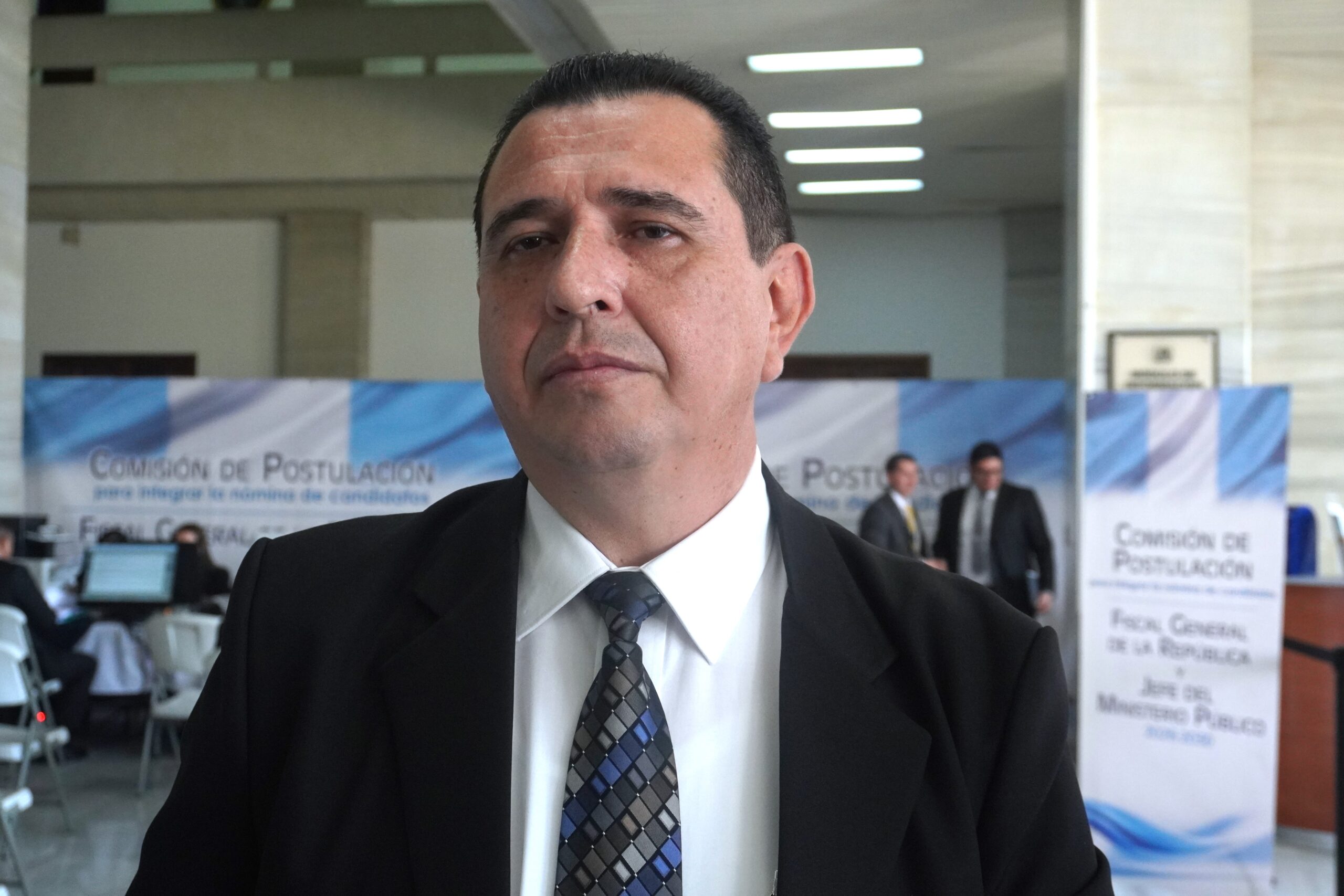
Newly appointed as attorney general for the period 2026-2030, Gabriel Estuardo García Luna On April 6, it presented its work plan, focused on independence, modernization and attention to victims.
In this context, the business sector – such as the Coordinating Committee of Agricultural, Commercial, Industrial and Financial Associations (Cacif), the Chamber of Industry of Guatemala and the Chamber of Agriculture of Guatemala – called for a management with “strict adherence to the law”transparency and accountability, and stressed the importance of these aspects for legal certainty.
During his presentation, García Luna defined several axes, but it was in the round of questions where he landed on the main challenges.
“That there is transparency in all actions” and avoiding opacity were the first points he made, along with the need to regain citizen trust in the institution.
Independence and trust
As a starting point, García Luna focused his speech on the need to strengthen the independence of the Public Ministry and regain citizen trust through greater transparency in its operation.
“The Public Ministry is an independent and autonomous institution, so it should not receive external instructions and must act free of political and other pressures.”he assured.
“You must act for or against the accused according to the evidence and zero external interference,” he also stated.
Attention to victims was one of the most critical points. He acknowledged current flaws, such as dismissals without prior investigation, and was direct: “that is a treatment that is not for the victims”. He proposed improving support, expert reports and avoiding re-victimization.
“Manage to generate trust in the population through the improvement of all mechanisms, not only for receiving complaints, but also the treatment given to each complaint”he assured.
Criminal investigation and use of resources
When addressing the current functioning of the MP, García recognized weaknesses such as the use of the reserve of cases and the internal dynamics of the prosecutor’s career.
Regarding the modernization of criminal investigation, he proposed strengthening multidisciplinary teams and technical coordination. The objective, he said, is to have “evidential support” solid that allows well-structured cases to be brought to justice.
“Everything is aimed at selective and intelligent criminal prosecutionprioritizing cases with high social impact while continuing to provide proportional follow-up to the rest of the crimes that affect the population,” he stated.
In terms of resources, he avoided talking about more budget and proposed first evaluating results.
“That is the first parameter regarding the financial resource”he stated, while pointing out possible inefficiencies—such as oversized infrastructure in some headquarters—and opting to redistribute resources towards technology and criminal investigation, prioritizing impact over expansion.
“The first thing that should be done is an evaluation of the results that are being given (…) that is the first parameter versus the financial resource that is being assigned,” he said.
“Leases could be reviewed, for example. I agree that there is a fiscal presence in Guatemala, but In some cases, the infrastructure or rent does not match the amount of population and, therefore, crime in a municipality.. So, we have large tax agencies, with high costs, while a peace court is quite small and its own,” he explained as an example.
Reserve and tax career
When addressing the current functioning of the MP, another sensitive issue that was addressed was the reservation of actions.
García Luna considered that its excessive use has generated institutional wear and tear and proposed limiting it to what is strictly necessary, to avoid “a feeling of concealment.”
Finally, when referring to the tax career, he pointed out the perception of blocks in promotions and warned that meritocracy criteria must be reinforced. Although he avoided talking about illegalities, he acknowledged that certain practices “are beginning to overshadow that opportunity” within the system.