
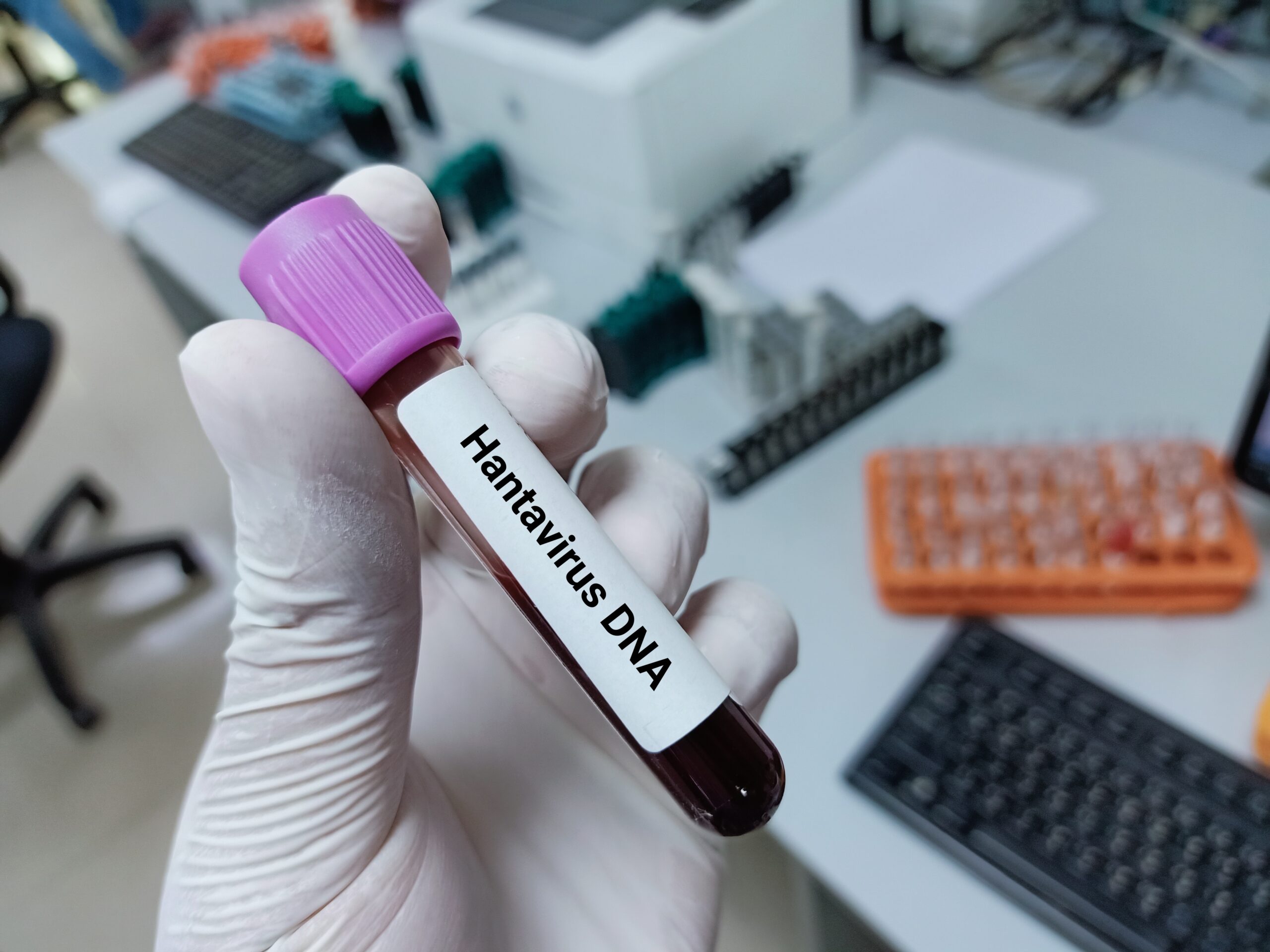
One of the rare diseases that has been occurring sporadically on an international scale for years is hantavirusa microorganism with viral characteristics capable of affecting humans and producing diseases that can be serious and even fatal.
Although there are no reports of outbreaks of this disease in Guatemala, the alert was raised after entities such as the World Health Organization (WHO) reported that on the MV cruise ship Hondius There have been reported cases of this disease, which as of May 9 has left three dead and six confirmed cases.
1.How is hantavirus transmitted?
Óscar Donis, head of the Epidemiology Section of the Department of Preventive Medicine of the Guatemalan Social Security Institute (IGSS), shares that Hantavirus transmissionusually, is zoonotic; that is, from animals to human beings.
Transmission occurs primarily by inhaling particles contaminated with rodent urine, saliva, or feces. It can also occur through direct contact with these secretions or, in some cases, through bites. The doctor highlights that the main reservoir is the rodent, capable of maintaining the virus in its body and transmitting it to people.
In addition, there is a risk in materials contaminated by rodent secretions, especially in barns, warehouses and places where these animals usually reproduce and remain for long periods.
In the vast majority of cases it is not spread between people because, in most variants, highlights Nancy Sandoval, infectologist and vice president of the Pan American Association of Infectious Diseases, transmission occurs exclusively from the rodent to humans, so a sick person does not represent a risk of contagion for those around them.
However, there is only one variant that can be transmitted between humans, although doctors consulted point out that it is not easily transmitted, like diseases such as covid-19.
2. When was the first case of hantavirus recorded?
Although it is not established when this disease emerged, it is believed that it has existed since the appearance of rodents. Media like The New York Times They highlight that the first outbreaks in humans were recorded at the beginning of the 20th century.
By 1951, it is believed that the first outbreaks in humans arose during the Korean War, where the first cases of a disease that developed hemorrhagic fever with renal syndrome occurred and which led to three thousand cases being reported by 1954.
It is believed that it was in 1993 when this virus was discovered in America, specifically in the United States, where it was later determined that not only was it transmitted from rodent to human, but that there was a variant that was transmitted from person to person, shares Iris Cazali, infectious disease doctor and head of the Infectious Diseases Unit at Roosevelt Hospital.
3. What is known about the variant that is transmitted between humans?
The so-called Andes variant is considered the only one of the hantavirus family that can be transmitted between humans, a virus that, according to Sandoval, is gaining clinical relevance at this time because it is the same one that is suspected to have developed on the MV cruise ship. Hondius.
Sandoval highlights that the Andes strain circulates mainly in Argentina and Chile, and is related to transmission through close and prolonged contact with an infected patient. This occurs mainly through respiratory secretions, “similar to how influenza is spread, but much less efficiently,” he highlights.
“It is important to clarify that it is not a transmission mechanism as efficient as that of covid-19. In the case of coronavirus, it was enough to be close to an infected person. Hantavirus requires much more specific contact,” emphasizes Óscar Donis.
4. What are the symptoms of the disease?
Iris Cazali highlights that the incubation time of this virus can range from one to six weeks and that the symptoms can be confused with the flu, but over time pain and breathing difficulties appear.
The first symptoms can range from a sudden high fever, severe muscle pain, chills and general malaise, to nausea and abdominal pain, mainly between three and five days.
When it progresses to a severe respiratory condition, difficulty breathing appears, which is one of the most important symptoms, says Cazali. The warning sign that distinguishes hantavirus from any other common illness is difficulty breathing, which can worsen within hours.
“That transition — from ‘I feel bad’ to ‘I can’t breathe’ — is the emergency and can worsen to the point of being lethal. A patient who arrives at the hospital in that phase has the option of being managed and receiving life support, but one who arrives in collapse has a worse prognosis,” says Sandoval.
5. How does the disease evolve?
After the virus enters the human body, highlights Óscar Donis, the symptoms develop like a common cold, which makes early diagnosis difficult, and they present fever, general malaise, muscle pain and headache.
Chills and gastrointestinal symptoms, such as nausea, vomiting, and diarrhea, may also occur. At this time we are not necessarily talking about warning signs yet, the doctor shares.
Warning signs appear when the patient begins to have difficulty breathing. “This is one of the symptoms that requires greater attention, because it indicates that the disease may be advancing to a critical stage,” he adds.
Chest pain and oxygenation problems may also appear with respiratory distress. This is when the patient may show bluish lips or nails, a drop in blood pressure and even go into shock, which is why it is necessary to urgently transfer them to a healthcare center as soon as possible.
6. Is there a treatment or preventive vaccine?
Although it is not a new disease, doctors emphasize that there is no preventive vaccine or specific treatment for patients. Sandoval highlights that there is no approved vaccine in the West or an effective specific antiviral.
To date, the only treatment applied to affected people is intensive support: oxygen supply, mechanical ventilation, control of pulmonary edema and hemodynamic stabilization in intensive care units.
Likewise, the expert highlights that the hantavirus is high risk for three specific reasons:
- Its mortality can reach 30% to 40%
- Clinical deterioration can be fulminant and occur within hours, without prior warning signs.
- There is no effective second line of therapy

7. What are the countries with the highest case reports?
Given the recent case, Cazali highlights that hantavirus cases have been reported for years mainly in America, including the United States and Central American countries. However, the main reports have occurred in Argentina, Chile and Peru.
It is in these latter countries where, according to Sandoval, cases of the Andes variant, responsible for transmission between humans, have been recorded.
8. What are the measures to prevent the spread of hantavirus?
Experts such as infectologist Nancy Sandoval highlight that this virus, like others, can be prevented, which is why they recommend:
- In spaces with rodent tracks: never dry sweep. It is recommended to first moisten with a diluted bleach solution—one part bleach to ten parts water—to inactivate the virus before cleaning. Wear gloves and N95 mask. Ventilate the space at least 30 minutes before entering.
- At home: Look for and seal cracks and holes, store food in airtight containers, and remove accumulations of trash where rodents can linger.
- When camping, hiking or traveling to rural areas: do not leave food inside the tent, sleep on raised surfaces of the ground and, if fever appears in the following weeks, always mention the history of rural exposure when being examined.
9. Does it represent a threat to public health?
Although on social networks they point out that hantavirus infections could represent a new pandemic, this has been denied by the WHO. According to Maria Van Kerkhove, WHO director for prevention and preparedness against epidemics and pandemics, there is currently a “low” level of epidemic risk.
The expert highlights that this virus is different from covid-19, since it does not spread between humans like SARS-CoV-2.
In Guatemala, the Ministry of Public Health and Social Assistance (MSPAS) highlighted that there are no signs of risk or contagionfor which he asked the population to remain calm and not spread erroneous or alarming information. Likewise, he highlighted that the MSPAS maintains epidemiological surveillance and monitoring.
10. Why should hantavirus be kept under surveillance?
Dr. Sandoval indicated that, although this disease does not represent a danger of mass contagion as occurred with covid-19, the hantavirus does represent a real threat.
“The danger to public health is not in its pandemic potential, which is low, but in three factors: its high mortality when it is not diagnosed in time, the absence of specific treatment and that the region’s health systems do not have robust protocols to quickly recognize and confirm it.”