
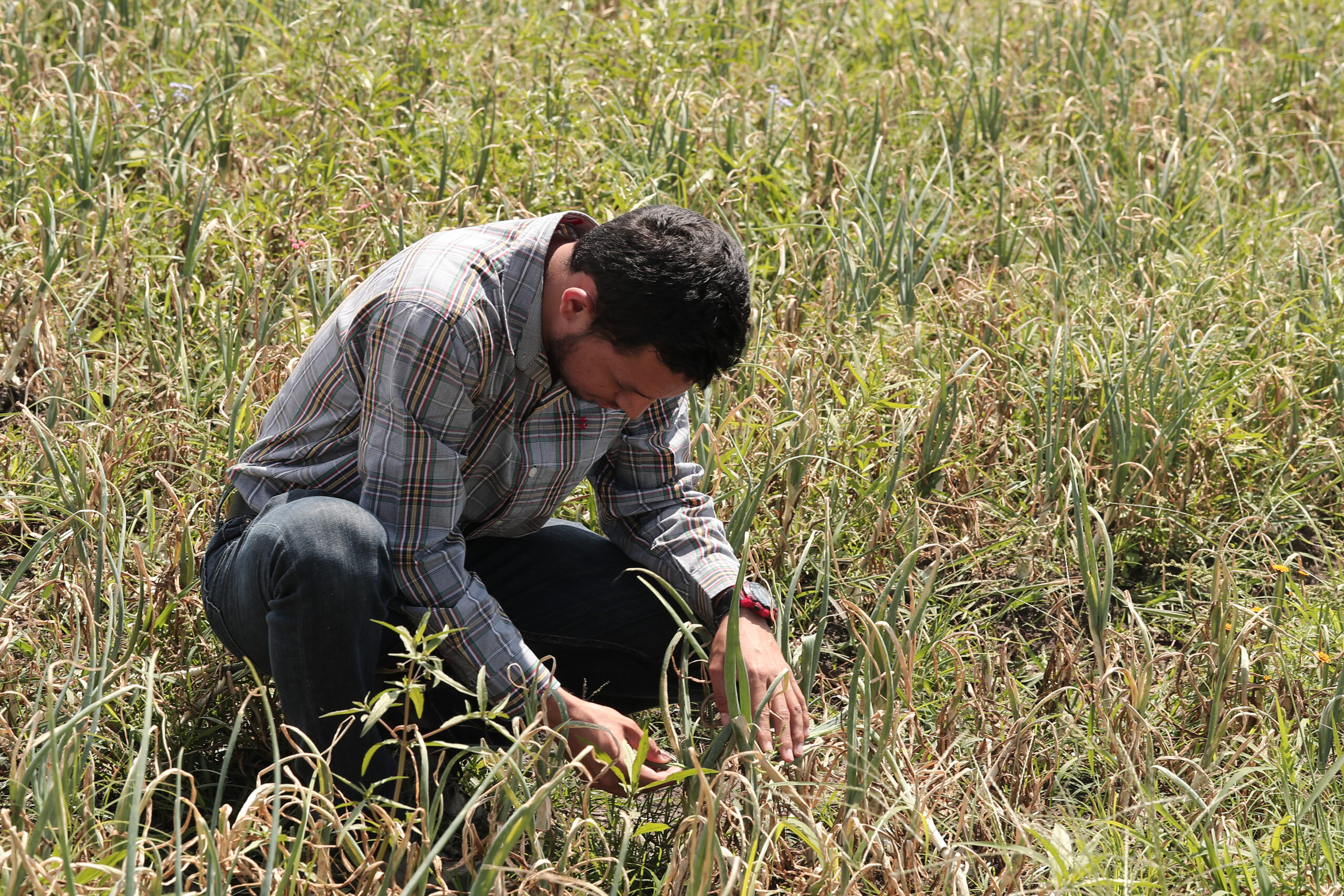
The report, prepared by the Geographic Information Directorate of the Ministry of Agriculture, Livestock and Food (Maga) and updated this weekend, indicates that large regions of the country They have less than 25% soil moistureespecially in northern, central and eastern areas.
“The soil moisture analysis shows that a large part of the national territory presents levels below 25%, mainly in the northern, central and eastern regions of the country, indicating limited availability of water in the soil and favorable conditions for water stress in crops,” details the agrometeorological bulletin.
Given this panorama, the authorities recommended to agricultural producers reinforce moisture conservation practices before starting sowing corresponding to the rainy season, which begins in May.
Among the suggested measures, the use of plant cover, incorporation of organic matter and reduction of direct soil exposure to conserve available moisture stand out.
The report also identifies areas with better humidity conditions, between 51% and 75%, in sectors of San Marcos, Quetzaltenango, Sololá and Suchitepéquez.
However, in these regions the Maga recommended maintaining surveillance over the drainage systems in plots and crops, due to the possibility of rain accompanied by thunderstorms and local activity during the weekend.
Recommendations for producers
The agrometeorological bulletin includes several recommendations aimed at the agricultural and livestock sector:
- Implement moisture conservation practices, such as incorporation of organic matter and minimum tillage.
- Sow only when the soil has adequate moisture conditions, to avoid losses due to irregular germination.
- Maintain health surveillance of the livestock herd, since warm and humid conditions favor the appearance of parasites and diseases.
- Ensure sufficient clean, fresh water for livestock to reduce the effects of stress caused by high temperatures.
They warn of risks for crops due to extreme weather
The official agrometeorological bulletin, prepared with information from the National Institute of Seismology, Volcanology, Meteorology and Hydrology (Insivumeh), warns that during the beginning of the week there could be high temperatures above 35 degrees Celsius and accumulated rainfall greater than 100 millimeters, conditions that represent risk for various crops in several regions of the country.
The information was validated by the Agricultural Strategic Information Center and indicates that the municipalities of Huehuetenango are among the areas most exposed to damage from intense rains.
According to the report, among the Crops vulnerable to excess rain in Huehuetenango include vegetables, coffee, grasses, corn and beans.
Regarding high temperatures, the bulletin identifies possible effects on tobacco, banana, coffee, corn and bean crops, citrus fruits, sugar cane, oil palm, melon, grasses, vegetables, pineapple and rice.
“The soil moisture analysis shows that a large part of the national territory has levels below 25%, mainly in the northern, central and eastern regions of the country.”
The extreme heat alert mainly covers producers in Retalhuleu, Escuintla, Santa Rosa, Alta Verapaz, Quiché and Petén.
The report emphasizes that high temperatures not only directly affect direct to crops, but they also accelerate evapotranspiration, causing a more rapid loss of moisture in the soil.
“This can generate water stress in plants even when recent rains have been recorded, especially in soils with little plant cover,” the bulletin highlights.
The authorities recommend that producers strengthen moisture conservation practices and constantly monitor climatic conditions to reduce the impact on agricultural and livestock activities.