
On the hill of a Colombian mountain, between palm trees, stables and green pastures, the doors of the house where he grew up Juan Luis Londono opened to show an unusual facet of the global phenomenon known as Maluma: that of the boy who dreamed of singing while walking barefoot on a family farm on the outskirts of Medellín, the city where this Thursday he will release his new album.
At the entrance of the house, a silleta—a traditional figure of the Flower Fair—welcomed the guests, as if from the first step the singer wanted to make it clear that this was not just any presentation, but a celebration of Antioquia, a department in the northwest of the country, and its roots.
There, on his grandparents’ farm, Maluma presented to his guests Crazy to come back, his seventh solo album, with which he claims to have “rediscovered Juan Luis”, his essence and the place from which he left before becoming a world star.
“We are celebrating the rebirth of Juan Luis. We are showing the world a new album that took me a while to make, but which is a very beautiful moment of healing in my life, which took me back to my land, to my roots,” said the artist in an interview with EFE.
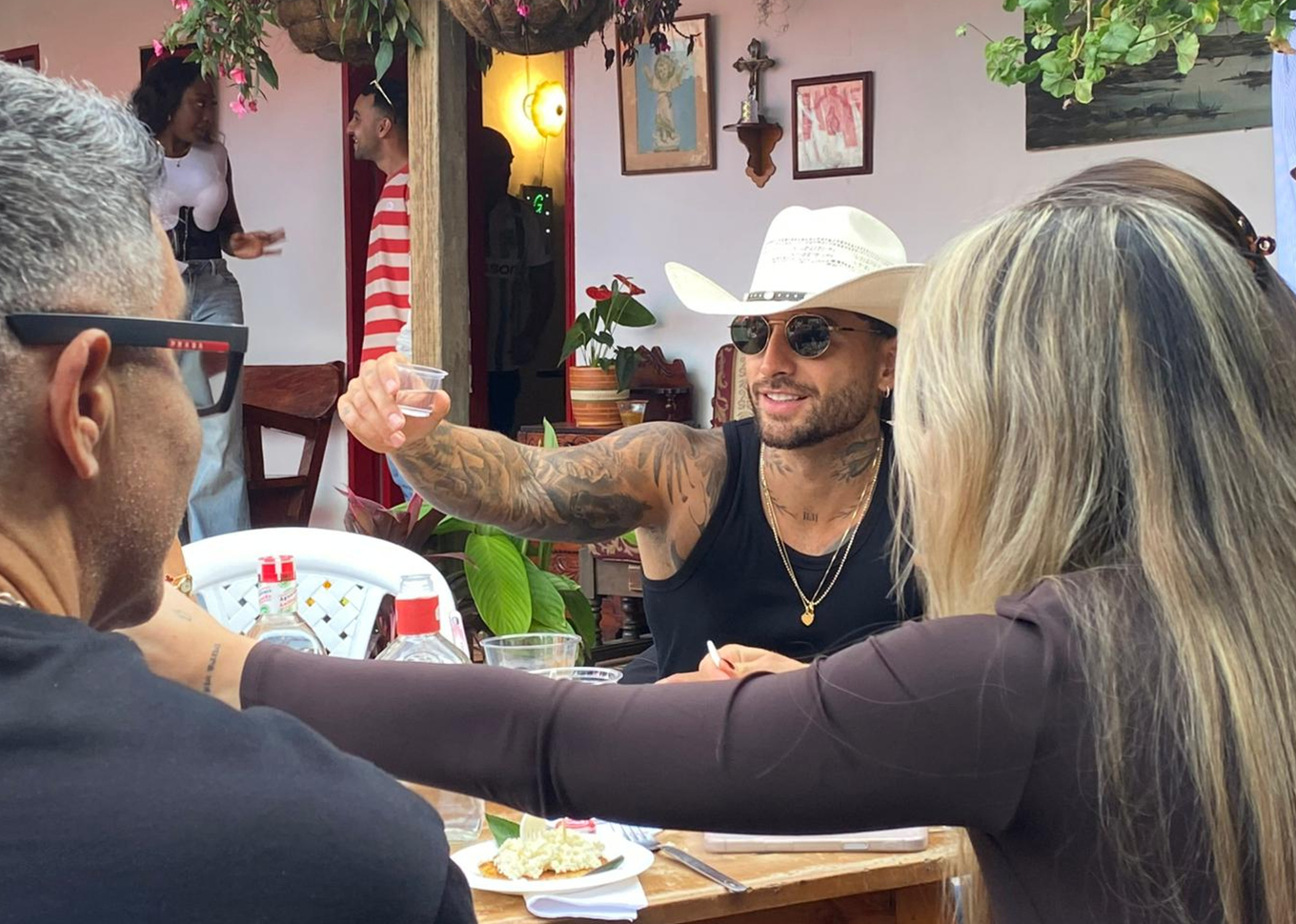
The entrance seemed more like a family reunion than an international launch. Empanadas, Colombian fried foods, domino tables, games of tejo (typical Colombian game), flowers, popular music and bottles of Antioquian liquor accompanied journalists and influencers from Colombia, Mexico, Spain and Argentina.
Maluma appeared dressed in black denim clothing and a white hat, greeting his guests one by one while toasting with small glasses of guaro.
For the 32-year-old singer, the album talks about his culture, what it is like: “I think it’s enough for people to connect with it,” he explained.
Museum of childhood
More than a farm for a private party, the house seemed like a sentimental reconstruction of Juan Luis Londoño’s childhood.
Although during the tour it was repeated several times that the artist grew up there and spent a good part of his childhood, the organization never officially confirmed how long he lived in the place, and the truth is that the space was converted into a kind of intimate Maluma museum.
Family photographs, young Londoño’s first visit to the Atanasio Girardot stadium in Medellín, Nintendo consoles, rooms with bunk beds, objects from his childhood and actors playing his grandparents, uncles and cousins sought to transport the guests to the singer’s personal universe.
One of those actors, dressed in the Atlético Nacional shirt and in charge of representing one of his uncles, explained to EFE that the house “is the grandparents’ house, it represents the matron and the patron of the family.”
The scene reinforced the central idea of “Loco x Volver”: a symbolic return to traditional Antioquia, to the family roots and the environment that shaped the artist before becoming a global star.
The rebirth of Juan Luis
Before presenting the songs, Marlli, Luis and Manuela, respectively the mother, father and sister of the artist, arrived at the farm, the three people whose names gave rise to “Maluma”, the acronym that ended up becoming one of the most recognized brands in Latin music.
Also with them was his wife, Susana Gómez, who revealed the pregnancy of the couple, who are expecting their second child.
Between vallenatos, salsa, reggaeton and popular music, Maluma sang five of the 14 songs on the album, which took two years to write and which he shared with his audience for the first time.
“I missed Juan Luis, I missed my essence, that dreamy child. And I came back,” said the singer about the album, which includes collaborations with Ryan Castro, Beéle, Arcángel and Grupo Frontera.
But the intimate celebration at the family farm will be just the beginning.
This Thursday, Maluma will bring that symbolic return to his origins to the heart of Medellín with a free concert in Plaza Botero, whose tickets are already sold out for a capacity of eight thousand people, and in which he will be accompanied by several surprise artists.
After touring stadiums and international stages for years, the singer seems determined to turn his return home into a collective show for his city.