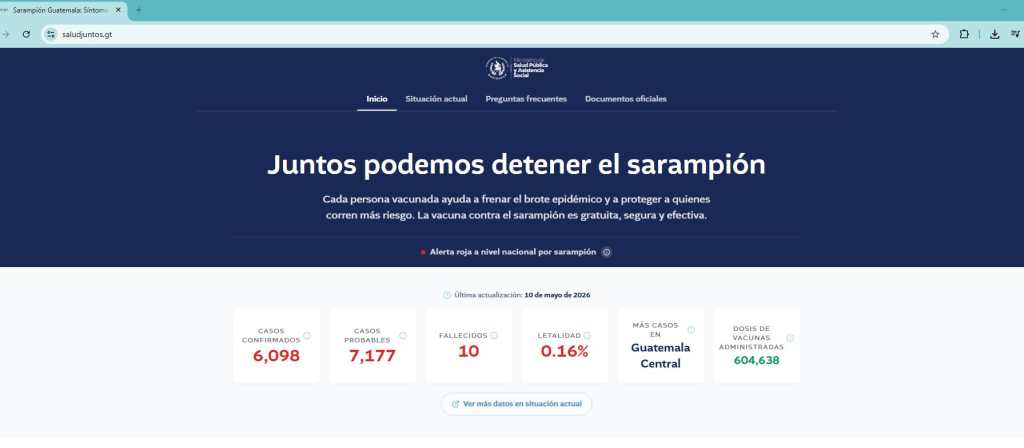
Guatemala is in a phase of active epidemiological surveillance after the detection of localized outbreaks of measles.
This disease, highly contagious and considered controlled, has once again generated concern due to the accumulation of susceptible people who did not complete their vaccination schedule in previous years.
The current alert responds to the need for prevent massive spread. Although the virus can affect anyone, authorities have identified a particular vulnerability in young adults and young children who have not received their booster doses.
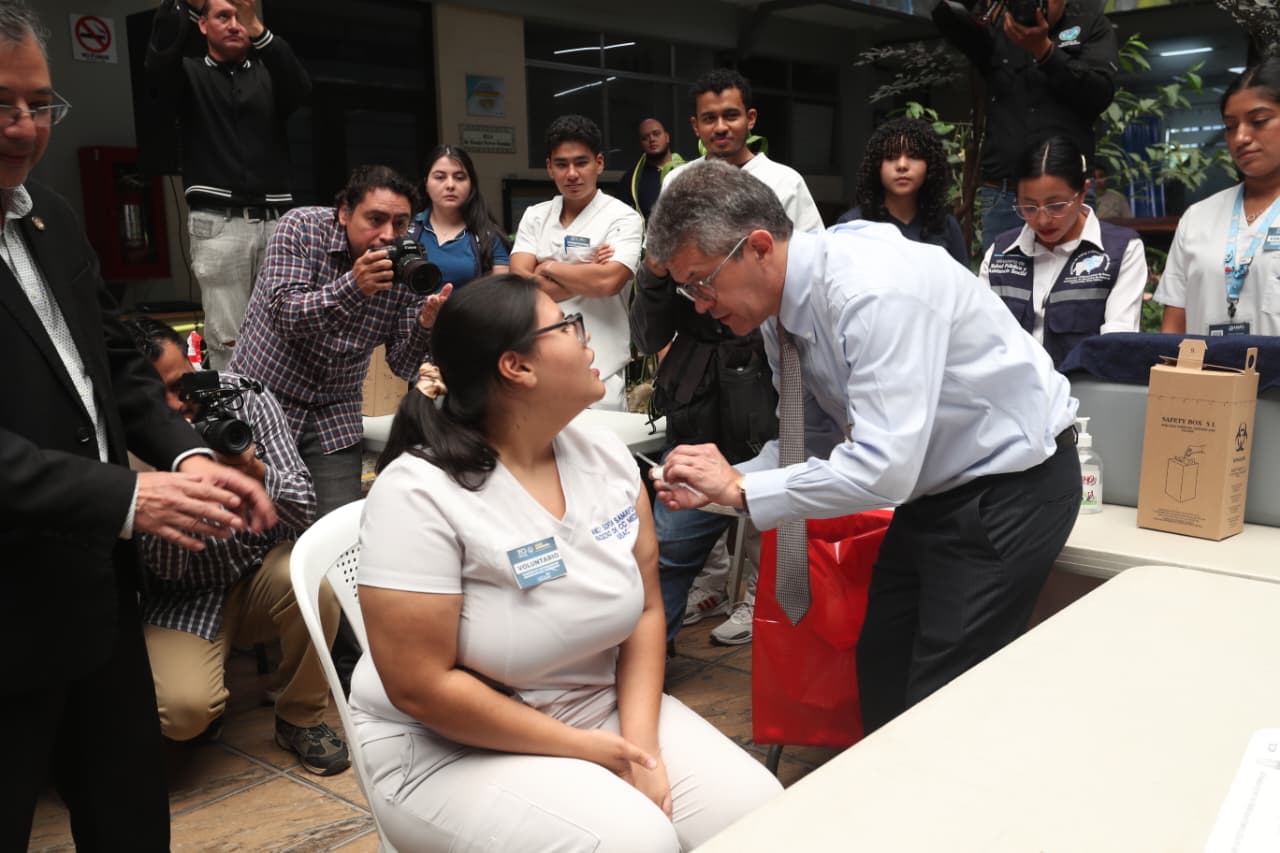
On May 14, 2026, Ministry of Public Health and Social Assistance (MSPAS) officially launched a strategic vaccination campaign. The objective is to increase herd immunity in the areas with the highest number of cases and protect the most vulnerable groups.
The priority of the health authorities is the immediate containment. During the coming weeks, immunization days will be intensified, starting with specific foci to ensure that the virus does not spread to other departments of the country.
Read also: Deaths from measles double in a month and cases exceed 13 thousand in Guatemala
Measles in Guatemala: frequently asked questions
The following questions are answered based on the technical and updated information published by the Ministry of Public Health and Social Assistance (MSPAS)the World Health Organization (WHO) and the US Centers for Disease Control and Prevention (CDC).
What is measles and why does it occur?
It is a highly contagious respiratory disease caused by a virus from the paramyxovirus family. It is transmitted through the air (coughing and sneezing) or by direct contact with infected nasal or pharyngeal secretions.
How does it start and what symptoms does it give?
It begins with a high fever, cough, runny nose (rhinorrhea) and red eyes (conjunctivitis). A few days later, Koplik’s spots (white spots inside the mouth) appear and, finally, the characteristic rash that spreads from the face to the rest of the body.
What is the measles rash like and where does it appear?
It appears 3 to 5 days after fever, cough and conjunctivitis. They are flat red spots and some raised ones that start on the face and hairline, and extend in descending order to the neck, trunk, arms, legs and feet. The spots may join together and the skin often peels as it heals.
What are the effects of the vaccine?
The vaccine is safe. Most people have no or mild side effects, such as pain in the arm where the injection was given or a brief fever. It is much safer to get vaccinated than to contract the disease to avoid serious complications such as pneumonia or encephalitis, or even death.
Minister Joaquín Barnoya responds
As part of the launch of the campaign on May 14, the Minister of Health, Joaquín Barnoya, clarified specific doubts about the logistics and nature of the current outbreak:
Is it a new pandemic?
No. The minister clarified that it is not comparable to COVID-19 because, unlike other viruses, this is a known disease for which there are already highly effective vaccines (SR and MMR).
Is the campaign national?
For now, it focuses on the municipalities with the highest record of cases, which are: Guatemala, San Juan Sacatepéquez and Mixco. The goal according to Barnoya is to contain the outbreak at these points first as part of the strategy and protect as many as possible.
Are measles doses available?
Health has more than 900 thousand vaccines in the system. It was emphasized that mortality mainly affects babies under 6 months, who cannot yet be vaccinated, so vaccination of adults is essential to protect them.
Don’t know if you were vaccinated? At what ages can you be vaccinated? This you should do if you do not have your health scheme
Although it can be applied from 6 months of age, the minister highlighted that The group with the highest contagion is currently between 15 and 39 years old.. If you don’t know if you were vaccinated as a child, Barnoya recommends attending: “The best thing is to come and get vaccinated; you just have to present your DPI.”
Where and at what times should you get vaccinated?
Currently, there is a day for the general population and also for students and staff of the University of San Carlos de Guatemala (Usac) in the Metropolitan University Center (CUM), located in the 9a. 9-45 avenue, zone 11taking care of 7:00 a.m. to 3:00 p.m..
The minister confirmed that the strategy will be expanded progressively. 9 weeks of containment are expected in the capital before spreading to other municipalities.
In particular, people can also go to the health centers and posts authorized at the national level to request the vaccine, confirmed the Health portfolio.
How to see how many cases there are?
For population transparency, official data is available on the website healthtogether.gt.