
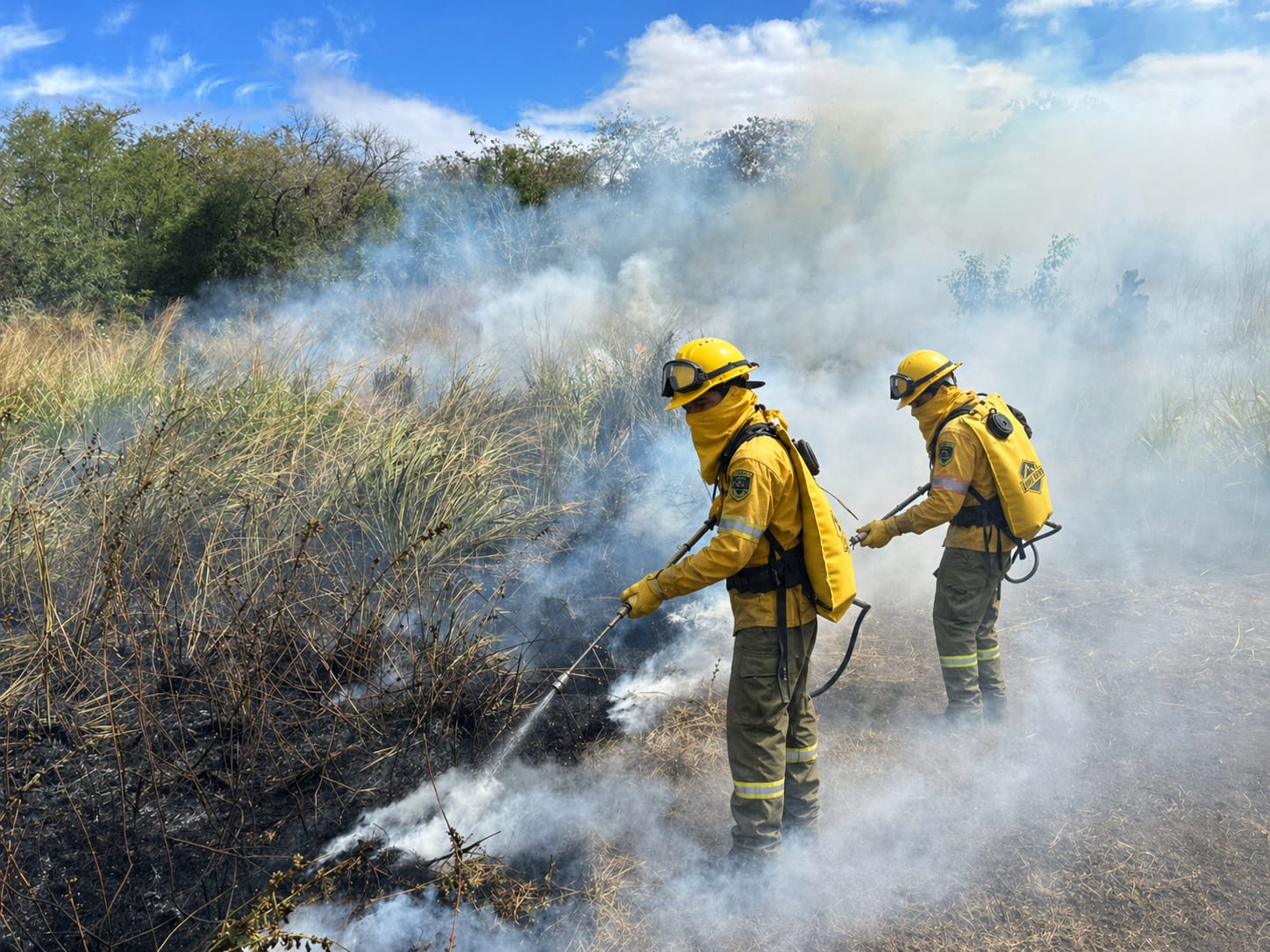
The fire has reduced to ashes 24,495 hectares of forestaccording to reports until May 18, 2026. Although the current budget for the attention of these emergencies amounts to Q56 millionauthorities and specialists warn that a relevant factor is the current climatic conditions.
Unlike previous years, the season has been extended due to a critical combination of high temperatures and variability in rainfall, intensified by the formation of the El Niño phenomenon.
In global figures, from January 1 to May 18, during the season there are a total of 1,076 forest fires registered nationwide.
A “complicated” scenario due to El Niño
Ivan Soberanis, forestry specialist Nature Defenders Foundationpoints out that the usual cycle of fires—which is usually concentrated between November and April— has moved towards May and June.
“In April we had some rain nationwide, but the season is getting longer. Now in the month of May for us has been quite critical… And seeing the climate news, that the El Niño phenomenon is entering with many more temperatures and that it will rain little, so We face a complicated scenario regarding fires“Soberanis warned.
The impact on the Sierra de las Minas is alarming, not only because Soberanis estimates that “more than 90% of fires are arson”, but for the vital role that this reserve has for the country.
“Sierra de las Minas is the second largest reserve in the country and is a bank of water; more or less 63 rivers that supply more than 200 communities (about 300 thousand inhabitants). The social impact implies the reduction of water for consumption and agricultural use, in addition to the destruction of flora and fauna habitats,” he explained.
To counteract this, the specialist explained that they carry out daily satellite monitoring of “heat points” together with Conred and Inab, which they verify in the field on foot or by motorcycle twice a day to confirm whether they are agricultural burning or real forest fires.
Ungovernance in protected areas
In the north of the country, the dynamics change but the human origin persists. Gloria Leticia Espina, director of the Sierra Lacandón National Park, affirms that in Petén fires do not occur naturally; are pressure tools for taking land.
“The fires in Petén are 100% caused. Here the forests are not forests that catch fire on their own… The phenomenon is that people enter the area, deforest certain small spaces so that when summer arrives they set fire to it. The park in recent years has had a lot of pressure from people who have wanted to enter the territory. In other words, the fire is usually a matter of entering protected areas to appropriate certain spaces,” Espina denounced.
Espina agreed that satellite monitoring is key to avoiding false alarms, since a “heat point” It can be caused by the reflection of sheets, bodies of water or illegal hunting in grasslands.
However, he emphasized that in the deep forest the situation is critical. “This year we did have fires due to weather issues in April, which is unusual. Right now I have four fires specifically in forest areas. Fires caused 100% by issues of ungovernability, by people with interests in appropriating an area to raise livestock or to settle within,” he concluded, pointing out that the park’s greatest challenge is already an issue of state security.
Normal parameters and heat waves
For its part, the National Forest Institute (Inab) maintains daily monitoring outside protected areas.
The engineer Vinicio Rodríguezhead of Forest Protection of the institution, pointed out that the 2026 season shows a balance within normal parameters and with figures very similar to those of last year, although the behavior of the recent climate has raised alerts.
“Except for these last few weeks, where Yes, there have been heat waves and, therefore, we have had temperatures much higher than normal…This, logically, does not help us much with the issue of forest fires,” explained Rodríguez, who added that rains are expected to be scarce.
To mitigate the damage, which varies according to the susceptibility of each ecosystem, Inab is committed to restoration and the launch of the national campaign “Sowing Traces” this May 21, seeking to involve schools and communities to create a culture of reforestation against the effects of fire.
The challenge of simultaneity
According to data from the National Coordinator for Disaster Reduction (Conred), Due to the high temperatures, the greatest impact has been in departments such as Quiche (159 records), Peten, Sacatepequez and Guatemala They lead the statistics.
The current challenge is the simultaneity of fires, which require activating several firefighting equipment at the same time to face the threats.
On May 18, it was reported 26 active fires at the same time, forcing brigades to divide efforts on multiple fronts under conditions of extreme risk.
Read also: Heat in Guatemala: eastern wave passing and temperatures of up to 42°C from May 18 to 22