
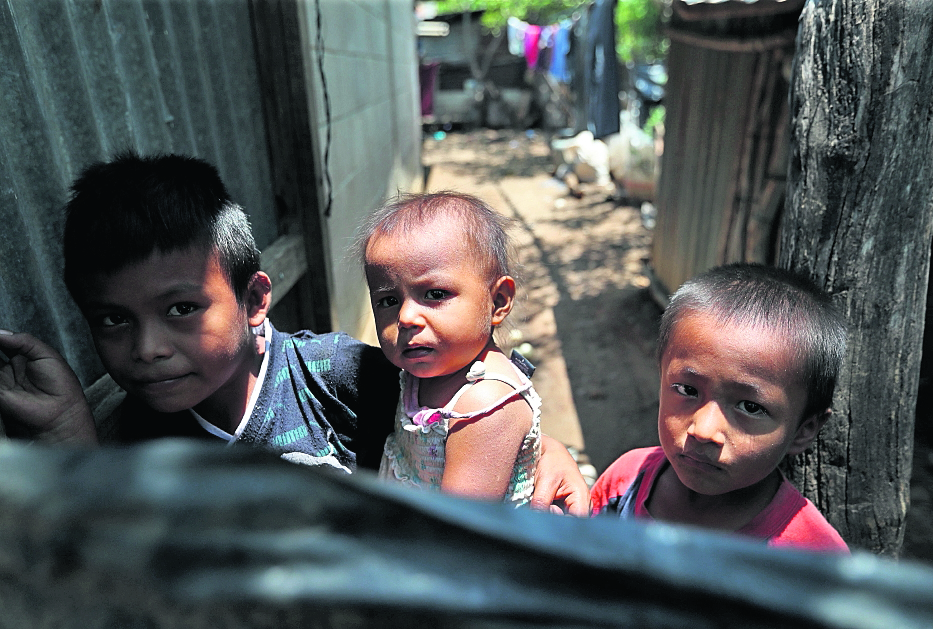
Health services suspended the delivery of fortified complementary food Nutriniños, which each year reached more than 300 thousand children between 6 and 23 months in municipalities prioritized for malnutrition. The last bags of the product were distributed last April, due to lack of renewal of the agreement to purchase the product which expired last December.
The Ministry of Health announced that in June a pilot plan will begin in seven municipalities in the country to deliver the Lipid Nutritional Supplement (SNL) to replace Nutriniños.
During In 2024, the delivery of food to 313,234 children was reportedand Last year the product was distributed to 388 thousand 134as indicated by Health officials during a recent summons in Congress. The mothers They received two two-kilo bags every month to prepare at home. as a food supplement for children. The product contained milk, corn and soy flour, vitamins A, D, E and K; B complex; niacin; iodine; calcium; zinc; potassium, and iron.
Due to the lack of renewal of the agreement, This year only a remainder of 29,303 bags were distributedwhich would have reached about 3,660 children, if each one received two monthly bags between January and April.
End of the agreement
Mides had to manage the purchase of Nutriniños food at the request of the Ministry of Health. The health services were responsible for delivering the product to mothers who brought their children for weight and height control.
However, Mides reported that “for fiscal year 2025, said requirement was no longer presented by the Health portfolio.” Therefore, the agreement was not renewed and the purchase of more product was no longer made, which was carried out through the WFP, on behalf of the Government of Guatemala.
Since January of this year, children under two years of age no longer receive any nutritional supplement to prevent chronic malnutrition, except for a small group that benefited from what was left from the last purchase.
Marlon Figueroa, advisor to the Vice Ministry of Primary Care of the Ministry of Health, pointed out on May 13, during a meeting with deputies from the Vos bench, that Health services do not have the capacity to store the Nutriniños product and they are not responsible for food distribution either.. Based on these technical criteria, he indicated that the agreement was no longer renewed.
“A health post is trained to store medicines, not food. This is a product that tends to be lost a lot,” said Figueroa, and indicated that said supplement is well could be delivered through Mides.
He added that there is “no direct decision,” not even in writing, about the suspension of the agreement; It was simply an issue that was no longer discussed between the parties involved.
“There was no signing of a new agreement. The Ministry of Health has technical opinions that, within the Food and Nutritional Security Law, it is not responsible for the distribution of food.”
Marlon Figueroa, advisor to the Vice Ministry of Primary Care of the Ministry of Health
However, María Eugenia Morales, financial administrative vice minister of Mides, pointed out that, as a ministry, they called on Health to come to a technical table and discuss the issue, but there was no response.
“It was reiterated to them that the agreement was going to expire; it was informed so that they would know,” said Morales, which is why this year the complementary food was no longer purchased.
Representatives Orlando Blanco and Jairo Flores questioned why it was not planned in advance to have a substitute product for Nutriniños, knowing that the agreement would expire, thus childhood is left unprotecteddespite the fact that in Guatemala one in four children has chronic malnutrition, which represents a violation of the right to health and life.
For her part, Mireya Palmieri, secretary of Sesán, indicated in the summons that she did not agree with the suspension of the delivery of said food and that the Secretariat in charge of her made several attempts to have a substitute product from the moment she knew that the agreement would end.
“I did not agree with him not continuing; I expressed it in the technical meetings, I made it known to the authorities of the ministries,” said Palmieri.
New supplement
It will not be until June when the Ministry of Health will implement a pilot plan to distribute the Lipid Nutritional Supplement (SNL)which contains macronutrients such as proteins, fats and carbohydrates. However, coverage will be limited.
The initial implementation of the project will be carried out in seven prioritized municipalities of Totonicapan and Alta Verapaz. Distribution will be made through health services, in coordination with actions to monitor children’s growth.
7,500 children will be reached between 6 and 23 months in Momostenango, San Francisco El Alto and Santa Lucía La Reforma, in Totonicapán. In Alta Verapaz it will be distributed in Panzós, San Cristóbal Verapaz, Tamahú and Tactic.
According to Health, the SNL does not replace Nutriniñossince the characteristics, composition and purposes of both products are different. One of the peculiarities of SNL is that it does not require preparation, since is ready for consumption, which facilitates its administration at home, under the recommendations of health personnel.
The first acquisition will be made with the support of the United Nations Children’s Fund (Unicef), which will donate 4,500 boxes. Purchases for subsequent years will be made with the budget of the Ministry of Health, according to Figueroa.
Questions efficiency of programs
According to Jorge Pernillo, professor at the School of Nutrition at the Universidad Panamericana (Upana), the window between 6 and 24 months of age is critical, since it is the period of complementary feeding in which It must be ensured that children consume the minimum required nutrients. “A gap of months in the delivery of complementary food interrupts key processes of prevention of chronic malnutrition,” he indicated.
That Salud begins the SNL pilot plan in June in only seven municipalities of Totonicapán and Alta Verapaz is, for Pernillo, evidence of “the deep fragmentation of public policies on food and nutritional security (SAN) and a new example of the failure in governance and institutional coordination that Sesán is responsible for leading.”
Consider that Mides must assume the delivery of complementary food as part of its institutional essence, so as not to overload health personnel at the first and second levels of care, who must focus on clinical and preventive care.