
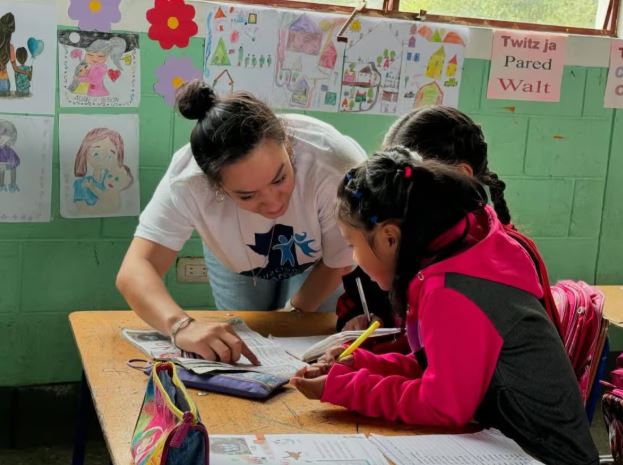
From San Francisco —where he will begin his residency in one of the most competitive programs in the United States—, Dr. Katherine Narváez does not lose sight of a point on the map that marked its history: Guatemala. Born in Izabal and raised since she was 6 years old in Atlanta, Georgia, her life is spent with the conviction of being a better professional and supporting the children of his country.
Narváez has not only traveled the demanding path of medicine in the United States; It has also acted in favor of local communities and has been an active bridge towards rural Guatemalan communities, where it promotes a health model that combines prevention, education and sustained work with local actors. For this reason, on April 2 she was recognized with the Leonard Tow Award for Humanism in Medicine, from the Arnold P. Gold Foundation.
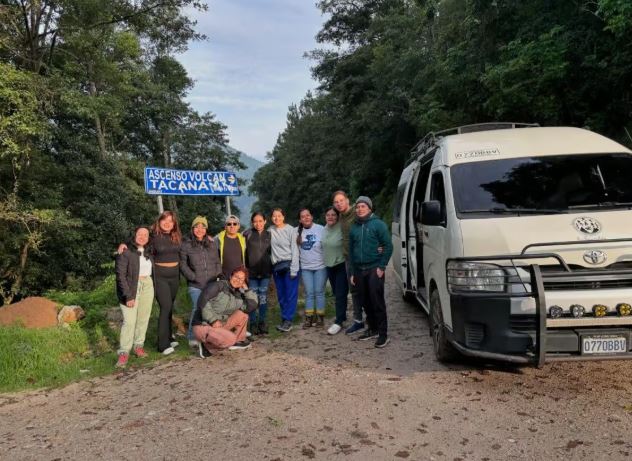
“I’m from Guatemala, I’m from Izabal… when I was six years old I moved to the United States,” he remembers. “We decided to start working 8 years ago in Sibinal, San Marcos, because it is one of the municipalities with low human development indices. It is very close to the border and sometimes very far from the support for its children.“He expresses. His foundation, Adelante Guatemala, works in the village of Vega del Volcán, at the foot of the great Tacaná.
From migrant identity to medical vocation
In 2018, Katherine was not yet a doctor, but she studied for an MBA at Johns Hopkins University, where He also took courses focused on health.
Thus he began to organize community efforts that over time were consolidated into a health program. “Initially I wanted to focus on education. But when we started to look at all the things… many of the children did not survive even to the age of five. How were we going to focus on education when children are not reaching that age? Due to malnutrition, gastrointestinal diseases,” he explains.
Today, their work is carried out in the village of Vega del Volcán, Sibinal, San Marcos, an area that is difficult to access where the deficiencies are evident from the road. “The first time we went, our bus got stranded… we all had to get out and push to ensure that the medical brigade arrived and what we were carrying,” he says.. His most recent visit was in 2024.
For this mission, Katherine gathers support from Guatemalan doctors and medical students, and implements actions ranging from the distribution of water filters to medical days and community education. “We want to try to change from below… not just put a band-aid and say ‘we are doing something’, but change the system from the bottom up”.
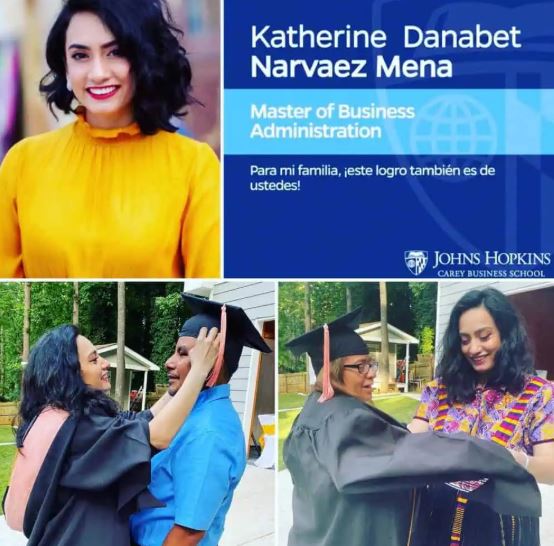
Specialist in gynecology and obstetrics
Access to drinking water, he explains, is one of the most critical factors. “In many places in Guatemala there is no such thing as turning on the spout and the water coming out clean.” Hence one of its initiatives central is One Drop at a Time, aimed at preventing gastrointestinal diseases that especially affect rural children.
But his approach goes further. Dr. Narváez, a specialist in gynecology and obstetrics, insists on strengthening local capacities and generating opportunities for those already in the country. “Guatemala’s problem can be solved by involving Guatemalans… the key is that they have the resources and the opportunity to train“, says.
That idea guides a scholarship aimed at medical students in the west of the country, particularly in Huehuetenango. “We want to empower these students to think like scientists… What can I do to change those statistics in these communities? Excellent doctors will emerge from the answer.”
Overcome barriers through service
But Katherine’s medical vocation was born in another context of inequality: that of migrant communities in the United States. “I grew up in an area where there are many immigrants… and I saw how the health system is very discriminatory. Having a hospital nearby does not mean that one can access those resources. “People have no way to pay for these services, there is a lot of exclusion.”
That contrast also marked their training, often in spaces where diversity is still limited. “Latinos are 6% of doctors in the United States, but Latinos are 20% of the population“, she points out. That imbalance became a driving force. “I want to be the doctor who returns to that community… and provide health resources.”
His parents have been his inspiration for perseverance. Daughter of a mother who worked cleaning houses and a father dedicated to construction, she grew up in a home where effort and solidarity were daily. “Sometimes we didn’t even have food for ourselves, but if someone in the church or in the community needed it, my mom would share the little we had.”.
Pride, purpose and systemic change
That sense of responsibility also transformed his relationship with Guatemalan identity. “For a long time they told me that Guatemala was where stupid people lived… and I internalized it. Until I decided to break with that prejudice. Why would one feel ashamed of coming from Guatemala, an ancient country, with great civilizations that have left their mark on the world?… It is an honor to be able to represent a hard-working, humble, fighting community, that of Guatemala and Latin America.”
In her medical practice, Katherine’s commitment is especially focused on women. “Here in the United States there are very high maternal death rates… and many women, especially migrants, do not even seek care out of fear.”
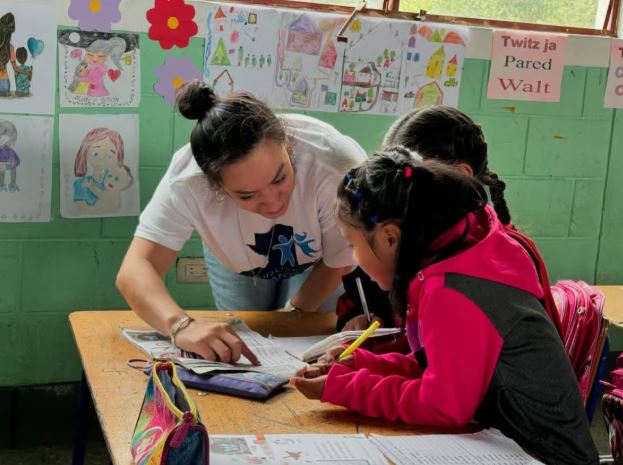
For Katherine Narváez, access to health should not depend on immigration status in the United States or the distance to the capital in Guatemala, nor be limited by economic conditions. “Health should not be a privilege, but a right for everyone, because it allows for better development of communities and a better economy.”
As she advances in her career, her sights remain on collective impact. “I want to change medicine here in the United States and also in Guatemala… open opportunities for others.” For this reason, his foundation has a good name: Adelante Guatemala. His goal, in essence, is clear: “To change people’s lives, no matter how small that change is… in the long run it will be a big one.”