
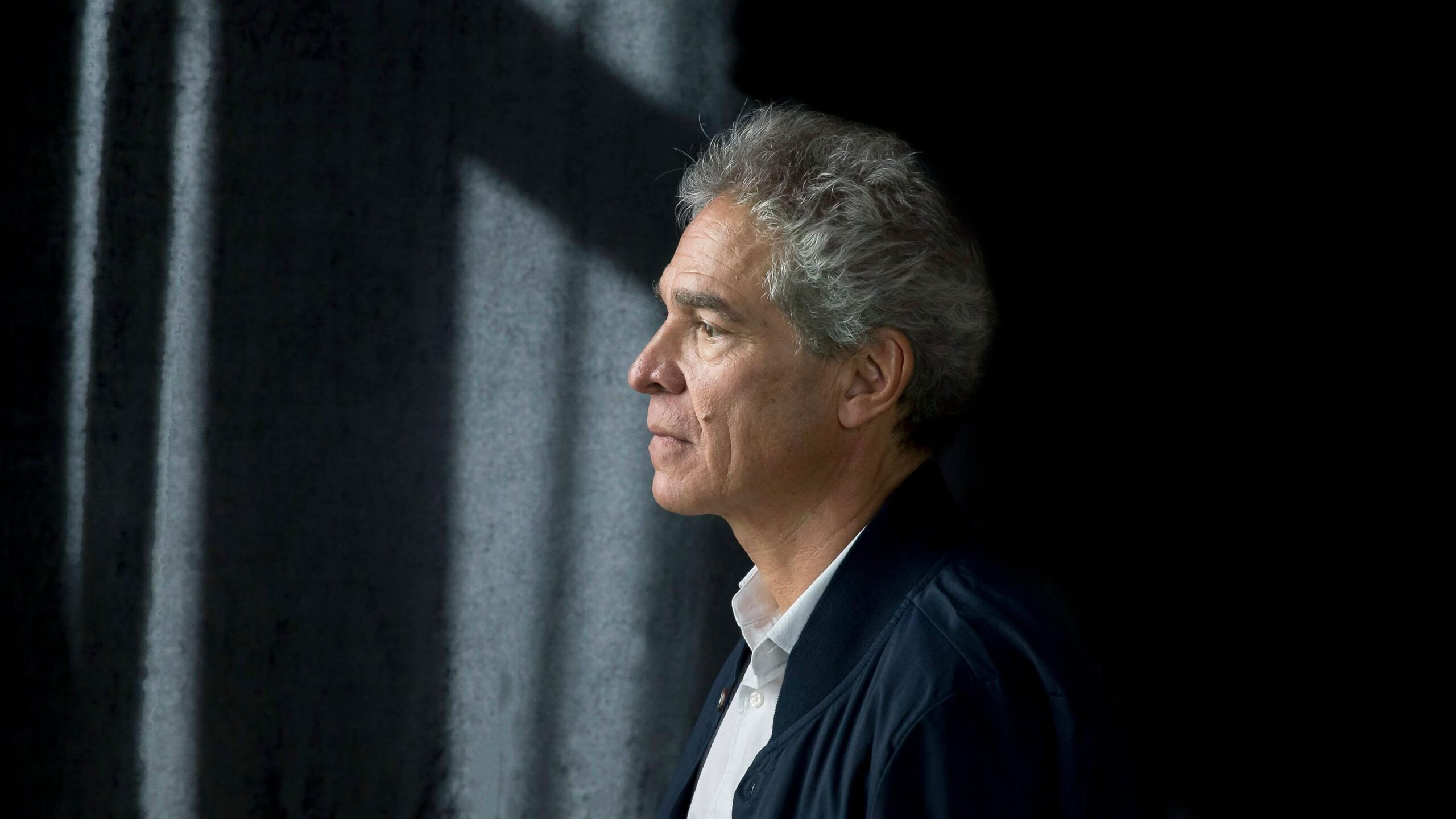
The country is not El Salvador governed by Nayib Bukele, but Nueva Verapaz, a fictitious republic that emerged from the division of the States of the region, presided over by a woman: The Strong Lady.
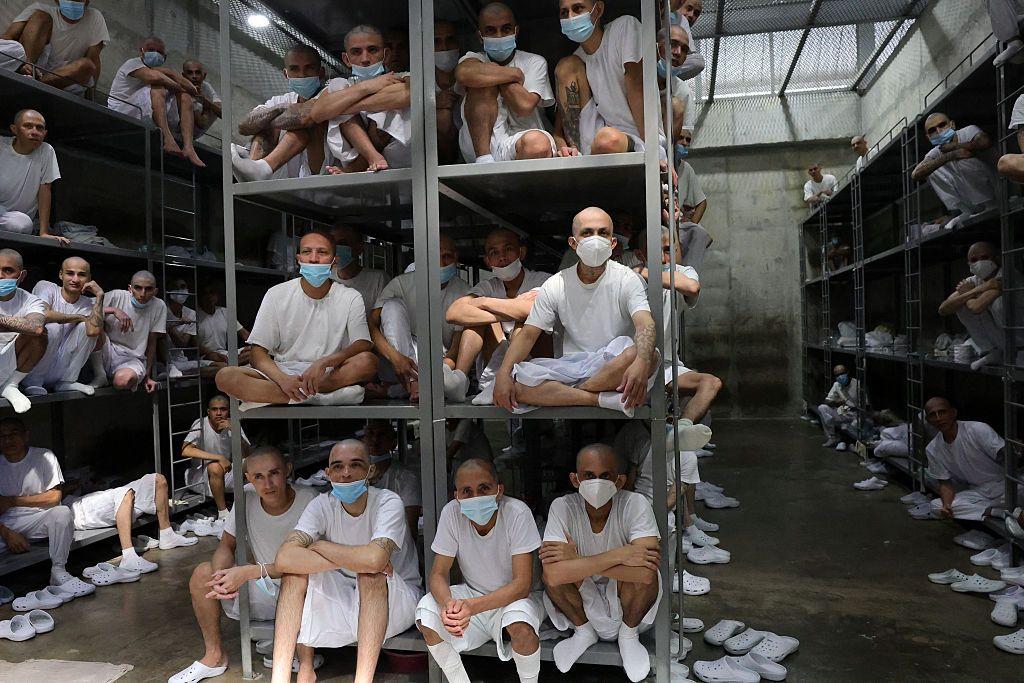
And the megaprison is not the Terrorism Confinement Center (Cecot) that Bukele inaugurated in 2023 as a symbol of his harsh security policy, but a prison called Infiernón.
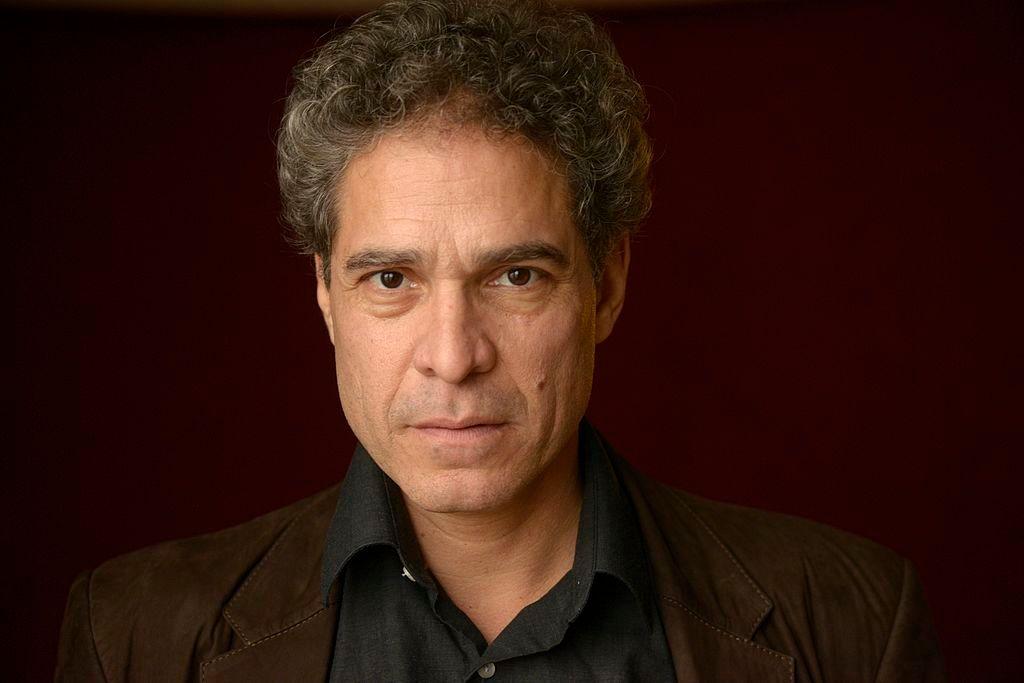
“Colonial Animal” takes place there, the novel just published by Rodrigo Rey Rosa, the writer born in Guatemala in 1958 who met the great American novelist Paul Bowles in Tangier (Morocco) and became his protégé, and who received awards such as the National Literature Prize of his country in 2004.
Living in Greece since the covid pandemic, the author of other books such as “Severina” or “El material humano” spoke with BBC Mundo about his new work in the run-up to the Centroamérica Cuenta literary festival, which takes place this month in Panama.
What follows is a summary of the telephone dialogue with Rey Rosa, whom the Chilean writer Roberto Bolaño came to praise for his prose.
What led you to write a book inspired by Bukele’s megaprison?
I have written several things about prisons: “Tree Prison”, something about those private prisons in the United States that were a big business… It is a topic that has interested me.
Guatemala can be a prison too, if you have no way to get out.
I never know exactly what the genesis is like, but I started reading a lot about Bukele and the mystery that existed about that prison. And it made me want to try something like that story of mine called “Tree Prison,” which happens in a secluded place. The opposite of a prison like this, which is a kind of national pride.
I started taking notes, suddenly I saw a character that I thought could be the common thread and that’s how I left, little by little.
What is the biggest challenge of bringing a real situation like that of El Salvador and its megaprison to literature?
As it is such a political thing, for me it was exactly that. I spent maybe two or three months watching how he got into it, until I saw this character who is sent from The Hague to investigate. It is inspired a little by two friends of mine who are like researchers, one of them who works in The Hague.
I thought he was a character I could follow and that it was not unlikely that he would penetrate that hermetic world.
That’s how I solved that problem. If I didn’t know that person, maybe I wouldn’t have thought of a nice character who would enter such a hostile world.
As in your previous works, this new novel includes elements of science fiction intertwined with reality. What do you find in science fiction as a writer?
The possibility of talking more and more about our present, which already seems like science fiction. There are things that we are seeing every day that 20 years ago were science fiction.
So I think that way of writing becomes more realistic.
The only science fiction I have written is related to prison, it is true. I never thought about why.
But in Guatemala there was a case that came to mind when I started thinking about Cecot: it was discovered in the 2010s that, during the government of the revolution (in the 1940s), unfortunately North American doctors carried out experiments, especially on penicillin, with prisoners, people in asylums and soldiers who did not know.
This is widely documented: a certain Dr. Cutler was not allowed to continue his experiments in the United States and through a friend he was invited to Guatemala.
And they infected sexually transmitted diseases such as syphilis and gonorrhea to prisoners and others…
Penicillin advanced thanks to that and Cutler was disgraced, because he had indeed done some atrocious things. They cured some and not others.
With that background… The truth is that I wouldn’t be very surprised that this is happening, that those people who are there sentenced to life imprisonment are guinea pigs.
Are you saying that you wouldn’t be surprised if something similar is happening?
In the prisons of totalitarian countries, yes. Maybe even more. I think it’s like the ideal kind of population for unscrupulous people to experiment with.
I have heard that what they do at Cecot is a little new, the prisoners do not see the light of day, the electric lights are never turned off… I suppose there must be a perverse scientific interest.
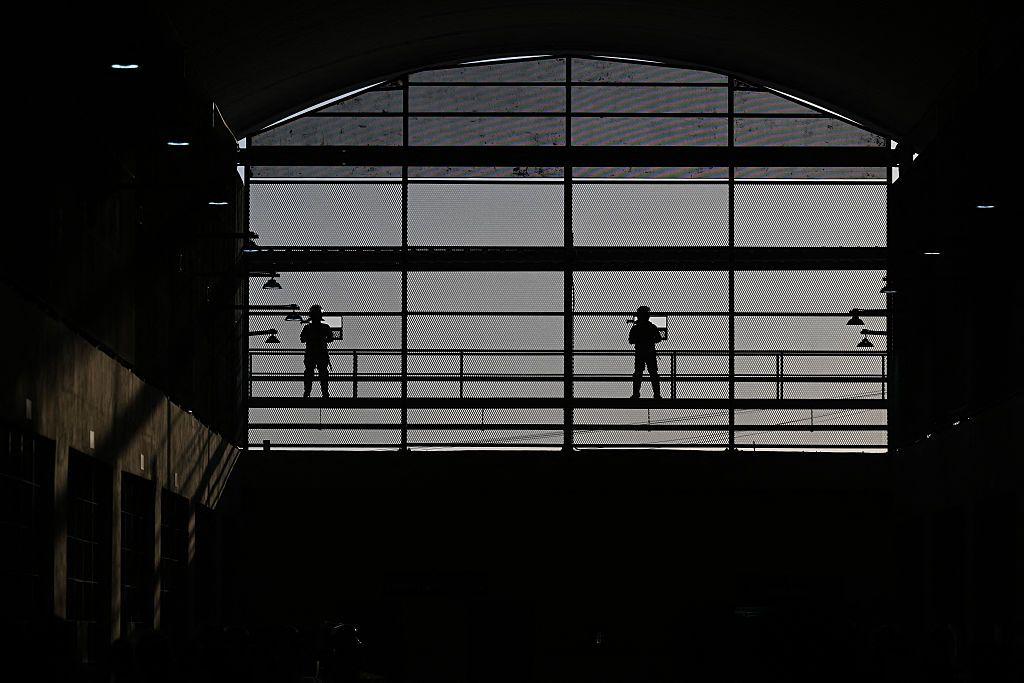
“Colonial Animal” also raises something that seems impossible in real life: the idea of escaping from a megaprison similar to Cecot. Where does that come from?
Any fiction that involves a prison implies the idea of escape.
I like to read and watch movies with that theme. They are escapes that seem impossible, because prisons are made to make it impossible to escape. But look, they have escaped from Alcatraz.
I went to visit Guatemala in September and there was a massive escape, but not so ingenious: they paid money to the guards and several of the most dangerous prisoners walked out. This almost led to a coup d’état, because there was a protest and the Minister of the Interior resigned.
Returning to your question, I think that the issue of prison calls for the issue of escape, whether it happens or not: I think it is the dream of any prisoner who still has basic instincts.
Another surprising fact about this novel is that the megaprison is the creation and symbol of power of a president, The Strong Lady. Did anything in particular lead you to put a woman and not a man in that place?
Yes, it is also Guatemalan anecdotal. The daughter of Efraín Ríos Montt, the dictator accused of genocide, ran as a candidate for the presidency. And one of his promises was to build a prison larger than Bukele’s.
A quite attractive woman, I was lucky enough to meet her and talk to her at an event when she was not a candidate. And it was very approachable; Very nice, but scary.
She is my model: this strong, unforgiving and very modern woman.
“Instead of asking ourselves why those boys are imprisoned, we should ask ourselves why,” says a phrase from your novel. How would you answer that question about the real situation of the prisoners in the Bukele megaprison?
What makes this prison so criticizable is that there is no way out. It is pure punishment, there is no impulse to rehabilitate.
The conditions in which they live, from what I have read, seem inhumane. And I think the question that a character asks is valid: if perhaps death would be better than that life.
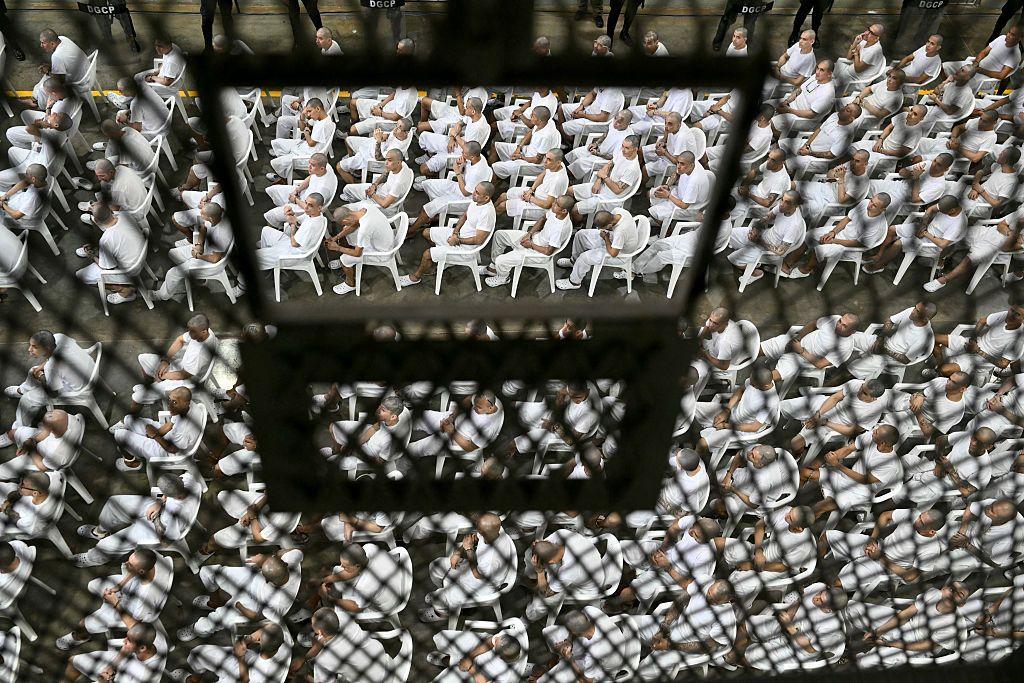
However, many in Latin America see what is happening in El Salvador as a model…
That’s what worries me. They take away a lot of people who are innocent and the legal structure around the prison does not allow those cases to be reviewed.
In a prison for 40,000 people, there are many people locked up unjustly.
If there were mechanisms so that innocent people can leave, that is another thing. But knowing that this is not possible is very harmful.
Furthermore, with the shift to the right that is being seen in almost the entire world, this type of detention centers may become the norm.
How do you see the situation in your country, Guatemala, under the government of Bernardo Arévalo, who was elected to confront corruption and expand democracy?
I think his hands are tied. I don’t know him personally; I know people who collaborate and believe in their good intentions, which I also believe in. But I don’t think I had the personality, knowledge or energy necessary for a change.
And even if we had it, I don’t know if it could be done, due to the degree of corruption that exists in Guatemala. And also because of racism.
The Mayan population has proven to be for me the only hope for profound change. But since it is such a systematically and structurally racist country, it is very unlikely that one of the Mayan ethnic groups will come to dominate.

I see such rot that it is not easy to glimpse, at least not in the coming decades. I am very pessimistic and I can’t think of any model.
In that sense, I think we are worse than when there was a kind of hope, which perhaps was a mirage, that a socialist revolution would improve things in Latin America. Now I think that no one seriously has that illusion.
Arévalo recently achieved something that he had set out to do since he was elected: the departure of Attorney General Consuelo Porras, accused of using her power for political purposes and designated as corrupt and undemocratic by the US. What do you think of this and the appointment of Gabriel García Luna as the new Attorney General?
I think there will not be big changes with this election; It seems that it is about maintaining the structure as before, with some adjustments that allow the state of things, which is not good at all, to be preserved.
To what extent do you think that in Guatemala the power of the economic elite, considered one of the most voracious in Latin America, can be reduced?
Yes and that is not new: since the last century it has been dominated by the same people.
Perhaps now they share power a little with the army, because without the army they would not have been able to maintain themselves after the counterrevolution (starting with the 1954 coup against President Jacobo Árbenz).
Then the army became more powerful than it was. The army, let’s say, is the social class that rose the most. If not, little has changed: the shape of the pyramid has not changed much.
“Colonial Animal” takes place in a fictional nation in Central America. In one part it says that “the fragmentation of the small countries of this region into even smaller and authoritarian states represents another stage in the advanced process of political disintegration of the subcontinent.” Do you fear that this will happen in reality, or is it also pure science fiction?
In Guatemala, precisely, there are Mayan towns that have an accepted right: you can benefit from that system instead of the Western one. And there has been a desire to separate.
In fact, Mayan leaders offered to protect Iván Velásquez (the Colombian who headed the International Commission Against Impunity in Guatemala, who was prohibited from entering the country in 2018) in their territory. For me, that was a sign of a certain fragmentation.
Yes, I think that in Guatemala at least, the Mayan region and the non-Mayan regions could become divided. From the outside it is difficult to see where the border is. But there is a big difference between the Mayan world, which is governed by certain principles, and the Western or mestizo world. And there would be a natural cut.
If you talk to the Mayan leaders, they would be very happy with that, because they would leave them alone. What they want is to live in peace. They have no desire to dominate the rest of the country, on the contrary.
What would that mean for Guatemala?
An opening of an eye, that they really depend on those people. Because agriculture and much of Guatemala’s wealth comes from there, but they are treated with that contemptuous racism, as if they were worthless. And they are not really represented in the government.
Do you ever plan to live in Guatemala again?
Look, when I turned 18 I left. I returned 20 years later. I lived there for another 20 years. And if I have life left, in the end maybe I will come back. Now I don’t feel like going back.
But I do keep in touch and I’ll spend a few months each year. I do not exclude that possibility.

click here to read more stories from BBC News Mundo.
Subscribe here to our new newsletter to receive a selection of our best content of the week every Friday.
You can also follow us on YouTube, instagram, TikTok, x, Facebook and in our whatsapp channel.
And remember that you can receive notifications in our app. Download the latest version and activate them.