
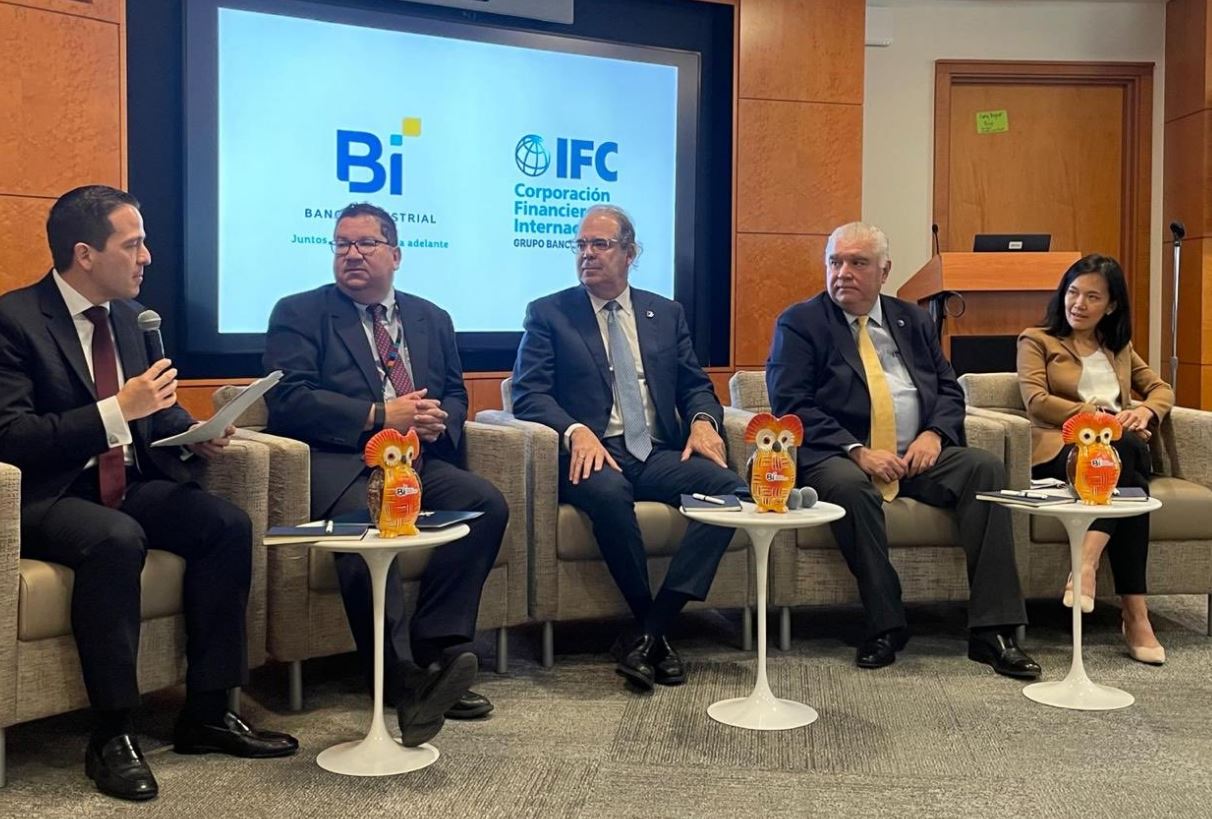
During this week, representatives of the organized private sector held a series of meetings in Washington DC, in order to strengthen investment relations and reaffirm Guatemala as a strategic partner and ally in economic security.
The series of sessions concluded yesterday, within the framework of the Guatemala Week 2026, and the results were classified as timely, with a roadmap to follow.
The delegation was led by Carlos Arias Bouscayrol, president of the Coordinating Committee of Agricultural, Commercial, Industrial and Financial Associations (Cacif), and José Miguel Torrebiarte, president of the Foundation for the Development of Guatemala (Fundesa), who presented the main results.
Also participating were the Vice Minister of Foreign Affairs, Julio Orozco; the Vice Minister of Economy, Valeria Prado, and the Guatemalan ambassador to the United States, Hugo Beteta Méndez-Ruiz, who participated in the meetings with various US authorities.
EPQ and rail advance in the US
The business executives highlighted a bilateral meeting held yesterday with delegates from the United States Army Corps of Engineers (Usace), to follow up on the infrastructure agreements related to the expansion of the commercial docks of the Quetzal Port Company (EPQ) and the construction of a cargo rail connection that will link the EPQ with Escuintla, a project known as the Multimodal Logistics Station.
CONTENT FOR SUBSCRIBERS
Torrebiarte commented that Guatemala faces permanent challenges, especially in infrastructure, and considered that during the visit interesting conversations were held about how to accelerate the processes to develop more works in this area.
The manager declared that one of the most relevant meetings was with Usace, where the progress of the work in Puerto Quetzal and the railway project was presented.
“They are important infrastructures, which do not happen overnight, but we see that they are being worked on and it takes first structuring them, planning them, executing them and operating them. This is not from one day to the next, but we see a long-term vision, it is what we have to support and that, in general, the private sector always sees more than the situation, we see the long term,” the manager noted.
He remembered that, Cacif, Fundesa and other private sector institutions promote the development of more and better infrastructure, both for the mobility of goods and the mobility of people.
Usace gives certainty to logistics megaplan
The business leaders emphasized that the projects developed with the Usace require steps prior to execution, but they also highlighted the need to promote short-term infrastructure projects.
To do this, they explained that the first thing is to make Puerto Quetzal more efficient to improve the existing infrastructure. They added that there are also intermediate investments, since some private companies work in different terminals.
“At the same time, this is a longer-term project that follows the standards of the Corps of Engineers. It gives great certainty that it is a well-structured and planned project, and that, when the time comes to build it, the process will be much more transparent and will follow the guidelines of the Corps of Engineers, an institution with many years of experience and a world reference,” they noted.
When asked if there is confidence in the execution of the project, they responded: “Yes, a lot of confidence.”
Businessmen promote investment in Guatemala
Arias Bouscayrol reiterated that, in addition to having achieved an important connection with officials of the United States Government, representatives of the private sector, think tanks and multilateral banks, Great interest was aroused in learning about opportunities for joint work, one of the main messages of the mission.
“What we are looking for is investment for the development of the national economy, but integrated into a value chain and a shared vision with the United States,” stressed the president of Cacif.
They are important infrastructures, which do not happen overnight, but we see that they are being worked on and it takes first structuring, planning, executing and operating them. This is not from one day to the next, but we see a long-term vision, it is what we have to support.
He mentioned that, rather than reaching specific agreements, relationship ties were strengthened and the foundations were laid for future joint actions.
He exemplified that multilateral banks, such as the International Finance Corporation (IFC), attached to the World Bank, and the Inter-American Development Bank (IDB), are very interested in finding mechanisms to expand their portfolios for infrastructure, productive and other areas projects.
CONTENT FOR SUBSCRIBERS
He assured that there are already commitments to work together and that Now it is time to analyze and study the identified opportunities. He added that the purpose of Guatemala Week 2026 was not to come out with specific agreements, but to show the broad investment potential that Guatemala offers and the opportunities for economic integration and shared prosperity with the United States.
Guatemala gains strategic allies
José Echeverría, executive director of the US-Guatemala Business Council, highlighted that one of the main results of the mission is the urgency of advancing the infrastructure projects already identified, especially in the port area, as well as in the implementation of laws that have already been approved.
In addition, he highlighted the need to work to improve economic security in the region, which will translate into more jobs in Guatemala, a reduction in poverty and, consequently, a decrease in migration.
“We have found allies in the agencies or strengthened alliances in federal agencies of the United States Government, in Congress, in the Lower House, the Upper House and with US and multinational companies. So, I believe that there is an ecosystem interested in strengthening collaboration between Guatemala and the United States that we have to take advantage of soon because the window of opportunity will not be open forever,” he insisted.