
Harnesses, sensors, electrical wiring sets and textile coverings for vehicles are some of the parts that the country could begin to manufacture to integrate into the global auto parts chain. However, the industry raises the need to have a public policy that encourages investments, strengthens the training of labor and generates the necessary conditions to attract companies in the sector.
This was announced in The Talksegment of Guatemala Doesn’t Stopin which Martha Pozuelos, head of the Technical Division of the Technical Institute for Training and Productivity (Intecap), and Wendy Mena, manager of Investment Promotion Strategy at Invest Guatemala, participated. The space was moderated by Juan Manuel Fernández, Innovation editor of Prensa Libre.
For Mena, the development of an auto parts industry requires specific actions from the State, taking as a reference the experiences of other countries that have managed to integrate into the supply chains of the automotive industry. “Definitely, having a specific public policy would help a lot. We can see successful cases such as Mexico and Paraguay, which managed to develop an auto parts industry to supply Brazil through specific public policies to support the automotive sector, from fiscal and non-fiscal incentive programs,” he explained.
According to Mena, automotive companies have particular requirements that must be addressed through policies designed for the sector. As an example, he mentioned the development of the Guatemalan textile industry, which had specific regimes to promote its growth. “In the same way, we have to think about what the needs of the automotive sector are. The auto parts industry is very sensitive to delivery times. We need to ensure that Guatemala’s logistics respond to the speed to market what an automotive company needs,” he indicated.
He added that suppliers must meet international standards and certifications to integrate into the supply chain. “If the companies that are currently in Guatemala decide to make a productive reconversion to become suppliers to the automotive industry, they will need certifications,” he commented.
He added that the Government can play a key role by promoting a supportive public policy so that companies can be certified in new processes. “Specific support is required for companies to renew machinery, obtain certifications and train specialized personnel,” he said.
Mena also considered that a cluster strategy could be part of that policy. “We could do things today with what we already have, but we could be much more successful with a public policy. Many times these policies emerge from clusters, so a clusterization policy could be an aspect we can work on,” he explained.
Pillars of a public policy
When referring to the components that a public policy for the sector should include, Mena pointed out that one of the main elements is the creation of an automotive cluster and the training of specialized human talent. “Promoting the formation of an automotive cluster designed to respond to the specific needs of companies is important,” he commented.
Likewise, he pointed out that we must begin to focus on the formation of human capital and encourage people to prepare in areas related to the automotive industry, both at the technical level and in university training.
In addition, he suggested directing scholarship programs toward careers linked to the sector. “We could guide scholarship programs to specialize people in the automotive area. Specific incentives, fiscal and non-fiscal, designed for the industry are also important.”
From the perspective of Intecap, Pozuelos agreed that training must be one of the axes of any strategy to develop the industry. “Policies focused on training are required, because we can work on training in all the areas that were mentioned. We are even talking about mechanics, but training can also be provided on imports and exports,” he explained.
Likewise, he added that Intecap participated in processes to strengthen other productive sectors. “When the clothing and textile sector was promoted, we were part of the project from the business sector. We placed equipment and machinery in specific municipalities to work on training personnel. I believe that a public policy for this sector is extremely necessary,” he indicated.
Pozuelos added that a public policy for this sector is necessary and that Intecap can contribute from the technical field, aligned with the requirements of the industry and focused on developing people’s capabilities to respond to both public policy and the needs of the business sector.
Preparation aligned with demand
According to Pozuelos, Intecap maintains constant communication with the business sector to adapt its training offer to the needs of companies. “To the extent that we have information about what type of companies might be interested in the country, we can prepare to design specific training that responds to the needs of the industry,” he commented.
The official explained that the institution has a training base that can be adapted to specialized requirements for future investments. “We develop the training bases for the industry and, if something specific is required, we could begin to design and prepare with training courses and specialized technical careers in what each company interested in establishing itself in Guatemala wants to develop,” he stated.
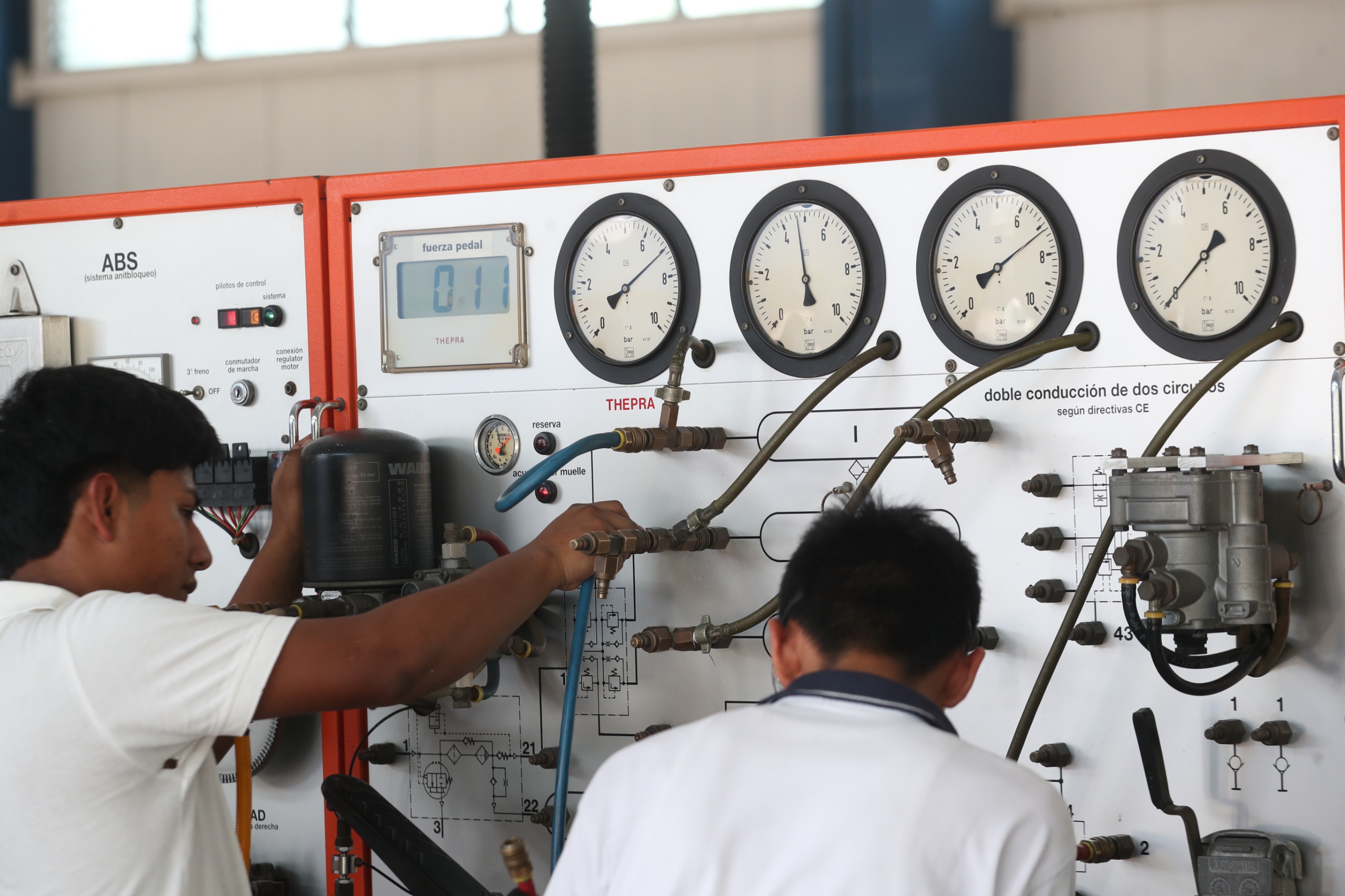
Currently, Intecap has more than 450 specialized courses. These include programs linked to areas that could serve as a basis for the auto parts industry, such as automotive mechanics, industrial maintenance, electronics and welding.
“We have a high-tech workshop in the textile area that has been focused on what local companies require. But if companies dedicated to the manufacture of auto parts arrive, it will be up to us, in addition to the bases that already exist in electronics, welding and electricity, to start developing specialized courses so that people can choose to work in new industries,” he noted.
Improve coordination
Mena considered that Guatemala already has capabilities that can become an advantage in attracting investments, but that it is necessary to better articulate the efforts of the institutions involved. “Today we work hand in hand with Intecap when serving investors, so that they know that the country already has this important differentiator. The capacity we have to employ and train personnel immediately can help us attract investments in these sectors,” he stated.
However, he indicated that it is necessary to build a joint proposal for investors. “What we need is to coordinate better, communicate and agree on what is the differentiating proposal that we will offer to the investor when he arrives in the country, which involves the collaboration of the Government, the private sector and Intecap.”
As an example, he pointed out that institutions could coordinate recruitment and training processes to respond to the needs of companies that need to hire thousands of workers in a few months. “We can work on recruitment from the municipalities, the Ministry of Labor and the industrial parks themselves. We can design training courses tailored to each company, in conjunction with Intecap, and help them hire personnel in an agile manner. What we need is to articulate these efforts in a better way,” he said.
Find more Guatemala Doesn’t Stop on our video channels Free press and Guatevision, alliance content focused on solutions journalism.