
Although the Tropical Storm Cristina Its intensity decreased and is now a tropical depression, the authorities remain vigilant because another phenomenon could influence maritime conditions during the next few days: a supermoon
The director of National Institute of Seismology, Volcanology, Meteorology and Hydrology (Insivumeh), Edwin Rojas, explained in an interview with Free Press Radio that the proximity of the Moon to the Earth will favor higher tides than usual, a condition that coincides with a coast that is already facing the effects of strong waves.
“The supermoon favors higher tides and increased waves,” Rojas indicated when referring to the conditions planned for mid-June.
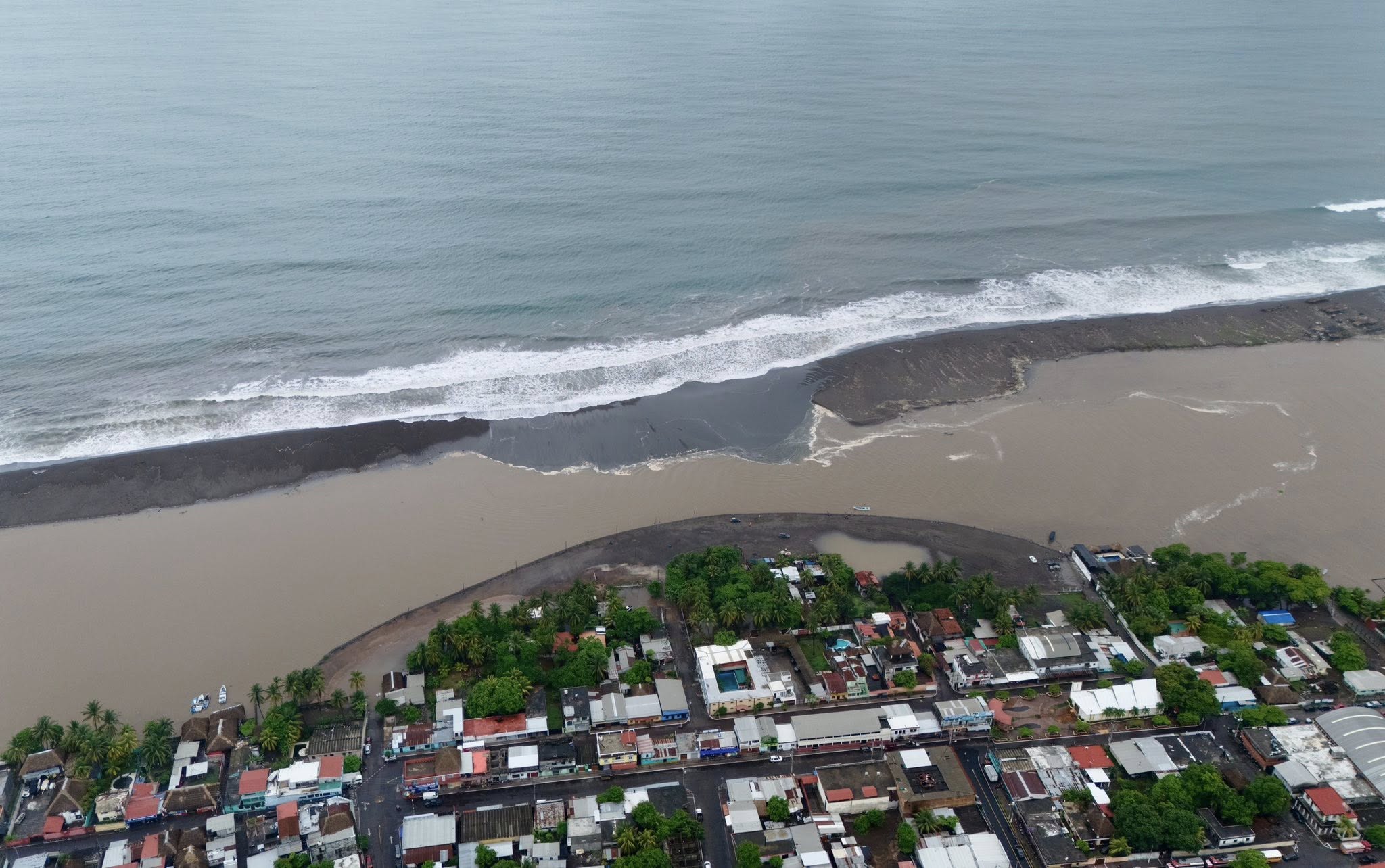
The warning comes at a time when several coastal communities continue to evaluate the damage caused by the advance of the sea and beach erosion. The waves already destroyed homes, damaged tourist infrastructure and They advanced to a cemetery on the Pacific coast.
What the Insivumeh says about the supermoon and the strong waves
Although the supermoon has drawn attention for its possible influence on the behavior of the sea, the Insivumeh clarifies that the damage currently observed is mainly related to Storm Cristina.
According to the most recent special oceanographic bulletin, The storm generated strong winds and a decrease in atmospheric pressure that favored the temporary rise in sea level through a phenomenon known as an “inverted barometer.”
In other words, the recent rise in ocean level was caused by the meteorological conditions associated with Storm Cristina and not directly by the gravitational pull of the Moon.
However, Rojas explained that the arrival of The supermoon could coincide with a sea that already presents altered conditions. For this reason, the authorities remain vigilant against the possibility of higher tides and reinforced waves in vulnerable sectors of the Pacific coast.
The call supermoon occurs when the Moon It is located at one of the closest points to Earth during its orbit.
Although to many people the phenomenon is best known for making the natural satellite appear slightly larger and brighter in the sky, it can also have effects on the oceans due to its gravitational influence.
According to scientific organizations such as NASA, when the Moon is closer to the Earth, its gravitational attraction can favor higher tides than normal, known as spring tides.
On its own, a supermoon does not usually cause damage to coasts, but when it coincides with weather phenomena such as storms, low pressure systems or strong waves, it can contribute to more intense maritime conditions and increase the risk of flooding and erosion in vulnerable areas.
Forecast maintains warning for the Pacific coast
In a special bulletin issued by Insivumeh, it is noted that the influence of low pressure systems associated with Cristina will continue to favor adverse maritime conditions.
The institution predicts waves greater than two meters in different monitored points on the Pacific coast, with some of the highest values expected in Ocós and Champerico.
In addition, records show positive sea level anomalies in different sectors of the coast, a condition that increases the risk of coastal flooding, erosion and damage to infrastructure located near the beach.
“These conditions can favor the increase in waves and maintain the risk in coastal areas”Rojas warned, insisting on the need to follow official bulletins and avoid activities in areas exposed to the sea.
A threat that is repeated year after year
The damage caused by Storm Cristina has also once again highlighted a problem that coastal communities have known about for years: the gradual advance of the sea over inhabited areas.
Neighbors of Iztapa affirm that coastal erosion is a recurring phenomenon, although events associated with tropical storms usually accelerate the deterioration of beaches and increase damage.
“The sea has been affecting year after year, but what happened yesterday was very strong,” he told EFE Karla Fermín, resident of Atitancito, one of the communities affected by the collapse of homes and power lines.
The most severe effects have been reported in Iztapa and La Barronain Escuintlaand in Monterricoin taxi, Santa Rosa, where the sea advanced several meters inland and caused losses to homes, chalets and other structures located near the coastline, according to reports from local authorities and the National Coordinator for Disaster Reduction (Conred).
Storm Cristina leaves a more vulnerable coast
In Iztapa, the waves reached the cemetery of the village of El Conacaste. Erosion caused by the sea considerably reduced the distance between the graves and the beach, while the collapse of niches forced neighbors to remove human remains.
“The truth is that we are worried and sad because we survive with tourism. The sea does this year after year, but if we have the help of a storm, this becomes worse than normal and becomes more chaos.“Verónica Florián, a local resident, told the international network.
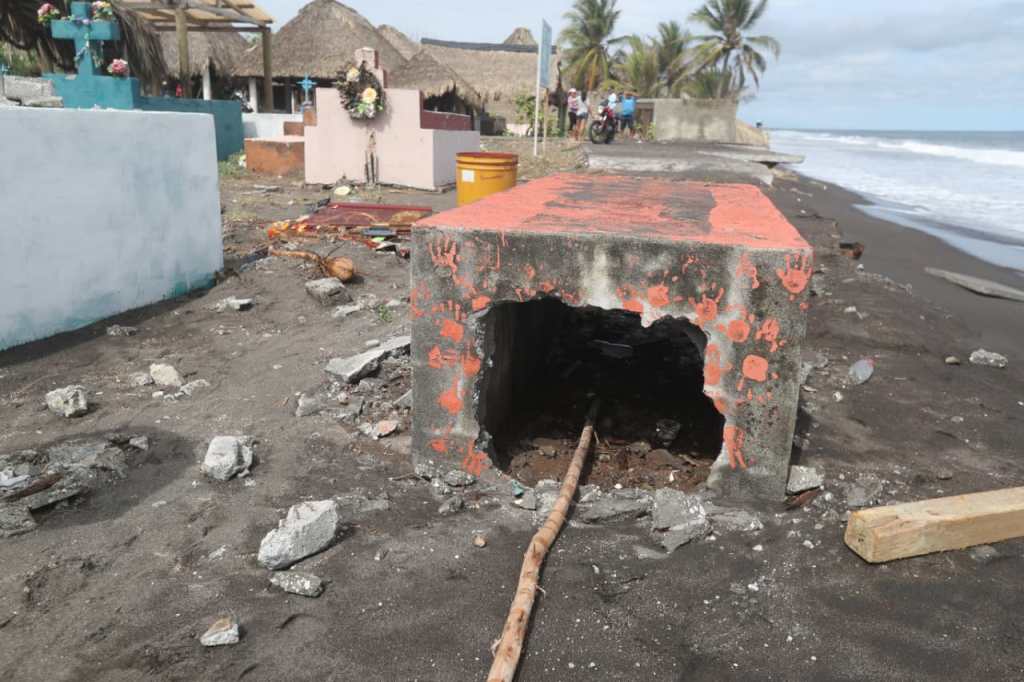
The neighbor described that the force of the water undermined the coast until leaving sectors of the pavement suspended, an image that reflects the magnitude of the erosion recorded in recent days.
While authorities continue to assess losses and monitor maritime conditions, the combination of an eroded coastline, remaining waves from Storm Cristina and the arrival of a supermoon keep alerts on in the Guatemalan Pacific.