
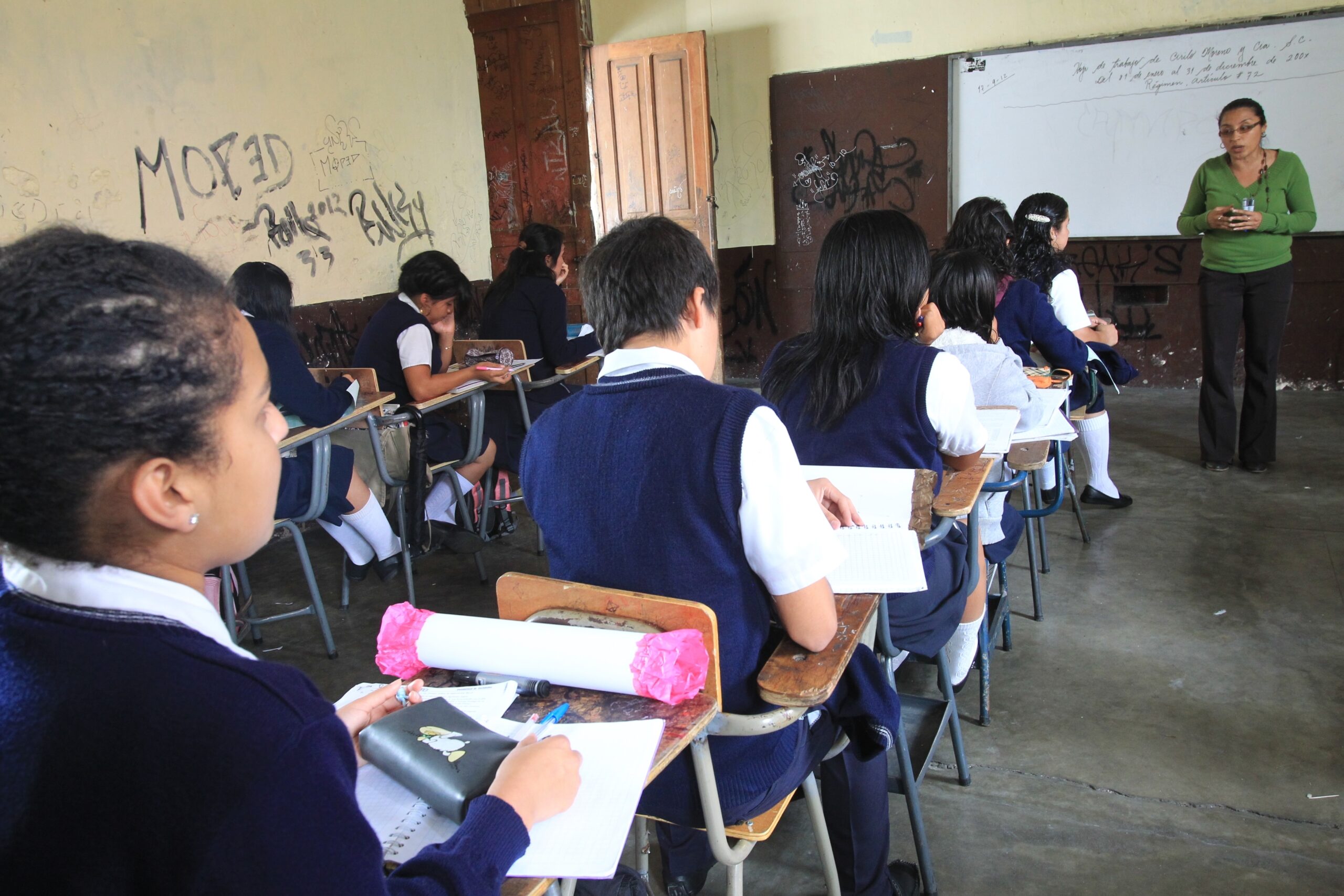
The Ministry of Education (Mineduc) designs the regulations of the Decree 4-2026, Law of Normal Schools and Institutes with Specialtieswhich returned the primary teaching career at the diversified level.
The regulation establishes the mechanisms or procedures that allow the law to be implemented, such as the registration and selection of students, the formation of the teaching team, sessions and possible incentives for students, among other aspects, according to Francisco Cabrera, technical vice minister.
The document that carries a 90% progress It is socialized with the sectors that participate in the initial training of future teachers, to collect ideas and proposals that can be incorporated into the regulations. Then it will go to the General Secretariat of the Presidency, where some modifications could be made.
According to the opinion of Representative Lucrecia Marroquín de Palomo, of the Education, Science and Technology Commission of the Congress of the Republic, It is progress to already have a draft of the regulationswhich demonstrates the ministry’s “will” to implement the regulations as soon as possible, since there is a lack of primary teachers to fill the positions left vacant by retiring personnel.
Creation of normal schools
Some key advances can be mentioned from the document being worked on:
One of the points that are developed in the regulations of Decree 4-2026 is the creation of normal schools and institutes with specialties.
During the government of Otto Perez Molinain 2012, the primary teaching career at the diversified level was eliminated and the Bachelor’s Degree in Sciences and Letters with a Focus on Educationso that the students could then complement their preparation at the university level in the Initial Teacher Training Program (FID).
Since the disappearance of the teaching profession at the diversified level, normal schools implemented other study options, such as baccalaureates, experts and secretariats, and teachers focused on teaching these careers.
The Law on Normal Schools and Institutes with Specialties returns the normal schools as teacher trainers at the secondary level, but incorporates some changes, because in addition to preparing primary teachers, it will also train teachers for initial education and pre-primaryas well as for different specialties, according to the needs and modalities required by the National Educational System.
The Mineduc will have to ensure that the courses now taught by normal schools do not disappear, while opening space to accommodate new groups that will be trained as teachers.
Read more: Teacher’s Day: young people do not want to be primary school teachers
“It is not reactivating the schools that previously functioned nor the model that had been working since 2012. This includes elements of previous experiences, but it also installs new mechanisms, procedures and even parameters, which are included in the regulations,” says Cabrera.
For now, the ministry is carrying out a infrastructure study of the normal schools to establish which ones are ready to open the new teaching career in 2027. Those that do not start next year will be able to do so in 2028.
Cabrera estimates that the pre-registration of students in the new teaching career could begin next August.
Extended day
The new model of normal schools establishes that the teaching career will be four years: two of common knowledge and practices, and two of specialization. Furthermore, the daily working hours will be eight hours for students and the school calendar will be extended to 210 days of classes.
Among the requirements to pursue the degree, young people must have passed the basic cycle with a average of 75 points; Otherwise, they will have to undergo a preparatory course in the last quarter of the year.
Although in some technical tables representatives of public sector establishments have shown disagreement with the extended study day and have requested to reduce it to six hours, according to Palomo, the Mineduc authorities have indicated that teacher training, as established by Decree 4-2026, requires that students not only receive classes, but also carry out research and practical work, which demands more time daily.
Who will teach the classes?
According to the law, teachers who teach classes in Specialized Public Normal Schools and Institutes will be selected by the Mineduc through competitive examinations and they will have a higher salaryaccording to their academic level and specialty. The portfolio must also take care of the continuous training of this human resource.
“New teaching and management teams must be formed, in which teachers who were previously part of normal schools can participate, but for this they have to submit to a call,” indicates the vice minister.
To hire this staff, Mineduc carries out procedures with the National Civil Service Office (Onsec) to make changes in the type of teachers that will be hired, since they must work double shifts and have a higher salary than the rest.
Cabrera mentions that the ministry has already contemplated in the 2027 budget the salary for the teaching staff who will work in the normal ones.
Private and cooperative establishments will also have to take care of hiring specialized teachers who have the qualities and qualities to teach the courses.
Support for students
The regulation establishes a financial support for students who do not reside in the place where the normal school is located, to cover food, transportation and lodging expenses.
“The law mandates that there be a financial aid program so that students from normal schools have the conditions to study full day; that they have conditions, in case they have to move from their place of origin or residence to another where the normal school is, because you cannot set up a school in each municipality,” says Cabrera.
In Palomo’s opinion, this is an incentive for students who want to become teachers.
This amount has not yet been defined, but must also be contemplated in the 2027 Mineduc budget.