
A controversy arose in the early days of the 2026 FIFA World Cup after journalists reported limitations on asking questions in Spanish during some official press conferences.
One of the most talked about episodes occurred in the press conference prior to the match between Brazil and Morocco. During the appearance, a journalist tried to ask a question in Spanish to the Moroccan defender Achraf Hakimi. Although the player indicated that he could respond in that language, the organizers initially requested that the intervention be made in one of the languages enabled for simultaneous translation.
Finally, the question could be asked.
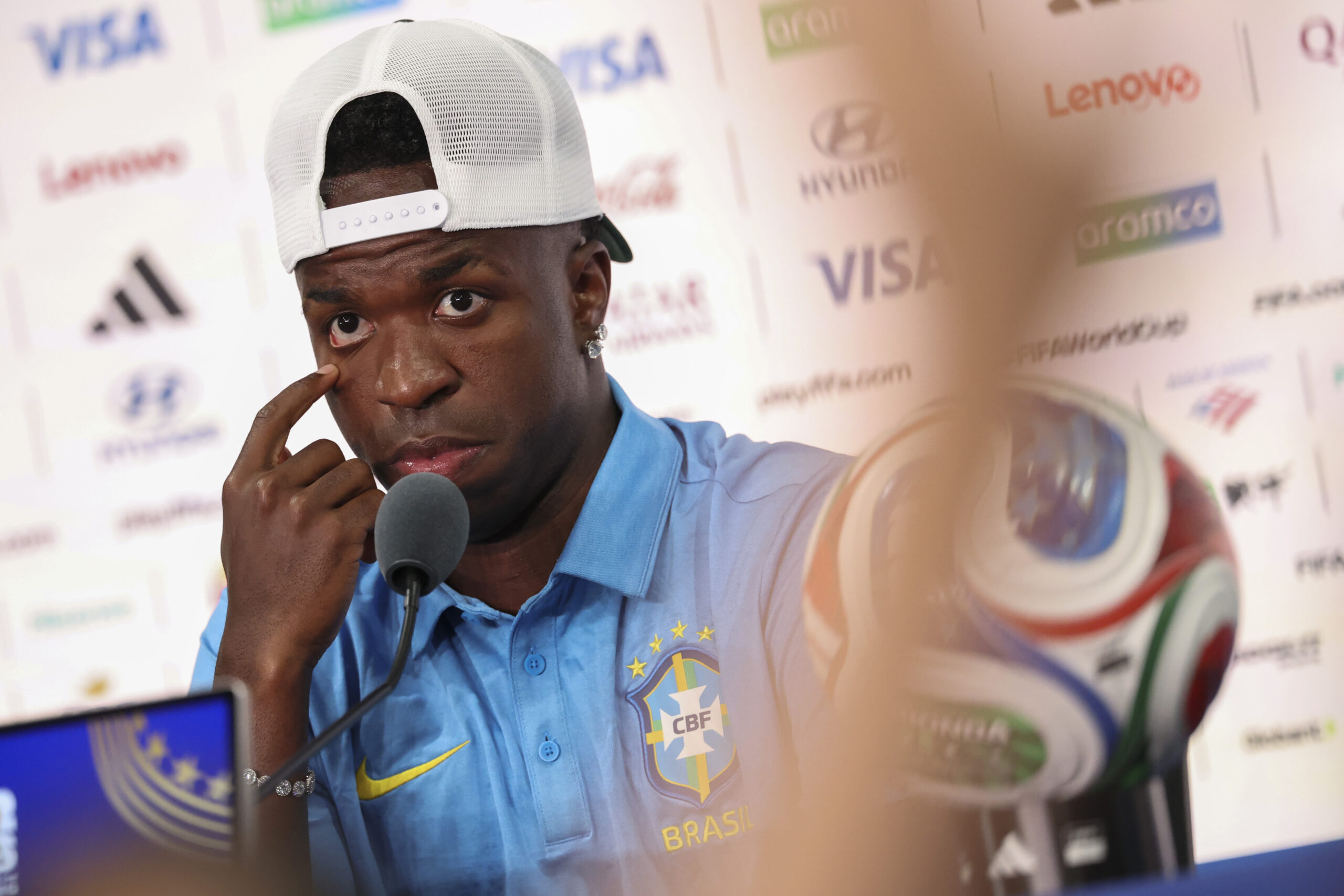
After that, it happened again, but this time with Real Madrid forward Vinícius Júnior. During the press conference in Brazil, a journalist also tried to ask him in Spanish, but the FIFA moderator interrupted again and asked him to switch to English.
FIFA has not announced a ban on the use of Spanish in official tournament activities. According to the explanations offered by the organization, the situation responds to operational criteria related to the interpretation services available at each conference.
In the case of Brazil and Morocco, simultaneous translation was enabled for Portuguese, Arabic, French, Italian and English. Due to this, the moderators requested that the questions be asked in one of those languages to guarantee correct interpretation.
Similar situations were recorded in other press conferences such as the one attended by Frenkie de Jong from the Netherlands, which generated criticism among Spanish-speaking journalists and social media users.
The questions center on the relevance of Spanish within the tournament, especially because Mexico is one of the host countries and because millions of people use that language in the United States.
FIFA maintains that this is a logistical issue and that in conferences of Spanish-speaking teams, such as Spain, Mexico or Argentina, Spanish is part of the languages available for translation.
So far, the organization has not reported any changes to the interpretation protocols for the next days of the World Cup.