
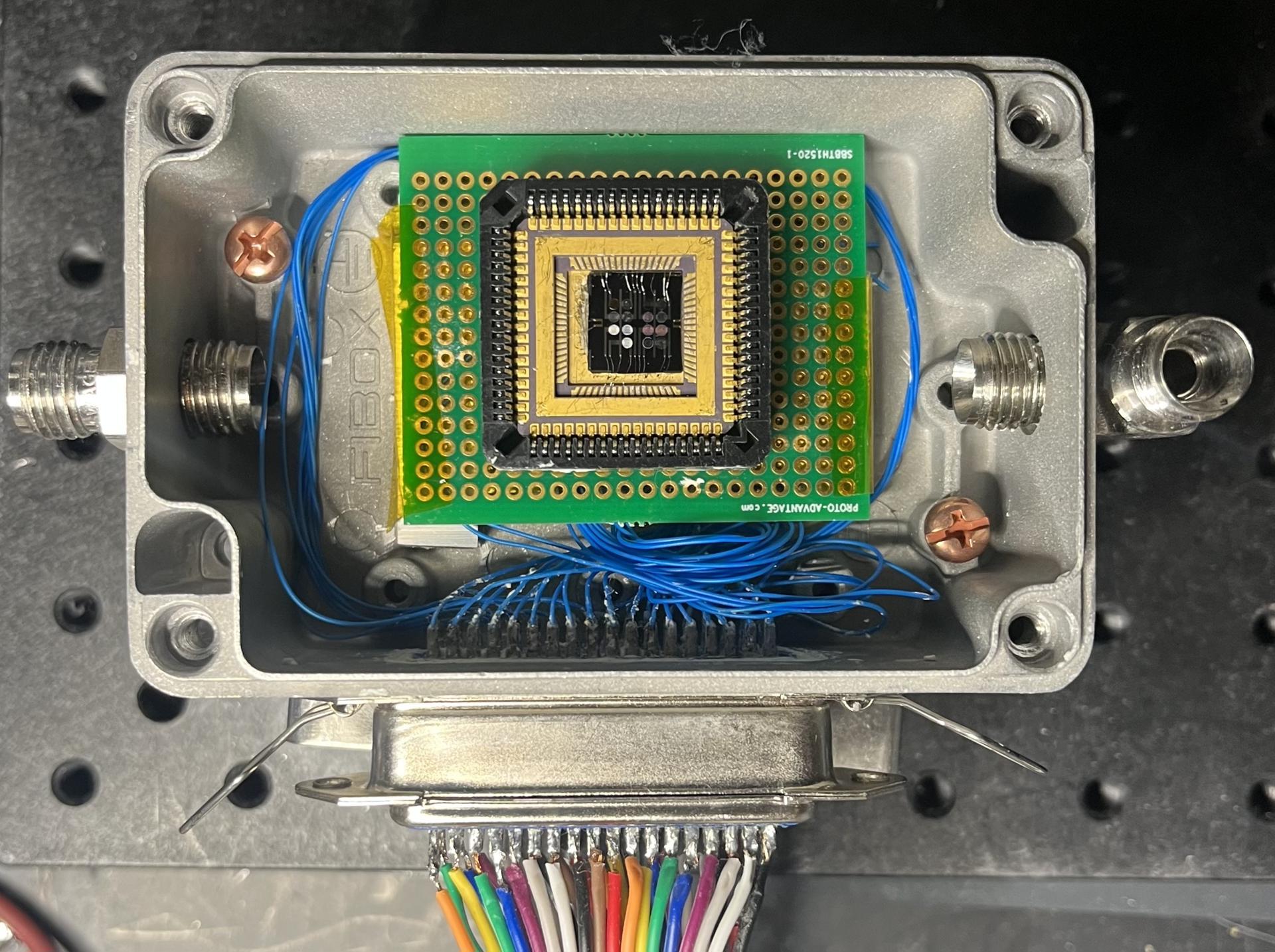
A chip with sensors made of 16 materials inside a small closed chamber and carbon nanotubes, That’s basically what a new “electronic nose” looks like that can detect spoiling foods and nut allergens with an overall accuracy of 92.6%.
The device is the result of the collaboration of a team led by the University of California at Berkeley (USA) that publishes its results in Science Advances.
The chip generates unique signal patterns in response to specific olfactory profiles of each object and, when combined with machine learning algorithms, allows for automated object identification, the article reveals.
The overall accuracy rate is 92.6% when evaluating the gas profiles of 16 different substances, including spoiled chicken, boiled eggs and nuts.
The human sense of smell is not the most advanced and generally cannot isolate and identify volatile compounds characteristic of most foods.
However, machine learning-assisted sensor arrays that act as electronic noses capture these compounds, allowing for better detection of traces of allergens and spoiled foods.
The lead author of the study Carla Bassil from the University of California explained that one of the most common problems with gas sensors is selectivity since there is always cross-reactivity.
The design of this “electronic nose” avoids this inconvenience, thanks to the number of sensors on the chip, with which the so-called “relative selectivity” can be applied, which allows capturing a global fingerprint of the different patterns, the scientist explained.
By designing sensors from 16 materials belonging to four main classes, the team ensured that each sensor uniquely interacted with the same gas molecules, while the carbon nanotubes carried the gaseous compounds into the matrix using a one-step microdosing method.
The electronic nose then generates specific signal patterns for each odor related to an object and, using machine learning, performs automated food identification.
This technology, the study indicates, “can directly contribute to preventing foodborne illnesses and life-threatening allergic reactions by detecting food and allergen spoilage, thus addressing issues of great social importance.”