
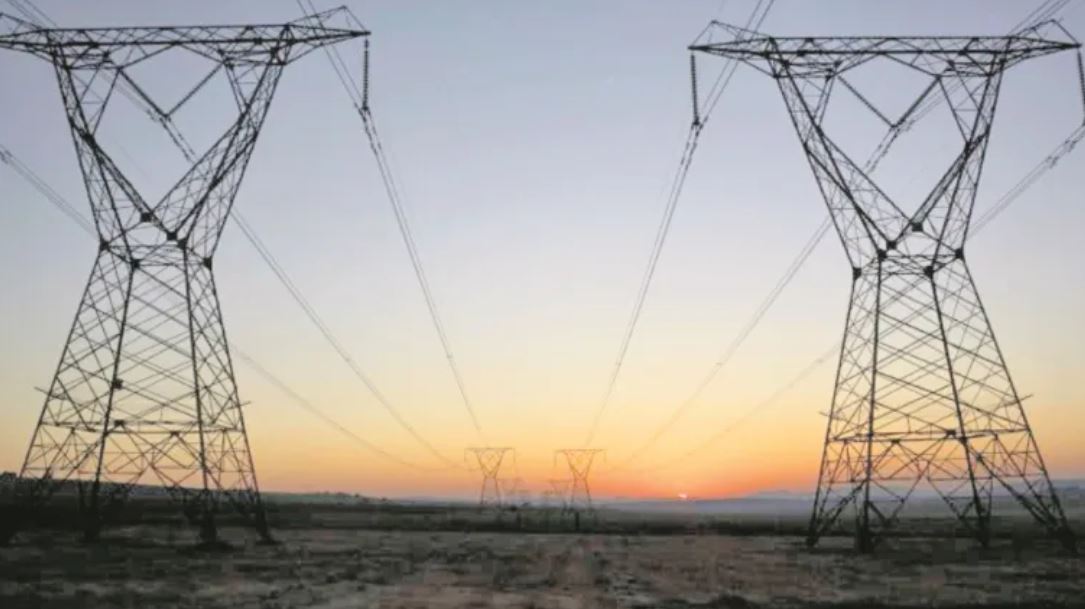
The Guatemalan Association of Electricity Carriers (AGTE) indicated that in January 2025 it began the work of identifying and compiling each case related to the sector, and that to date it has identified more than 74 incidents due to municipal issues in 26 projects.
Of these, 70 are incidents of electrical transmission in sections of line for the network and four in substations. Although it is the same project, the transmission line passes through several municipalities.
“The registered cases show that various actions of the municipalities are generating delays, legal uncertainty and obstacles for the development, operation and maintenance of the transmission infrastructure in Guatemala,” said the AGTE, and indicated that the departments where they have faced the greatest incidents are Izabal, Sacatepéquez, Quiché, Sololá, Huehuetenango, Quetzaltenango and Guatemala.
The entity identified at least 18 different reasons, among which it mentions as the main unjustified refusals to grant municipal construction licenses, delays and omissions in the issuance of municipal licenses and permits, issuance of resolutions suspending projects by municipal affairs judges, requirement of social guarantees as a prerequisite for granting municipal licenses, and requirement of guarantees from Cocodes or other community actors without a clear legal basis.
It also points out pronouncements by municipal corporations that reject the passage of transmission projects, which de facto prevents the issuance of licenses; revocations that he describes as arbitrary of previously granted municipal licenses; among others, such as disproportionate collections of municipal fees and duties, lack of legal certainty derived from the nonexistence, constant modification or discretionary application of municipal regulations.
In this regard, David Cabrera, president of the AGTE, declared that they have identified three axes of problems that the sector faces. Of the three, “the most complex variable today is the mayors and that is basically due to discretion, to the misunderstood free will under the protection of municipal autonomy,” since there is no regulation at the country level to establish the criteria to authorize a project of this type.
Cabrera mentioned several examples. He said that in Jocotán it has not been possible to finish the work of the tender for the Transportation System Expansion Plan (PET) of 2014, called PETNAC. In this case, the municipality has not allowed progress when arguing social issues.
On the other hand, there have been 10 years of seeking to complete the ring of the electrical network in Antigua Guatemala, which was awarded in PET 1-2009. In this case, the manager says that three mayors have already passed, but the permits have not been obtained.
He also mentioned cases in Chimaltenango, Huehuetenango, Chiantla, and others.
CONTENT FOR SUBSCRIBERS
In other municipalities they are asked to negotiate with the communities to carry out works, in addition to paying the license. However, Cabrera says that “that becomes a kind of blackmail. Because the municipal authority is there to govern and should have clear rules establishing what to do, but many times it gives the investor powers that it should not have” so that it covers needs that the municipality itself should attend to.
Regarding the costs that these procedures, permits and authorizations may entail, the AGTE leader mentioned that there is a work that must be done in Huehuetenango, but that only in municipal permits and easements the cost is 2.5 times that of the project.
Another problem that they have detected is that several municipalities have regulations suspended totally or partially by the CC and, based on them, they want to collect, according to Cabrera. While other municipalities seek to establish monthly charges for the operation and maintenance of the networks.
The problem is that they have encountered irrational charges, because the permit costs come to represent between 40% and 50% of the cost of the project, when international standards establish that it should be between 4% and 6%. For example, for the construction license in one municipality they charge one, two or 2.5 per thousand, but in another they want to charge 7% of the total cost of the work.
Generation
Separately, the Association of Generators with Renewable Energy (Ager) stated that there are various projects in the generation sector that face various obstacles and, similarly to the other sector, argues that these derive from the lack of legal certainty, the discretion in the issuance of municipal and construction licenses, as well as charges that exceed what is reasonable.
Ager points out that the situation is making the development of strategic projects for the country difficult and cites that, according to information provided by the partners, there are more than 15 renewable energy generation projects that face obstacles in their development “as a result of arbitrary decisions by municipal mayors.”
Among these, the organization expressed concern about the refusal of the Municipality of Jalpatagua (Jutiapa) to grant the construction license to the solar energy project called Solar El Progreso. He explained that it has all the required national permits, such as an environmental license from the Ministry of the Environment, a connection permit from the National Electrification Institute, approval from the CNEE and the Regional Operating Entity, and that it was formally awarded in the fourth tender of the Generation Expansion Plan (PEG 4); However, it has been detained for more than two years due to the mayor’s refusal to issue the municipal license.
Asked about the economic impact, Ager indicated that the municipality has stopped receiving US$57 million in direct investment, US$150 thousand for construction licenses and US$300 thousand annually in social and environmental investment, as well as in job creation.
The other project that Ager mentioned is that of the Pasabien hydroelectric plant, which has been operating for years in Río Hondo, Zacapa, but which to date has been blocked for more than a year.
Unify criteria
The generators association explained that it recognizes municipal autonomy and decentralization, but considers that its exercise must be consistent with current legislation to guarantee conditions that promote the development of strategic projects for the country.
CONTENT FOR SUBSCRIBERS
In that context, Ager called on the municipal authorities, the Government, the Congress of the Republic and the competent institutions to unify criteria and processes that guarantee legal certainty and clarity for the development of projects, as well as strengthening inter-institutional coordination.
The president of Ager, Alfonso González, recognized that there are municipalities where there is cooperation, but also exceptions where the processes have become complex without any reason contemplated in the legal framework.
He added that 52% of the awarded volume of 1,258 megawatts in the PEG 5 tender will come from new plants, which will need legal certainty to complete the investment and entry into operation.
Meanwhile, the AGTE stated that it has expressed these concerns and maintained rapprochements with different entities of the Executive Branch throughout several government periods, in search of institutional coordination mechanisms that allow reducing barriers to transmission infrastructure. However, the institutional position has been that municipal actions are protected by autonomy and must be resolved with each local authority.
Opinions
The Vice Minister of Energy of the Ministry of Energy and Mines (MEM), Luis Arturo Mérida, said on Thursday, June 18, that he did not have details of the complaints and positions that have been made and that he will be able to respond when he learns about the issue. He indicated that he has been in office for three weeks.
He added that it is a complaint from the entities that have spoken out, but that he could not indicate if there is a specific case or what actions to take without first investigating it, since the municipalities are autonomous.
When asked that the entities ask for joint work between authorities to issue a regulation that unifies criteria, he responded that it is a good idea to talk about whether that can be done, but that they must be based on the law and regulations to define how far they can go.
Separately, the president of the National Electric Energy Commission (CNEE), Luis Ortiz, said that it is an old problem that is becoming complex, because there are projects that are delayed due to various difficulties, while the energy needs are evident. He indicated that one of these is PET 1, which had been structured for a period of four years, but still has unfinished sections.
Therefore, it is considered important to discuss the issue to raise awareness that progress cannot be made if these obstacles are not resolved. “There are projects everywhere that cannot move forward if they do not have the support of local powers,” said Ortiz.
The official recalled that Bill 6665, which contains the proposal to create the Urgent Infrastructure Law for Energy Transportation, is currently being discussed in Congress.
The position of Sebastián Siero, president of the National Association of Municipalities (ANAM), was requested, but he has not responded.