
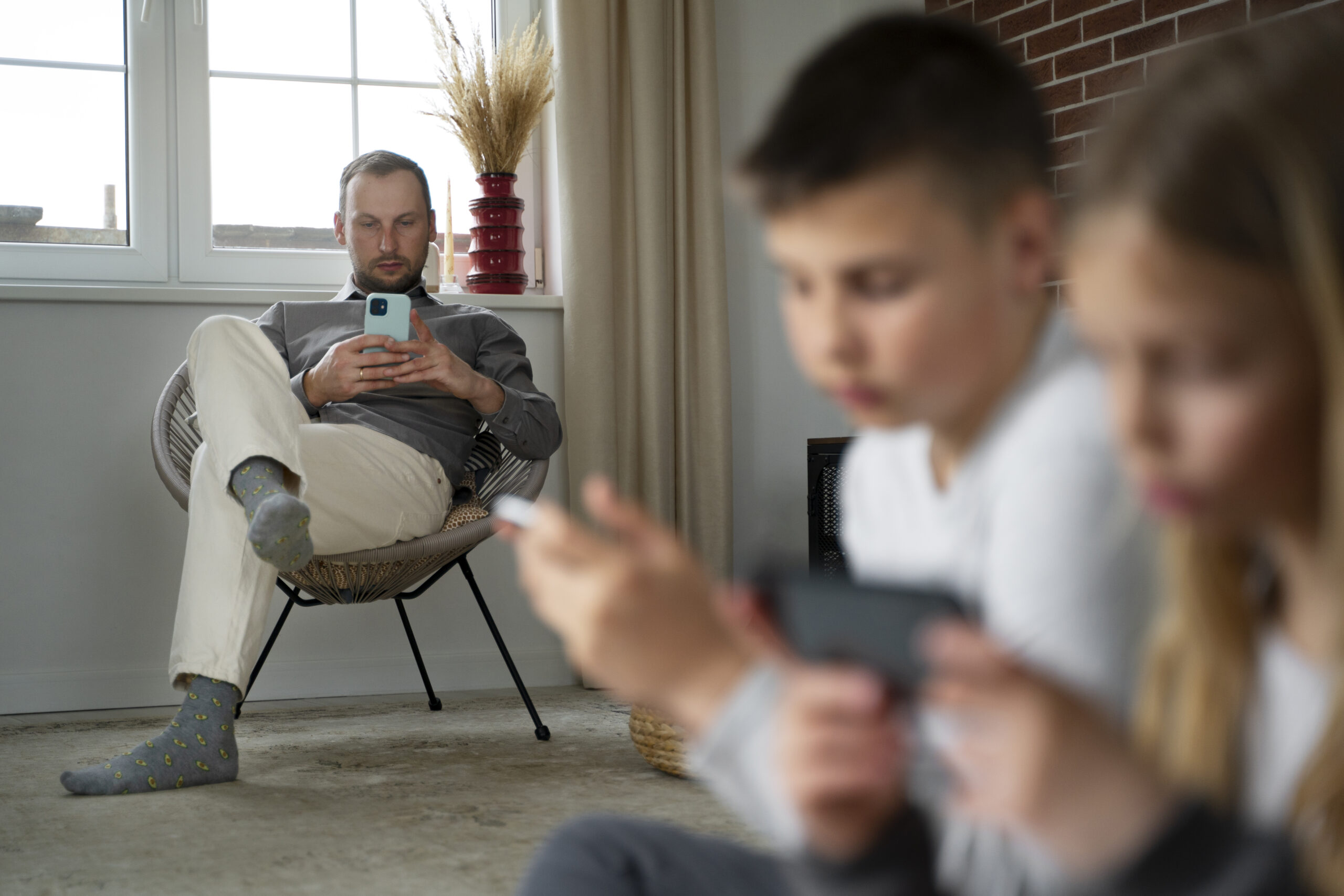
Technology has come to revolutionize life, giving us the opportunity to communicate in easier ways, but it also serves as a distraction from our time. Although it is believed that young people and children spend the most time on social networks, adults have also immersed themselves in them, which affects family ties.
Dependency on social networks not only affects our tasks, but also personal relationships. It was a claim like: “Mom, do you love your cell phone more than me?”, which led a group of psychologists to study how their parents’ dependence on the phone affects children. The result was the development of an unhealthy anxious attachment.
To further investigate this link, the authors developed a “Device Attachment Interference Scale” (known in English as Device Attachment Interference Scale or DAIS).
This is a self-assessment tool specifically designed to measure adolescents’ perspectives on their primary caregivers’ behaviors related to the use of technological devices.
Next, the scientists recruited a sample of 600 adolescents between the ages of 12 and 17, representative of the general population of the United States, and asked them to answer a questionnaire about their attachment to their parents and how they perceived their cell phone use in their presence.
The results, published this Thursday in the magazine Frontiersshow a clear conclusion: parents’ digital distractions deteriorate the quality of their relationship with their children and the emotional stability of the minors.
The more abuse, the more insecurity
The scientists discovered that the higher the score on the “Device Attachment Interference Scale,” the higher the levels of insecure attachment, both anxious and avoidant, reported by adolescents.
As they grow, “children with an insecure attachment style may become anxious and either cling to others for security or avoid relationships to minimize the risk of emotional pain,” the researchers recall.
Furthermore, insecure attachment during adolescence is associated with poorer mental health in adulthood and difficulties maintaining healthy relationships, while secure attachment is related to more satisfying bonds and greater well-being.
Although the authors themselves recognize that the study is of an associative type and that it is necessary to continue investigating this link, “the results invite caution,” says Don Grant, clinical psychologist at the Newport Healthcare Research and Innovation Center, in Tennessee, United States.
Grant began investigating how parental cell phone use affected children’s attachment, as a growing number of adolescent patients in consultation expressed negative feelings about their parents’ abuse of these devices.
“Given the omnipresence of smartphones Among millennials, who are mainly the parents of today’s adolescents, it must be taken into account that relatively small changes in children’s attachment styles can have negative consequences over time,” the researcher points out in a statement.
‘Technointerference’ and ‘phubbing’
“We’re not saying that every time a child asks for attention, a parent has to drop everything, including what they’re doing on their devices, and respond. What we do recommend is that when those requests occur, parents recognize them and respond to them in some way,” adds Grant.
The study concludes that the digital behavior of adults should be considered a determining factor in the security of children’s emotional bond and that it is necessary to remain alert because, unlike other more visible risk factors for parenting – such as the mental or physical health of parents or the use of addictive substances -, mobile phone abuse is not so evident.
The findings of this study are in line with recent research on two other growing phenomena: “technointerference”, or the act of ignoring other people to answer the mobile phone, and “phubbing”, also known in Spanish as ningufoneo, which consists of belittling the person with whom one interacts face to face for paying attention to the mobile phone.
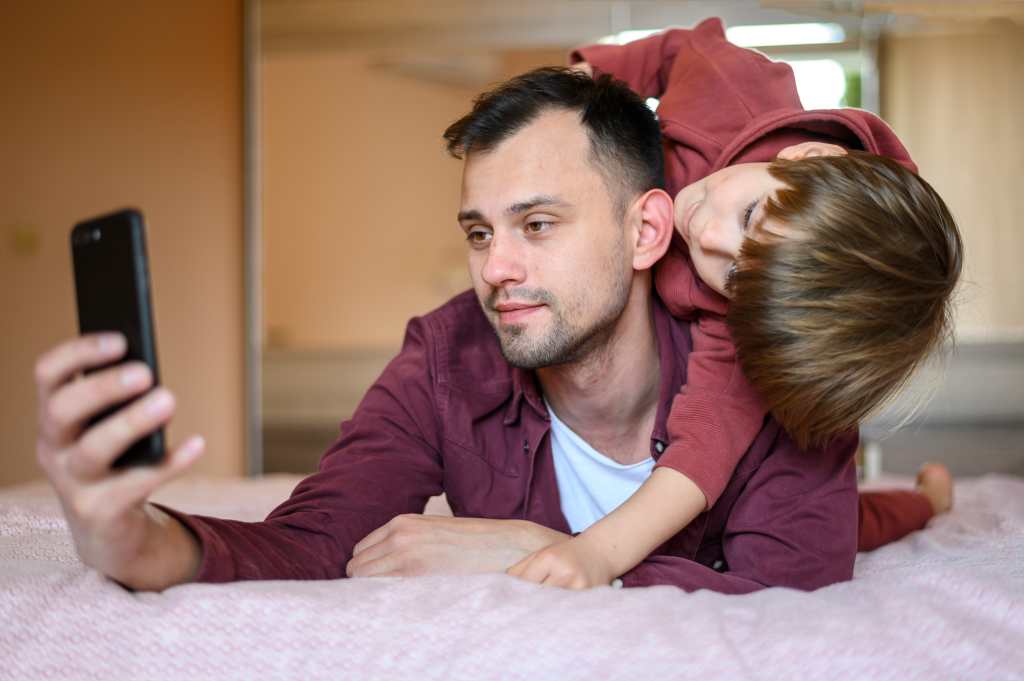
Using technology during family time can weaken the bond between parents and children. (Free Press Photo: Freepik)