
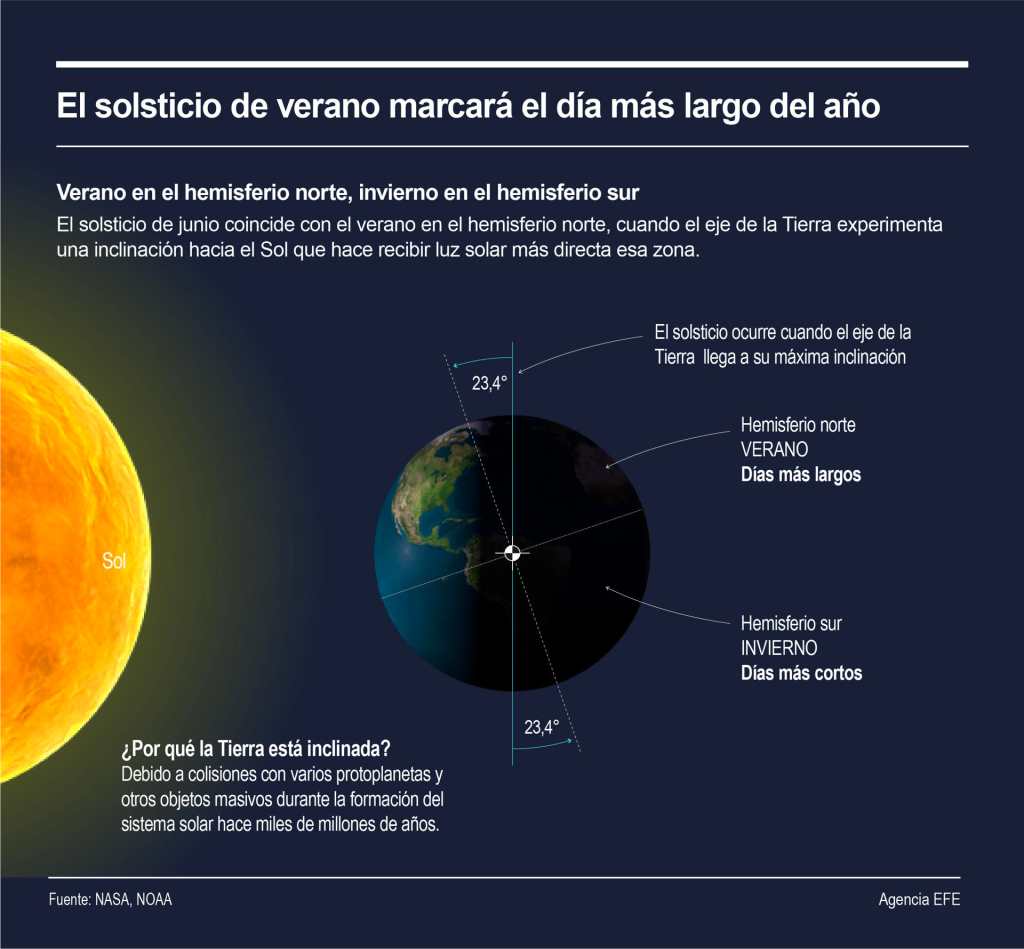
The inclination of the Earth (about 23.5°) means that, during the solstice, one of the hemispheres receives more sunlight. This phenomenon usually occurs between June 20 and 21 and, although it lasts only a moment, its effects are celebrated throughout the day, explains David López, the boy genius astronomer, in the Astronomical Calendar series published by Free press.
In the northern hemisphere, where Guatemala is located, that day is the longest of the year: There are more hours of light and fewer hours of darkness, says López and adds that it is the beginning of astronomical summer. On the other hand, in the southern hemisphere, the day is shorter and gives way to astronomical winter.
The summer solstice beginning June 21, 2026 It marks the longest day of the year because the inclination of the Earth’s axis orients the northern hemisphere towards the Sun, notes EFE.
The longest day in the northern hemisphere marks the beginning of the summer season in one part of the planet: North America, Europe, Asia and North Africa.
While for the southern hemisphere winter begins and it will be the longest night of the year for countries like Argentina, Chile, South Africa and Australia, explains Infobae, citing the National Oceanic and Atmospheric Administration (NOAA).
This Sunday, June 21, in the northern hemisphere, the Sun reaches its highest point in the sky. From our point of view, it appears to stop, hence the Latin term solstitium, which means “Sun still,” explains López.
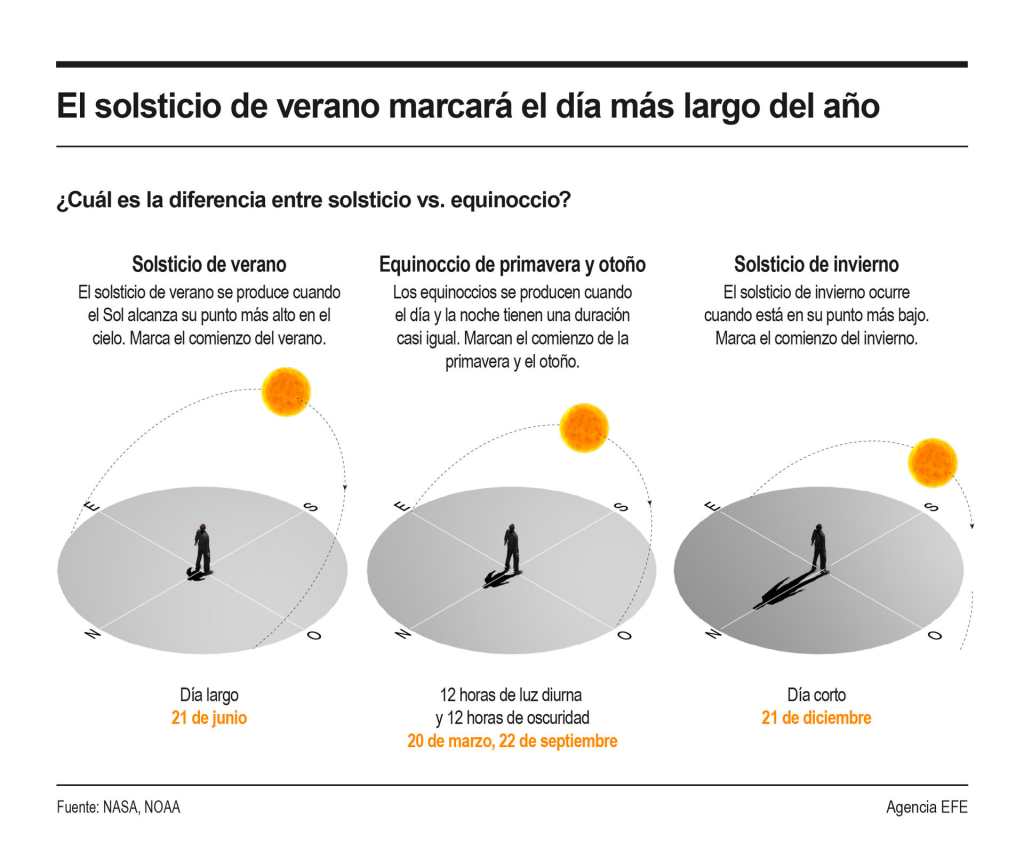
On the summer solstice the Sun reaches its highest point in the sky, explains EFE.