
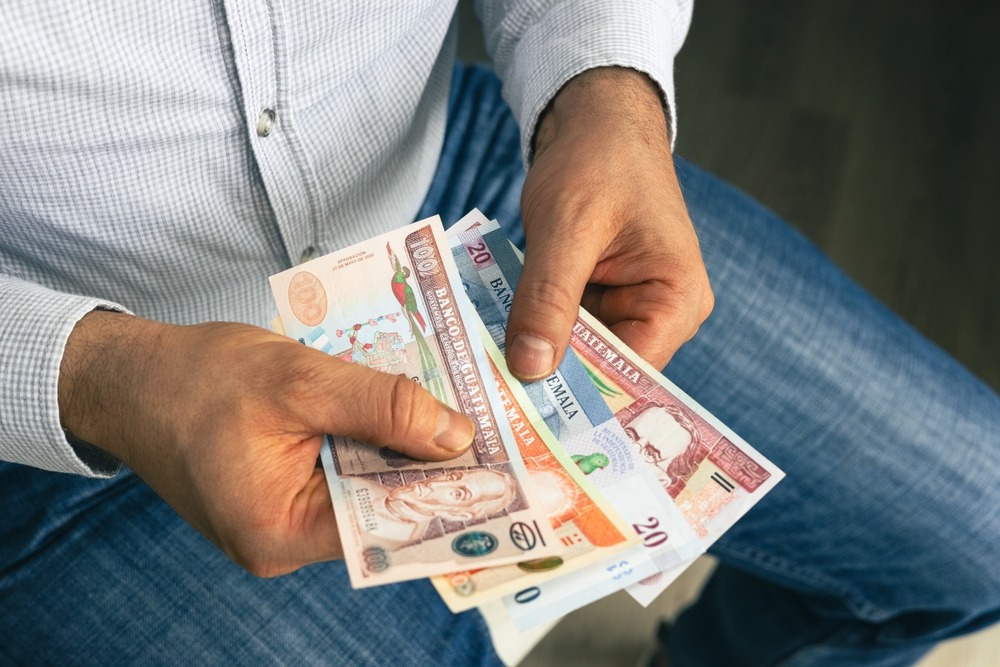
The use of cash in Guatemalan households predominates compared to other means of payment, such as credit cards, debit cards and other mechanisms, according to the sample. The results show an opportunity to promote the use of alternatives other than currency.
The National Household Financial Inclusion Survey (ENIFH) 2026, which analyzed the indicators of financial inclusion From a demand perspective, it confirmed that cash is the predominant means of payment, regardless of the amount of purchases. This trend is observed among men and women, in urban and rural areas, as well as in the indigenous population, with a participation of more than 84%.
The results indicate that 93.8% of households make purchases of less than Q200 in cash, while 6.2% use debit, credit cards or other means of payment. Likewise, 88.6% of the households consulted use cash for purchases greater than Q200, while 11.4% stated that they pay with a debit card, credit card or other available means.
The variable is also associated with the collection of remittances. According to the ENIFH, 71.7% of households that receive these resources collect them in cash at a banking agency, while 53.7% make cash withdrawals through a banking agent, a neighborhood store or other establishments.
That is, both indicators are linked and confirm that the majority of households collect remittances and make their purchases in cash.
44.9% of households that receive remittances obtain them through a bank deposit; 9.8%, through a remittance company, and 3.6%, through an electronic wallet, according to the results presented by the National Institute of Statistics (INE).
Foreign currency income from family remittances registered an annual growth of 18.7% in 2025, reaching more than US$25,530 million, equivalent to about Q195 billion.
Cash leads payments in homes
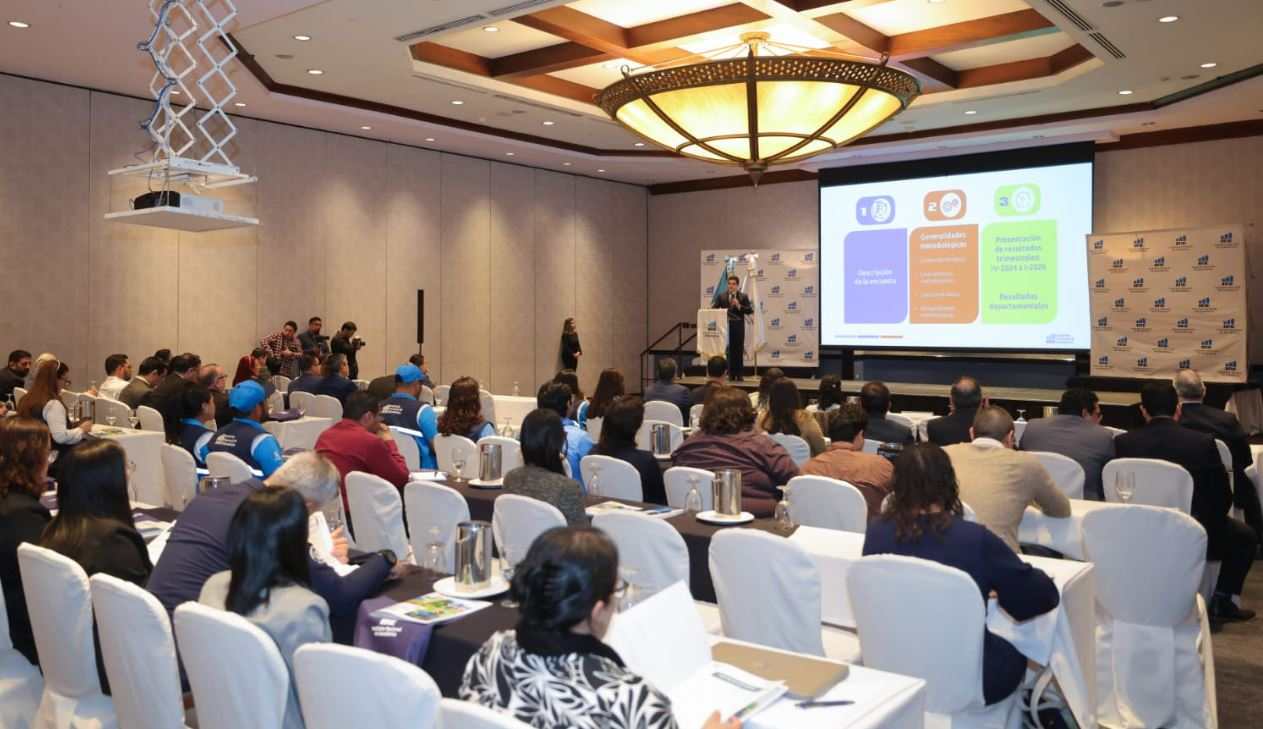
Cristian Cabrera Ayala, technical deputy manager of the National Institute of Statistics (INE), explained that the survey recorded the behavior of households regarding the means of payment used for their purchases. Both in purchases of less than Q200 and those greater than that amount, respondents stated that the use of cash predominates.
He added that this result is consistent with other indicators of financial inclusion, such as the use of credits, loans and credit cards. According to the survey, only 11% of the population uses this last financial instrument.
“It is consistent that the majority of the population uses cash to make their transactions,” said the deputy manager.
He exemplified that, when a household makes a purchase of less than Q200, such as in a neighborhood store or paying for a parking service, they usually use cash. Likewise, when you purchase a good whose value exceeds Q500 or Q700, you also use this means of payment.
William Ariel Cano Hernández, financial manager of the Bank of Guatemala (Banguat), explained last week that the institution acquired a new consignment of banknotes and coins to guarantee the supply of cash for the next five years and maintain the necessary inventories.
“It is consistent that the majority of the population uses cash to make their transactions.”
Cristian Cabrera Ayala, technical assistant manager
He explained that 1,020 million pieces will be purchased, of which 600 million will correspond to bills and 400 million to coins.
Of the total banknotes, the largest volume will correspond to the denominations of Q100, followed by those of Q50, Q20, Q10 and Q5.
As for coins, the largest proportion will correspond to pieces of Q1, followed by those of Q0.25, Q0.10 and Q0.05.
Rural area lags behind financial access
When asked what findings these results show, Cabrera stressed that there are several readings.
He explained that the use of information technologies is common in the capital and other urban areas, such as departmental capitals. However, the situation is different in rural areas, where the use of digital tools, the Internet and online banking is lower, due to limitations related to knowledge and access to digital media and other forms of payment.
The INE deputy manager added that the results of the National Financial Inclusion Strategy (ENIF) 2024-2027 They are useful to promote financial education campaigns and actions aimed at facilitating access to digital and payment means, as well as services such as credit and insurance, with the aim of reducing existing gaps.
Cash use reflects financial gaps
Fernando Spross, researcher at the Foundation for the Development of Guatemala (Fundesa), stated that he is surprised that cash is still used much more than digital means of payment.
“One would think that digital media are more implemented, but there are big differences between rural and urban areas,” he noted.
The analyst highlighted that there is a significant gap in financial inclusion between urban and rural areas.
Spross agreed with Cabrera that banking needs to be deepened, especially in rural areas, since the predominant use of cash reflects that many people do not have access to banking services.
He added that it is necessary to work on internet access and the availability of financial tools and services. “There is an opportunity to continue deepening financial services,” said the Fundesa analyst.
Informal savings exceed formal savings
The survey determined that, on a national scale, 38.6% of the population has formal savings products. The INE defines savings as the part of income that a person sets aside to use in the future. That is, it corresponds to the portion of income that is not allocated to consumption.
In the urban area, the indicator reached 47.5%, while in the rural area it was 27.5%.
By department, Guatemala registered the highest percentage of population with formal savings products, with 59.2%, followed by El Progreso, with 53.3%; Escuintla, with 50.6%; Santa Rosa, with 48.2%, and Jutiapa, with 45%. In contrast, Huehuetenango registered the lowest percentage, with 17%.
The sample determined that 41.3% of the population has informal savings. The indicator was 44.1% in the urban area and 37.9% in the rural area. The INE defines informal savings as the money that people save outside the financial system, whether in cuchubales, with family members, through the purchase of pets or goods, or in non-formal savings banks.
Totonicapán registered the highest proportion of the population with informal savings, with 55.2%, followed by Chimaltenango, with 53%; Escuintla, with 50.8%; Santa Rosa, with 48.6%; Guatemala, with 48.3%; Izabal, with 47.3%, and Sololá, with 47.1%.