
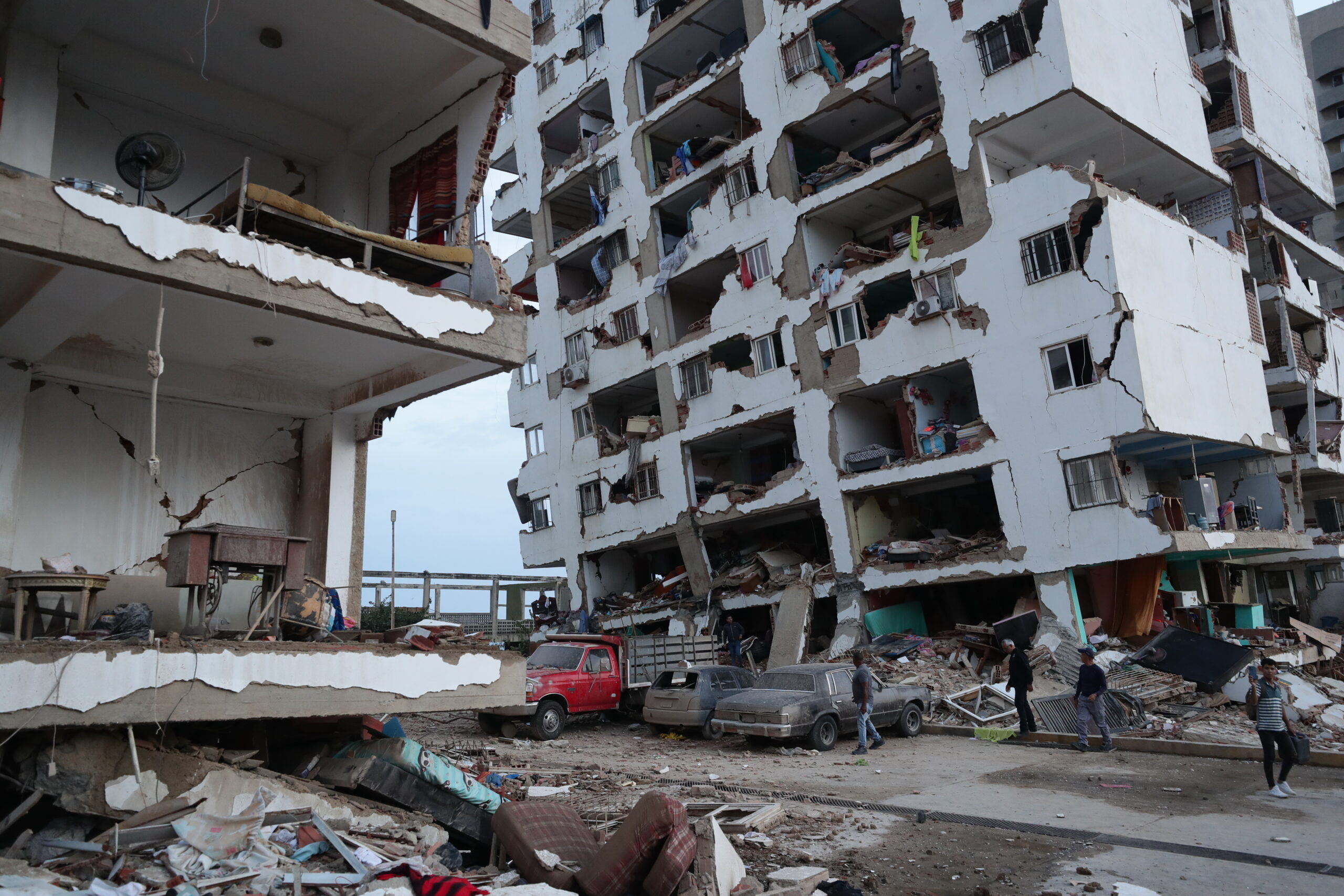
The earthquakes of magnitudes 7.2 and 7.5 recorded in Venezuela They once again paid attention to a phenomenon known as seismic doublet.
This is a rare sequence in which two earthquakes of similar magnitude occur in the same region and with little time difference.
Although the Venezuelan case has attracted attention due to the magnitude of the events, it is not a behavior unknown to seismologists.
In fact, Guatemala recorded a very similar episode recently, in Jutiapaaccording to consulted specialists.
What is a seismic doublet?
Victor Tzorinof the Guatemala Seismological Service (SSG) of the Mariano Galvez Universityexplains that it is “two seismic events very close in space and time, with comparable magnitudes and associated with the same rupture zone.”
According to the specialist, to identify a doublet, factors such as the proximity of the epicenters, the interval between both events and the similarity of their magnitudes are taken into account.
“Generally we talk about differences of just a few tenths and earthquakes that occur within the same tectonic structure,” points out.
“Unlike a conventional sequence of aftershocks, in a doublet both events can be considered main earthquakes due to the energy they release”adds Tzorin.

Has it happened in Guatemala?
Yes. The most recent example occurred last year in Jutiapa, where earthquakes of magnitudes 5.7 and 5.6, the specialist recalled.
According to data from the United States Geological Survey (USGS)both events occurred with a difference of just 3 minutes and 36 seconds.
Furthermore, the epicenters were separated by less than 10 kilometersone of the characteristics used to identify this type of sequences.
“This case meets the typical conditions of a seismic doublet due to the similarity of magnitudes, the spatial proximity and the short interval between both events,” says Tzorin. The specialist adds that “It was a very clear sequence and probably the most recent example of this phenomenon in Guatemala.”

Is it a rare phenomenon?
Seismic doublets are not frequent, but They are not considered exceptional phenomena either. within regions with high tectonic activity.
“They are less common events than traditional mainshock and aftershock sequences, but they are part of the normal behavior of fault systems,” explains Tzorin.
The expert considers that it is likely that Guatemala has experienced other similar cases throughout its history. “More doublets have surely occurred, but they are not always formally classified as such because they require a detailed analysis of the sequence and characteristics of each event,” comments.
“The important thing is to understand that the release of energy on a fault does not always occur in a single earthquake. Sometimes it can be distributed in two or more main events within a relatively short period,” concludes Tzorin.
Read also: Unique circular structure discovered in El Tigre, Petén, in good condition