
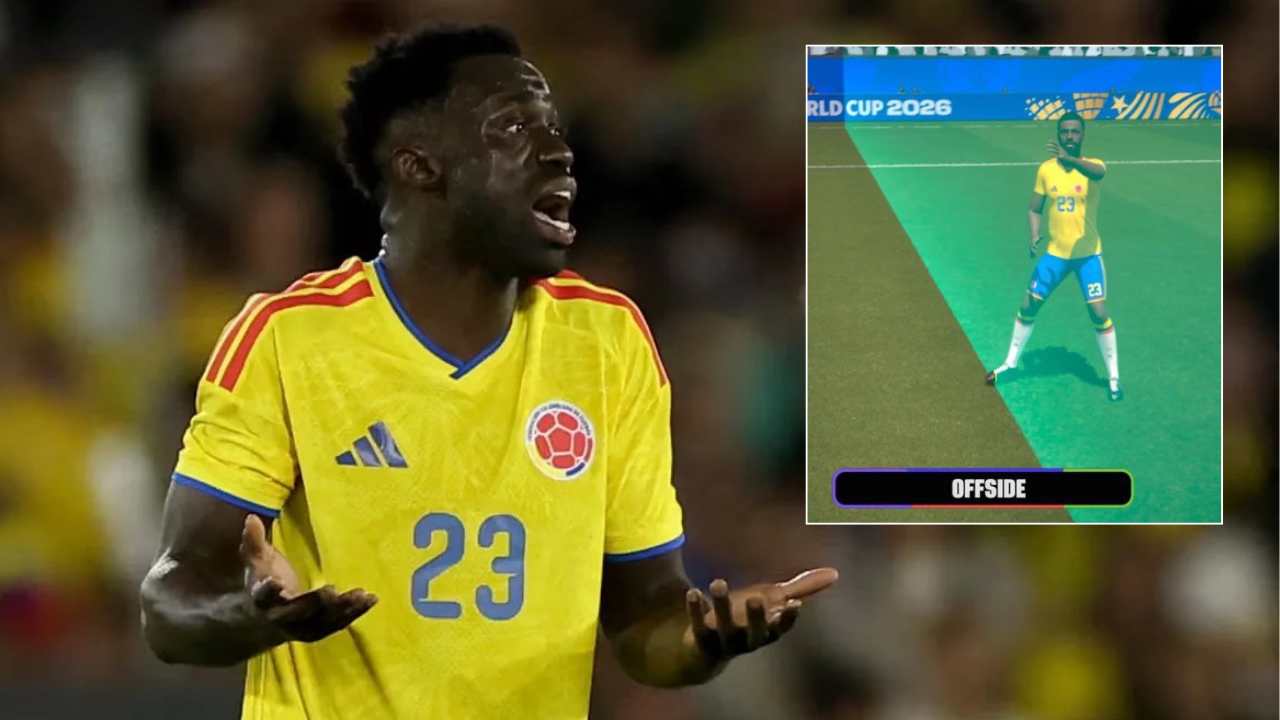
The controversy marked the closing of the match between Colombia and Portugal. In added time, Davinson Sánchez scored what seemed to be the winning goal for the coffee growers, but the celebration was short-lived.
The play was born from a center by Juan Fernando Quintero from the left wing that Sánchez connected with a header. However, the VAR intervened and reviewed the action for a possible offside.
After review, Australian referee Alireza Faghani annulled the goal due to a position millimeter advance. The decision caused surprise and complaints among Colombian soccer players.
The replay confirmed that Davinson Sánchez’s toe was forward. The Semi-Automatic Offside System (SAOT), implemented by FIFA in this World Cup, supported the referee’s decision.
The Semi-Automatic Offside System (SAOT) changed the way offside positions are determined. The technology combines a ball with a chip, high-speed cameras and artificial intelligence to precisely detect the moment of the pass and the location of each footballer.
Thanks to this combination of tools, the margin of human error is reduced to a minimum. Although some decisions may seem millimetric or unfair at first glance, the system is based on precise biomechanical and spatial measurements.
FIFA is also analyzing a modification to Law 11. The proposal, which is already being tested in Canada, would only sanction offside when the attacker’s entire enabling body is in front of the penultimate defender.
Despite the controversy, the tie did not alter the classification of Group K. Colombia advanced as leader with seven points and will face Ghana in the round of 32, while Portugal finished second and will face Croatia.