
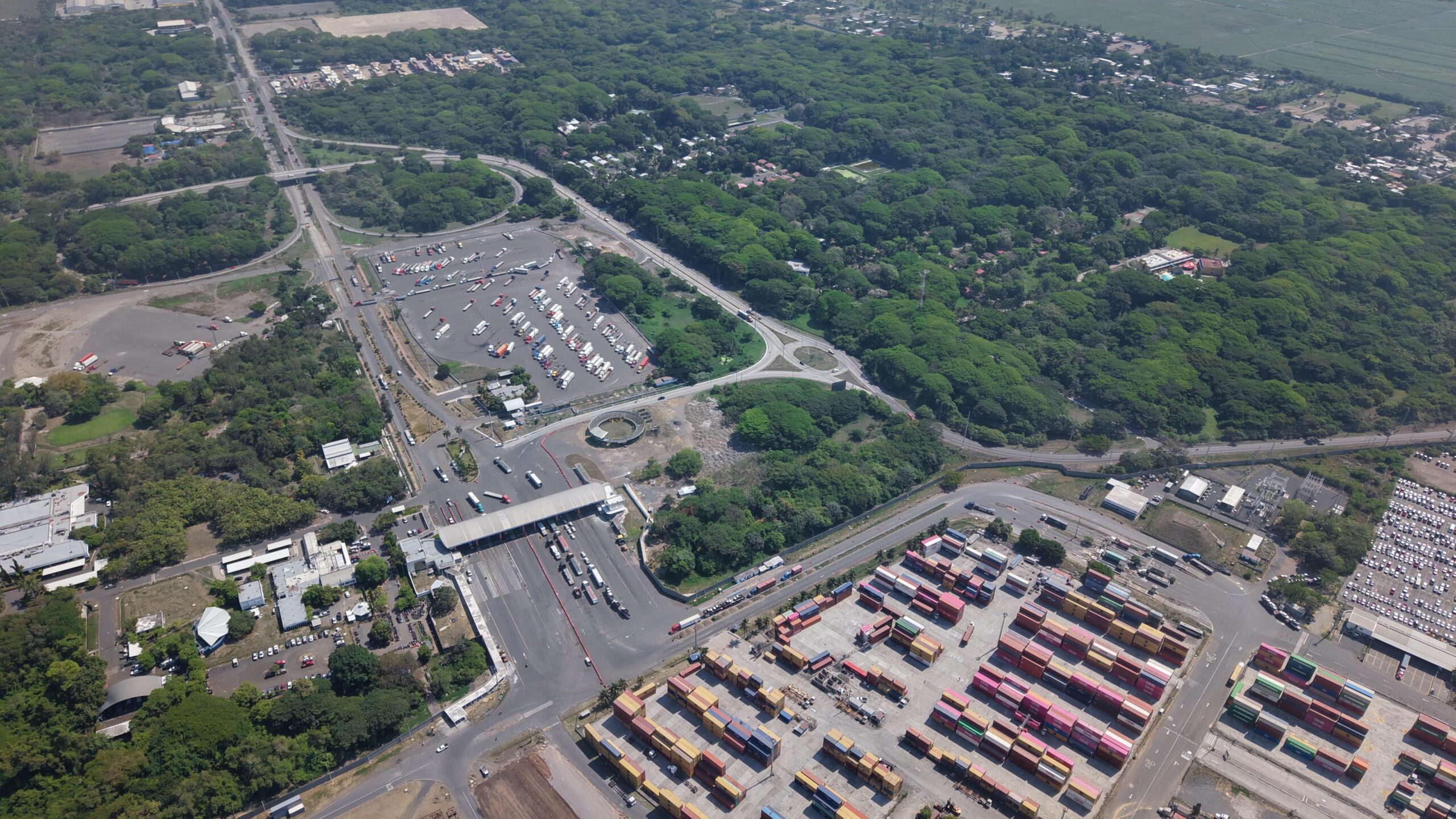
The allocations destined for investment in infrastructure included in the preliminary project of the General Budget of State Income and Expenditures, estimated at Q181 thousand 563 million, They contemplate part of the projects which is currently being developed by the United States Army Corps of Engineers (USACE).
From the perspective of government planning, authorities maintain that the budget proposal responds to the country’s needs and takes advantage of greater availability of resources to finance public investment projects.
The Planning and Programming Secretariat of the Presidency (Segeplán) argues that strengthening infrastructure constitutes one of the axes to promote economic growth, improve connectivity and expand access to basic services.
The commitment to increase public investment coincides with recommendations made by international organizations. In early June, a mission from the International Monetary Fund (IMF) recommended expanding investment, especially in public infrastructure, within a technical and prudent framework of public finance management.
The agency’s delegation highlighted that greater investment in infrastructure could contribute to raising productivity and strengthening Guatemala’s economic growth prospects in the medium term.
Infrastructure requires more funds
Hugo Allan García Monterrosa, Undersecretary of Strategic Development Analysis of Segeplán, declared that the infrastructure of ports, airports, and road and rail systems has been structured with the United States Government.
He added that these are works that will require financial injection from the Central Government, so it will be necessary to make transfers to continue with pre-investment and feasibility studies.
Furthermore, sIt will be necessary to make the first payments for execution of these large-scale works.
For the moment, the investment cost of the projects has not been defined and the joint work between the USACE and Guatemala delegations involved in each of them continues, explained the undersecretary.
What has happened is the payment of the technical feasibility studies for the expansion of commercial docks 5, 6, 7 and 8 of the Quetzal Port Company (EPQ), in Escuintla; the construction of a cargo rail connection that will connect the EPQ with Escuintla, a project known as the Multimodal Logistics Station, and the land circuits in which Usace will intervene.
For the second semester, it is expected to have the cost estimate and the budgetary mechanisms that will finance these projects.
They reserve Q19 billion for works
On Friday, June 19, during the 2027 budget workshops, they presented budget ceilings to finance this type of infrastructure works, defined as priority allocations for a global amount of Q19,122 million.
In this area, Q4.8 billion are identified for the modernization of the Quetzal Port Company (EPQ); Q3,517 million for the Priority Road Projects Fund (Fovip), and Q600 million for the modernization of the metropolitan transportation system, ports, airports and railways.
Works will require multi-year financing
The undersecretary clarified that they are still working on the studies to define the investment cost and that, once the analyzes are completed, the magnitude of the financial effort necessary to execute the projects.
“Preliminarily, resources are being allocated in the 2027 budget to continue with the preliminary work. In addition, it is planned to continue the projects, since their execution will probably last four or five years and will transcend a government period,” he noted.
The objective is to lay the technical and financial foundations for these projects to promote the modernization of the country’s infrastructure.
He reiterated that during the second semester work is still being done to take advantage of the available budget spaces and allocate the greatest possible amount of resources to guarantee the progress of the projects and allow these investments to be completed in the shortest possible time.