
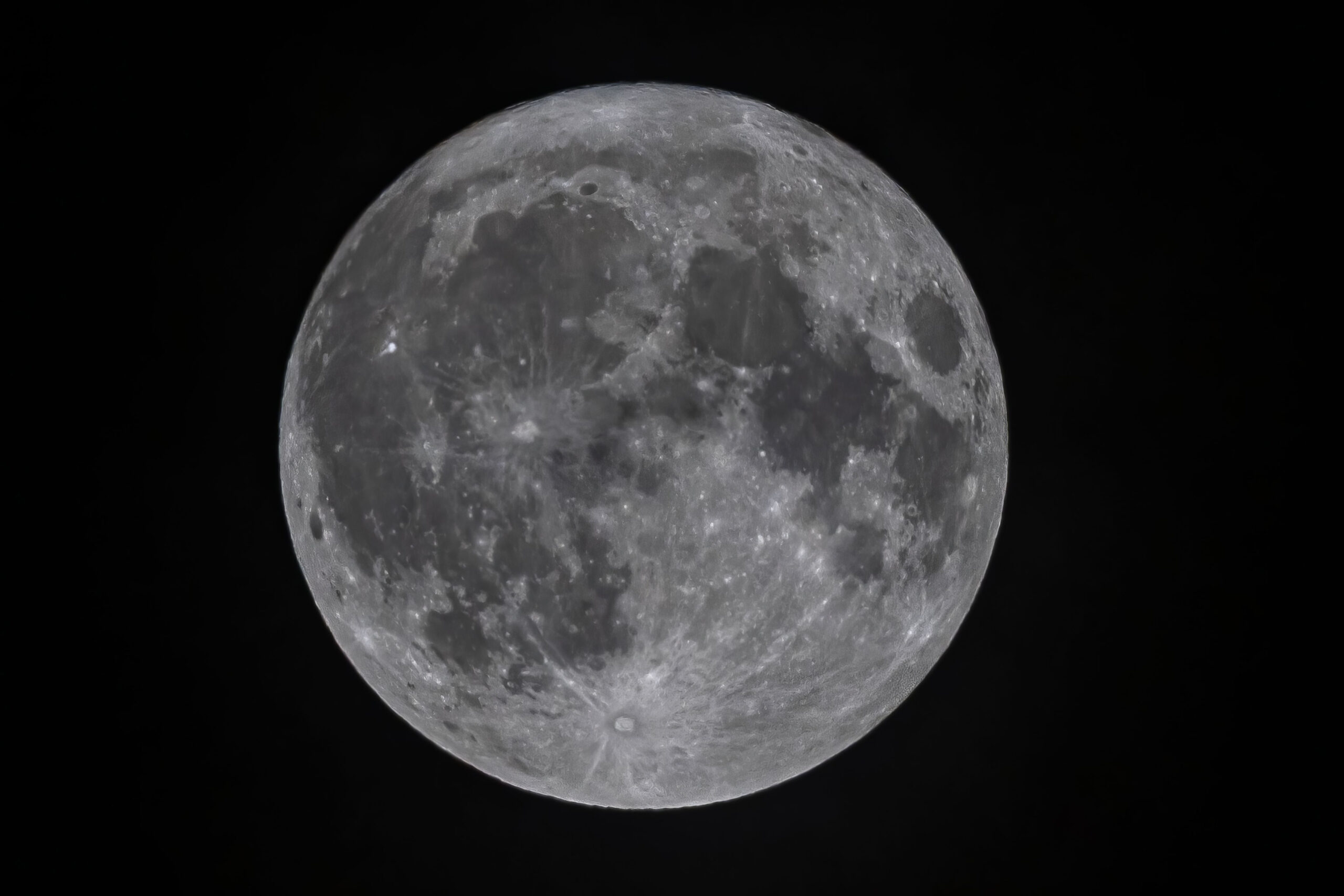
The night offers several astronomical phenomena that amaze astronomers and lovers of the universe. July will be no exception, as it will bring everything from the observation of planets to the first Perseid meteor showers.
The July calendar will arrive with the Deer Moon, as well as the visibility of some planets. The director of the Astronomy Institute of the Galileo University, Edgar Castro, detailed to Prensa Libre the phenomena that will arrive this month.
One of the most notable phenomena is the Southern Delta Aquarids, which, according to NASA, come from the direction of the Aquarius constellation; that is, its radiant will be in the southern part of the sky.
This meteor shower, which EarthSky notes will occur from July 18 to August 21, will offer an ideal time for viewing during the darkest hours. Likewise, Mercury, Jupiter and Venus will be some of the planets visible during this month.
Planet observation
To start the month, the sky will offer fans the opportunity to observe some planets. Castro highlights that from July 1 to 5, Mercury, Jupiter and Venus can be observed towards the west, from 6:30 p.m. to 7:30 p.m., with the naked eye, with binoculars or a telescope.
lunar conjunctions
Another phenomenon that will arrive on July 7 will be the conjunction between the Moon and Saturn. Castro highlights that it can be observed with the naked eye, while with a telescope it will also be possible to appreciate the planet’s rings.
On July 11, the conjunction of the Earth’s natural satellite with Mars and the Pleiades star cluster will occur, in the constellation of Taurus. The phenomenon can be observed towards the east from 4:30 am.
New Moon: opportunity for observation
Astronomer Edgar Castro highlights that the night of the new moon on July 14 will offer an opportunity for observation. This moment, also known as the deep sky window, will allow deep space objects, such as the Lagoon Nebula (M8), to be observed with a telescope.
Castro recommends visiting places such as Tecpán, the Altiplano or the Sierra de los Cuchumatanes, where conditions favor the observation of objects such as the Cúmulo de Hércules (M13).
Perseid meteors
At the end of the month, the first Perseid meteors can be observed, which will begin to cross the night sky from mid-July. Likewise, during the night of July 29 and the early morning of July 30, the Southern Delta Aquarids will be active in the southern sky.
Astronomer Edgar Castro highlights that during this month it is the rainy season in the country, so he recommends checking the weather forecast to enjoy these astronomical events.
Moon phases
One of the stars that always attracts attention is the Earth’s natural satellite, which will shine in the darkness of the night. These are the dates of the Moon phases during July:
- Last quarter: July 7
- New Moon: July 14
- Waxing quarter: July 21
- Full Moon: July 29