
Volcanoes, lakes, colonial cities, archaeological sites and a wide cultural offer have positioned Guatemala as a destination with multiple options for different types of travelers. However, to take advantage of this potential, it is necessary to strengthen aspects such as the road infrastructure that connects the different sites and the basic services necessary to offer a quality experience to visitors.
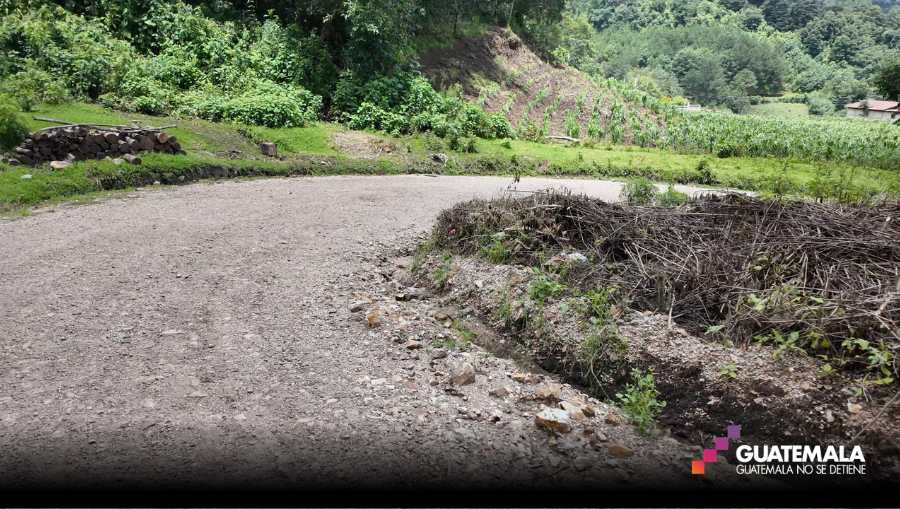
Along these lines, the Ministry of Communications, Infrastructure and Housing (CIV) executes paving and improvement projects for rural roads in Chimaltenango, Sololá, Alta Verapaz, Quiché, Petén, Huehuetenango and Jutiapa. The works seek to improve the connectivity of the communities, but could also facilitate access to some of the main tourist attractions of those territories.
For Jorge Mario Chajón, former director of the Guatemalan Tourism Institute (Inguat), Guatemala has a competitive advantage over other countries in the region due to the diversity of natural, cultural and historical resources it offers. The challenge, he assured, is to transform that potential into destinations prepared to receive visitors.
Chajón explained that this process begins by guaranteeing minimum conditions of accessibility and services for those who visit a place. “Accessibility is always important. If we do not arrive by road, we must arrive by water, by air or by another land route,” he indicated.
Juan Pablo Nieto, tourism consultant, agreed that a road facilitates access, but can hardly generate, by itself, a tourist destination. He explained that there are places with high tourist potential whose attractions remain isolated and do not have the necessary services. “There are places that have many tourist attractions, but they are dispersed and are not articulated or have sufficient tourist infrastructure,” he noted.
For Nieto, road infrastructure constitutes just one of the pillars that make up a destination. To this must be added a network of tourist services, an organized offer and the participation of local actors.
From Inguat, the director of Tourism Product Development, Mario Maldonado, pointed out that the development of a destination starts from having an attraction that arouses the interest of visitors. “Based on attractiveness, value proposals must be generated that allow us to offer interesting experiences for visitors from a competitive approach,” he explained.
Maldonado added that this process does not depend only on public institutions, but also on the participation of communities, businessmen and other actors linked to the territory.
Along the same lines, the president of the Congressional Tourism Commission, Alberto de León, considered that the recovery and construction of roads represent an opportunity to expand the country’s tourism offer, especially towards destinations that until now have remained outside the most visited circuits.
According to the deputy, improving connectivity can favor the arrival of national and international tourists, as long as these investments are complemented with other actions that strengthen the experience of those who visit the destinations. “If there are no good roads, tourists will hardly want to travel to those places. But tourism goes far beyond road infrastructure,” he stated.
Rural roads and paved tourist routes
- Paving of the Tecpán-Patzún section, in Chimaltenango (11 kilometers)
- Rehabilitation of the Las Trampas-Godínez section, in Sololá (19.15 kilometers)
- Paving of the RN-7W, between San Cristóbal Verapaz (Alta Verapaz) and Chicamán (Quiché) (45.71 kilometers)
- Improvement of the Flores-Tikal route, in Petén (56 kilometers)
- Rehabilitation of the route to Huehuetenango from Cuatro Caminos (25.60 kilometers)
- Improvement of the El Molino-Valle Nuevo route, on the CA-08 (122 kilometers)
- Improvement of the corridor towards the border with El Salvador, on the CA-01 Oriente, in the Guatemala-El Molino-Jutiapa-Ciudad San Cristóbal section (170 kilometers)
- Improvement of departmental routes RD-AV-06 and RD-AV-07, between Cruce El Pajal and Semuc Champey, Alta Verapaz (22 kilometers)
What does it take for a place to attract tourists?
Improving access to a destination can reduce travel times and facilitate the arrival of visitors. However, once the tourist arrives at the place, other elements are required to guarantee a good stay.
Nieto explained that a destination needs tourist infrastructure capable of responding to the needs of those who visit it. Among these elements he mentioned toilets in good condition, signage, safe spaces to transit and proper waste management. “This is essential so that we can have attractions that begin to generate interest,” he stated.
He added that digital connectivity stopped being a complementary service and became a tool that provides security to visitors and facilitates their movement. “People now feel insecure if they do not have access to the internet. They use it to locate themselves, communicate and share their travel experiences,” he said.
For Chajón, once access is guaranteed, the next step is to develop the tourist plant, made up of hotels, restaurants, visitor service centers and other services that allow tourists to extend their stay.
Added to this are basic services such as parking, signage and security conditions. “The visitor should only worry about enjoying the destination and not about finding where the bathroom is, where to wash their hands or if they are going to feel safe,” he said.
In addition, he considered that the conditioning of the destinations must also contemplate improvements in the public spaces of the receiving communities, such as sidewalks, bicycle paths, cleaning, wastewater treatment and adequate management of solid waste.
Maldonado, from Inguat, agreed that a highway represents only the starting point of a broader process that requires the participation of different institutions and actors. “It is a comprehensive process that requires inter-institutional and inter-sector coordination. From the beginning, communities must be involved to define what they want to promote about their destination,” he explained.
According to the official, in addition to road infrastructure, destinations require investments aimed at waste management, environmental education, training of service providers and the development of tourism products aimed at different visitor profiles.
Among the aspects that, in his opinion, should also be strengthened are the information available to visitors, emergency protocols, accessibility measures and, when conditions allow, infrastructure that facilitates the entry of people with disabilities.
Deputy De León agreed that investments in infrastructure must be accompanied by services that respond to the new needs of tourists, such as drinking water, electricity, sanitation, access to clear information about destinations, digital connectivity and clean spaces. “Tourists need reliable basic services to feel comfortable in any corner of the country they visit,” he stated.
Communities must be part of the destiny
Nieto explained that, in addition to the attractions and infrastructure, one of the pillars of tourism are local entrepreneurs and service providers, who have direct contact with visitors.
In their opinion, these actors must work in an articulated manner and know the territory to offer experiences that reflect the identity of the place, but that also respond to the expectations of those who visit it. “The experience must be authentic and respond to what visitors are looking for. This can only be achieved when those providing the services know their territory and work in a coordinated manner,” he said.
He added that the preparation of human resources is also key to increasing the competitiveness of destinations. He explained that the training is not limited to tour guides, but also involves waiters, hotel staff and other people who participate in serving visitors.
As an example, he mentioned Tecpán, where the Technical Institute of Training and Productivity (Intecap) develops training programs for the tourism sector and some educational establishments already offer careers oriented to this activity, which has made it possible to train local talent.
From Inguat, Maldonado considered that community participation also strengthens the authenticity of destinations. He added that the institution works on initiatives aimed at strengthening cultural heritage through craft development centers, to generate economic opportunities for communities.
For Deputy De León, strengthening community participation also represents an opportunity to boost local economies. In his opinion, expanding the promotion to new destinations can generate greater opportunities for small businesses linked to gastronomy, crafts and tourist services.
He added that the country’s cultural diversity constitutes one of the main assets to expand the tourist offer. “Each locality has a different gastronomy, its own traditions and products that can become part of the visitor’s experience,” he commented.
Who should prepare the destinations?
For Chajón, tourism development requires governance that brings together public institutions, local governments, the private sector and communities to define a shared vision on the use of the territory.
He explained that the municipality must lead aspects related to territorial planning and some public services; Inguat, strengthen promotion and attention to visitors; the Ministry of Culture and Sports (MCD), ensure the archaeological heritage; the National Council of Protected Areas (Conap), for the conservation of natural resources; while communities participate in the maintenance and care of the destination.
“Each institution has defined responsibilities. The important thing is that they all work under the same vision of destiny,” he stated.
Chajón considered that this coordination should also be reflected in a territorial planning plan that establishes where hotels, restaurants, information centers and other tourist infrastructure can be located, seeking to conserve the natural and cultural resources that constitute the main attraction of the place.
Nieto shared that vision and explained that governance consists of creating spaces where all actors can agree on how to develop the territory. In these tables, he said, administrators of tourist attractions, businessmen, communities, municipalities and institutions such as Inguat, the Ministry of Economy and the Ministry of the Environment should participate.
“It is essential to sit at a table knowing that we will probably not agree on everything, but we will agree on the minimum conditions to work for the same destiny,” he explained.
Maldonado considered that one of the country’s main challenges consists, precisely, in consolidating governance models adapted to the characteristics of each territory. He indicated that, depending on the place, indigenous or ancestral authorities must also be incorporated, along with municipalities and State institutions, to achieve balanced participation of all sectors.
Congressman De León agreed that coordination between institutions will be decisive to take advantage of the infrastructure investments that are currently being carried out in different departments.
In its opinion, Inguat, as the governing body of tourism, must lead this process together with the municipalities, the central government, the private sector and the communities. “We cannot work in isolation. There has to be coordination between institutions and communities so that destinations can really develop,” he said. Find more Guatemala Doesn’t Stop on our video channels Free press and Guatevision, alliance content focused on solutions journalism.