

The Ninth Court of Criminal Sentencing benefited Carlos Acevedo Navas with alternative measures, prosecuted for attacking Larkin Morales on three occasions, who suffered permanent injuries during the incident that occurred in zone 18. Judge Verónica Ruiz Blau considered that the risks of escape and obstruction of the investigation of the truth had disappeared and took into account a circular from the Supreme Court of Justice which recommends privileging freedom and that preventive detention be applied as a last measure.
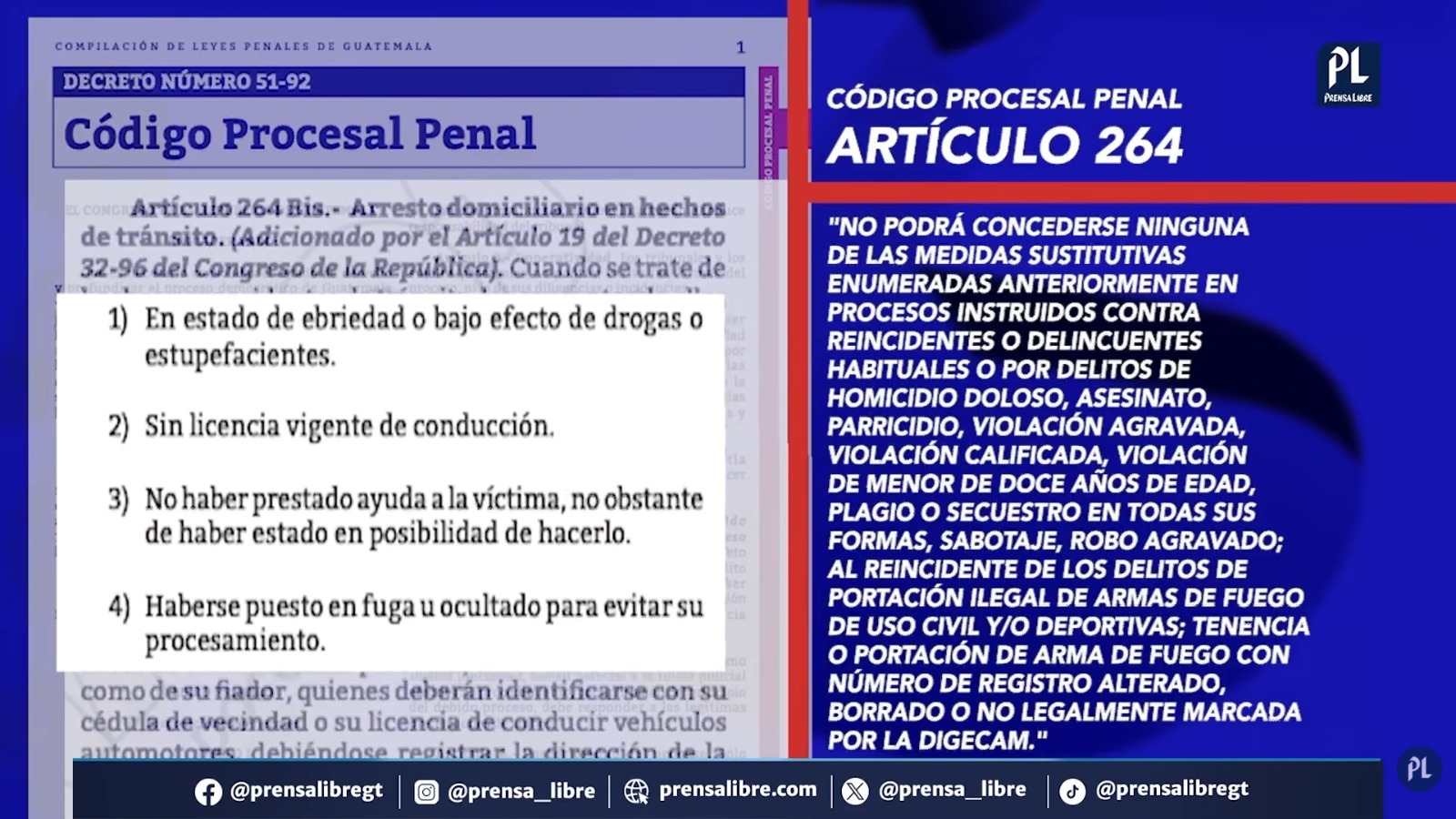
Among the measures imposed are house arrest, arraigo, the obligation to appear during the first five days of each month at the Public Ministry to register your fingerprint in the biometric system and the payment of a financial bond of Q15 thousand. The defendant’s defense indicated that it will promote the legal action it considers appropriate.
During the program Direct Impactexperts analyzed the scope of the judicial resolution, legal requirements to impose substitute measures and the impact that this type of decisions can have on the victims and on the trust of citizens in the justice system.
“We are lost as a country”
After learning of the resolution, Mónica Cuque, mother of Larkin Morales, held the judges responsible for any consequences that may arise from the case and expressed her concern about the decision. “If this case does not have a good end, we are lost as a country”.
He also stated:
“I leave you the criminal and civil responsibility for what happens both with the Lord and with the future of my son.”.
Cuque maintained that judicial authorities are responsible for guaranteeing justice and questioned what he described as an unequal application of the law.
“The criminal and civil responsibility for my son’s future and for what this man does from now on falls on them with all the freedom to walk calmly in peace.”.
Likewise, he asked that the case not be forgotten and pointed out that his concern transcends his family’s situation. “Do not leave us alone, do not abandon us, because I am not speaking for one case, I am speaking for all the cases that have been happening throughout the country in recent days.”.
Experts: preventive detention is exceptional, but victims also require protection
During the analysis, the specialists recalled that preventive detention does not constitute an early sentence, but rather a precautionary measure that only applies when there are duly substantiated procedural risks.

They explained that the Criminal Procedure Code allows preventive detention to be substituted when the judge considers that other measures guarantee the presence of the defendant during the trial and protect the development of the investigation.
However, They agreed that resolutions like this generate a strong impact when the victims consider that the seriousness of the events warrants maintaining the deprivation of liberty of the accused. According to what they explained, in addition to the legal aspect, there is a human component that influences the perception of justice.
Analysts pointed out that this type of resolution also tests citizens’ trust in institutions, especially when they involve cases that have caused permanent injuries and have had wide public repercussions.
Finally, indicated that the challenge for the courts is in finding a balance between respect for the procedural guarantees of the accused and the effective protection of victims, so that judicial resolutions strengthen, and do not weaken, the credibility of the justice system.