
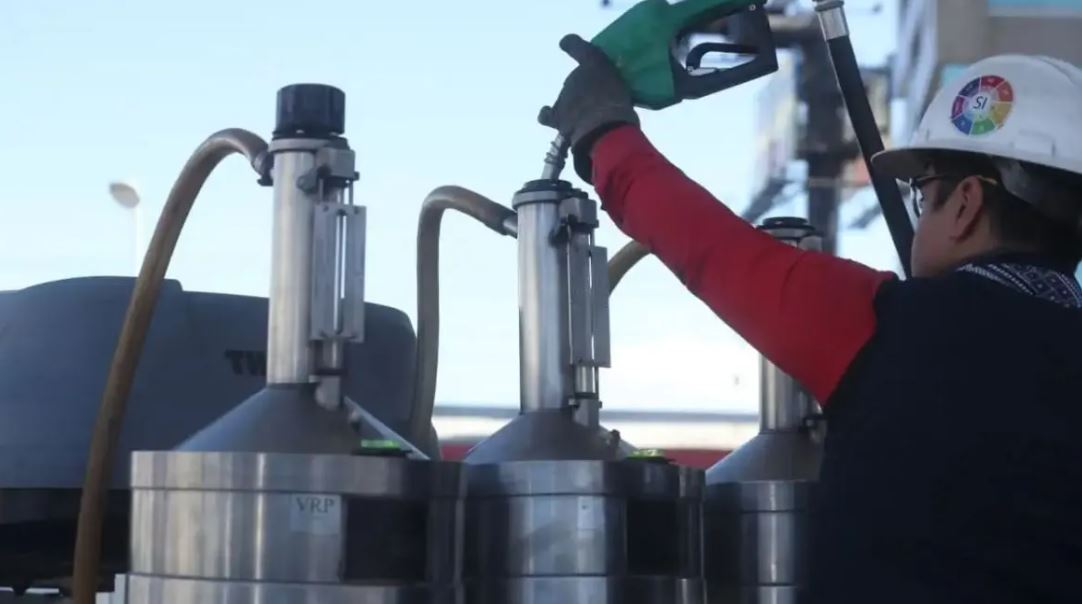
The change in consumer prices will depend on the pace at which gas stations exhaust their subsidized inventories and market prices because the reference prices calculated by the MEM would no longer apply, according to sources consulted.
Although the MEM reported that The gasoline and diesel subsidy ended on Thursday, July 2 For fuels that leave importers for distribution, at gas stations it will no longer apply until the inventories acquired with that subsidy run out.
When the now Minister of Energy and Mines, Erwin Barrios, was consulted about the period in which these inventories could be exhausted, the official did not provide an exact date, but responded that “it will take several days and even weeks for the change to be perceived in 100% of the sales, since there is a significant (volume of) inventory in transit and in tanks.”
The effects on prices
At night the MEM explained that the temporary support represents a contribution of Q5 per gallon of gasoline and Q8 per gallon of diesel and at the end of its validity the benefit is eliminated, and responded as an example that these amounts would be added to the reference prices.
The reference prices issued by said ministry for the final consumer at the service stations of Guatemala City, for the week of June 30 to July 6, are Q32.09 for the gallon of superior gasoline, Q31.09 for the regular gasoline and Q27.29 for diesel, amounts that are reflected in the gas stations visited this Thursday by Prensa Libre.
Taking into account the example mentioned by the institution, the new prices could be Q37.09 for superior gasoline; Q36.09 the regular one; and Q35.29 for diesel.
How the subsidy has been distributed
Of the total Q2 billion approved, from April 28 to June 21, Q1,580.2 million were paid, and the most recent two weeks are still missing.
By fuel The subsidy on that date was allocated as follows:
- Diesel: subsidy for 115.8 million gallons, Q926.4 million. Superior gasoline: for 58.1 million gallons, Q290.7 million. Regular gasoline: for 72.6 million gallons, Q363.1 million
According to decree 11-2026, the subsidy is paid to importers and the entire chain must apply the discount until it reaches the final consumer. According to data provided by the MEM, of that figure, by company importer has been paid:
- One Guatemala. SA: Q401.1 million. Chevron Guatemala Inc.: Q525.4 million. Puma Energy Bahamas, SA: Q103.9 million. Puma Energy Guatemala, SA: Q236.7 million. Uno Fuels Guatemala, SA: Q312.9 million
Importers and distributors
Fausto Velásquez, Sales Manager of Unopetrol Guatemala – licensee of the Shell brand in the country – indicated that, according to the information received from the authorities, the subsidy ended on Thursday, July 2 and therefore, as of this Friday, July 3, all the fuel that importing companies sell to gas stations will no longer have a subsidy.
CONTENT FOR SUBSCRIBERS
Regarding how fuel prices will be applied to the public, Velásquez said that, depending on how the legislation is structured, gas stations are expected to change or increase the price as they exhaust the inventory acquired with a subsidy.
For the consumer, as a reference, it would be necessary to see what price the gas stations have at this moment, and on that basis an increase of Q5 per gallon in premium and regular gasoline would be expected, and of Q8 per gallon in diesel.
“With it, At a minimum, an increase of Q5 per gallon for gasoline and Q8 for diesel should be observed.”responded when asked about how much prices could change.
The executive director of the Guatemalan Association of Gasoline Retailers (Ageg), Enrique Meléndez, Meléndez explained that, in addition to the fact that these subsidy amounts per gallon will no longer be applied, that portion is also affected by the value added tax (VAT), so it is increased.
Regarding the period in which inventories could be exhausted, Meléndez commented that it is difficult to establish it because each season has its own dynamics and purchasing days. The manager mentioned as an example that it could not be specified whether the inventories could last three or four days from Friday, since some gas stations bought on Tuesday, others planned to do so on Thursday and others might need to acquire it in the coming days; therefore.
In addition to this, he announced that consumption began to increase this Thursday, July 2, because users are informed that fuel will increase when they no longer have the subsidy, which also influences the fluctuation of inventories and these could run out sooner than expected.
The fuel market
When these inventories are depleted, the expectation is that the national market returns to regular conditions governed by what happens in international markets and their behavior, explained Velásquez.
He added that in recent times it has been observed that Guatemala has once again positioned itself as one of the countries with the most competitive prices in the Central American region, to the extent that subsidies have been eliminated and the international price trend has stabilized in some way, due to the news related to possible agreements due to the conflict in the Middle East, which influences the Strait of Hormuz and, therefore, the supply of the international market.
Another aspect explained by Meléndez is that the reference prices estimated by the MEM will no longer govern. based on the formula established in the law and the subsidy regulations, but rather it will be moved to a supply and demand market price, which will depend on the value that the suppliers set for the fuel.
Regarding the formation of prices, Meléndez said that the current reference price is structured by the MEM based on a formula established by the institution; However, these will lose validity when the subsidy stops being applied because this modality is governed by the law and regulations with which that subsidy was created.
CONTENT FOR SUBSCRIBERS
He explained that the formula of the reference prices of the MEM is prepared based on an index called Platts del Golfo, which generates a daily price. The Ministry takes five days to calculate an average, to which maritime freight and insurance are added, to establish a CIF price; Therefore, it does incorporate the behavior of the international price.
As of Friday, July 3, importers will no longer be granted any subsidy to transfer this reduction to the chain, and at the end of the validity of the reference prices, the market price will be resumed, with which each supplier establishes the value at which it will sell, in accordance with market conditions, added the Ageg manager.
Meanwhile, in the market, the supplier can establish a formula with a greater or lesser number of days, according to its price policies, and thus sells to service stations, said Meléndez.
Asked about when the prices of a barrel of oil, which have fluctuated between US$66 and US$78, would be reflected in the country, he explained that it will still take some time, since they must first be reflected in the international price of the derivatives, since there is no direct correlation. This is because oil may go down, but derived products, such as gasoline and diesel, may behave differently, as they depend on inventories, refining capacities and other factors.
With information from Urías Gamarro