
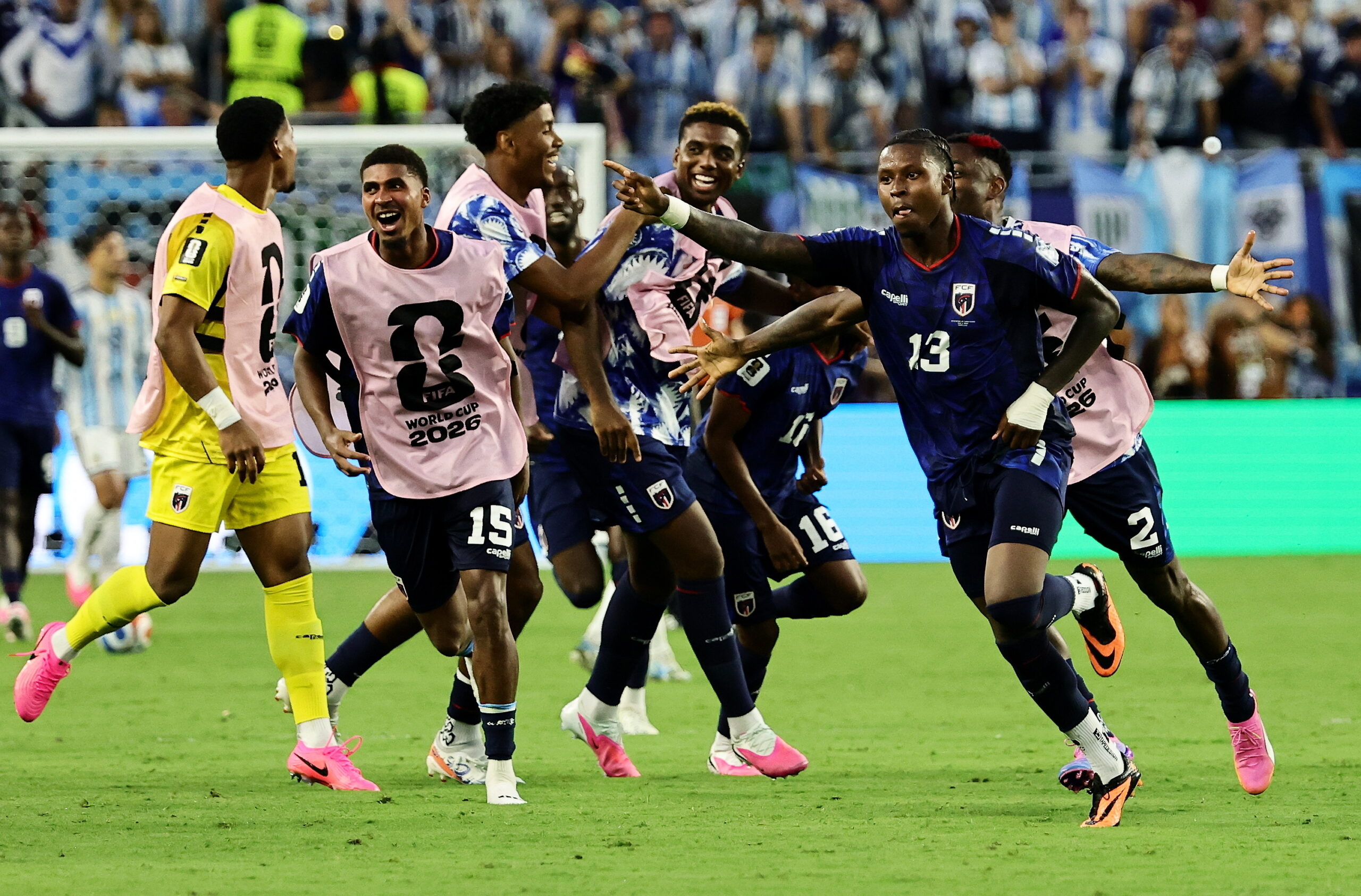
Cape Verde is competing in a direct elimination phase in a World Cup for the first time. Behind this historic achievement is a combination of the expansion of the World Cup to 48 teams, a consolidated sports project and a generation of footballers formed between Africa and Europe.
While Cape Verde faced Argentina in the round of 32 of the 2026 World Cup, the African team has already written the most important page in its history. With a population of just over 600 thousand inhabitants, the Atlantic archipelago managed to qualify for the World Cup for the first time and became one of the great revelations of the tournament.
The historic qualification began with the new format promoted by FIFA for the 2026 World Cup. The expansion from 32 to 48 teams allowed the Confederation of African Football (CAF) to increase its direct places from five to nine, in addition to a place for the intercontinental playoffs. In the African qualifiers, the 54 countries were distributed into nine groups and only the leaders of each sector obtained a direct ticket to the World Cup.
Cape Verde took advantage of that opportunity with authority. Under the direction of coach Pedro Leitão Brito, known as “Bubista”the team finished first in Group D and secured an unprecedented classification without having to compete in the play-offs. It shared a sector with Cameroon, Angola, Libya, Mauritius and Eswatini, and got the direct ticket after finishing as leader, ahead of teams with greater tradition on the continent.
The growth of the Cape Verde team had already been reflected months before in the African Cup of Nations and was consolidated during the World Cup qualifiers thanks to a solid defensive block, a well-defined collective functioning and the ability to score points both at home and away.
However, the success of the project is not explained solely by sporting results. One of the pillars of the team’s development has been the use of the extensive Cape Verdean diaspora in Europe. For several years now, the Cape Verdean Football Federation has promoted a program to recruit footballers with dual nationality born or trained in countries such as Portugal, France, the Netherlands and Ireland, many of them with family roots in the archipelago.
This strategy allowed us to assemble a squad with experience in European leagues and raise the competitive level of the team. Today, a good part of its players play in professional championships on the continent, providing a rhythm of competition that has been decisive in facing rivals with a greater soccer tradition.
The impact of this model transcends the fields. FIFA itself has highlighted that the Cape Verdean community residing abroad exceeds the population living on the islands, a link that has strengthened the identity of the team and expanded the universe of players eligible to represent the country.
The surprise did not end with the classification. In its World Cup debut, Cape Verde advanced to the round of 32 after completing a group stage that attracted the attention of international football. They drew goalless with Spain, drew 2-2 against Uruguay and scored again against Saudi Arabia, results that allowed them to advance to the knockout round and confirm that their presence in the tournament was not a coincidence.
Now, with Argentina as a rival, Cape Verde faced the most important challenge in its football history. Beyond the result, which in the end was 3 to 2, his presence in this instance demonstrated that the expansion of the World Cup opened new opportunities, but also that the growth of Cape Verdean football responds to a sustained project, a well-defined structure and a generation of players that took the country, for the first time, to the biggest stage in world football.